Our site contains ads and uses Amazon affiliate links. We may earn a small commission at no extra cost to you. We know ads can be distracting, and we’re sorry for any inconvenience they cause. It helps us keep the site running. Thanks for your understanding and supporting us!
Apple pie bars promise all the comfort of a classic apple pie without the work of rolling and crimping a full crust. Swap in puff pastry and you get shatter-crisp layers in a fraction of the time.
But puff pastry behaves nothing like a standard pie dough. It is built from dozens of stacked layers of butter and flour, and any excess moisture from the apple filling gets trapped between those layers instead of baking through cleanly.
This recipe walks through the mechanics behind every decision:
- why the bottom sheet needs a head start in the oven,
- how your choice of thickener changes the filling’s texture, and
- exactly how to vent both pastry sheets so steam has somewhere to go instead of pooling under the fruit.
Why Puff Pastry Needs a Different Approach Than Pie Crust
Standard pie dough is a single, relatively dense sheet. Puff pastry is dozens of alternating layers of dough and butter, built through a process called lamination.
When puff pastry bakes, the water inside the butter turns to steam and pushes those layers apart. That is what gives you height and a delicate, flaky crumble instead of a solid crust.
The problem is that a moist apple filling sitting directly on raw puff pastry interrupts that separation. The bottom layers stay damp, fuse together, and never fully crisp, no matter how long you leave the bars in the oven.
Cornstarch vs. Flour: Which Thickener Protects the Crust
Every apple pie filling needs a thickener to trap the juice apples release as they cook. The two most common choices are all purpose flour and cornstarch, and they behave differently once they hit the oven.
Flour thickens gradually and needs a higher ratio to fully set, which means more raw starch sitting directly against your pastry before the heat has a chance to work.
Cornstarch gelatinizes at a lower temperature and sets with a clear, glossy finish using about half the amount of flour. Less starch in contact with the pastry means less opportunity for moisture to soak in before the crust sets.
Docking Explained: Why Both Pastry Layers Need Fork Holes
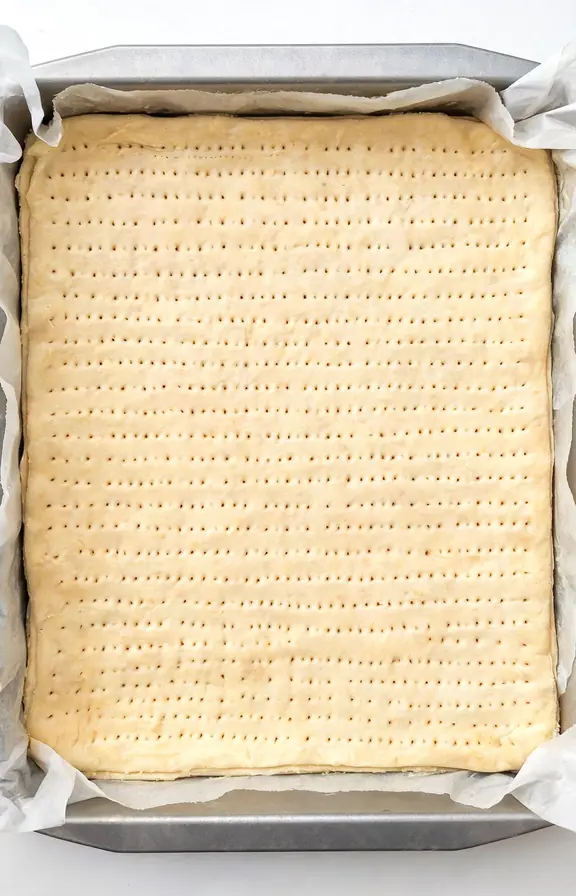
Docking means pricking dough with a fork to create small steam vents. Skip this step and trapped steam pushes the pastry into uneven bubbles instead of flat, stackable layers.
Dock the bottom sheet before its blind bake so it sets flat and even under the filling. Dock the top sheet again before its final bake, spacing the holes about an inch apart in a staggered pattern across the surface.
An egg wash brushed onto the blind-baked bottom before the filling goes on adds one more layer of protection. It seals the surface slightly, which is a technique bakers also use to slow moisture from soaking into a bottom crust.
Building the Bars in the Right Order
Assembly order affects the final texture as much as any single ingredient. Blind-baked bottom first, cooled apple filling second, docked top layer last.
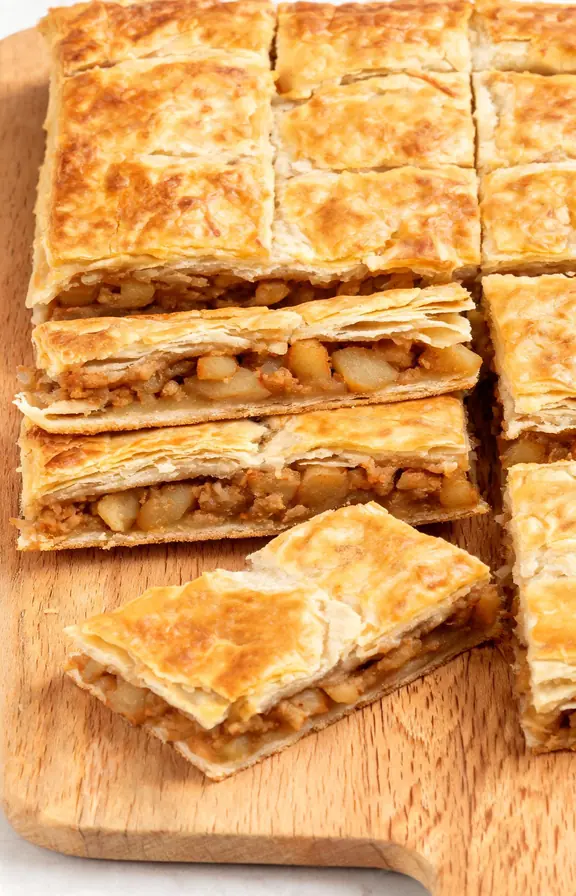
Let both the pastry and the filling cool before you stack them. Hot filling on cool pastry creates an instant burst of steam that softens the bottom before it ever reaches the oven for its second bake.
Choosing and Prepping Apples That Hold Their Shape
Firm, tart apples like Granny Smith or Honeycrisp keep their structure through baking. Soft varieties like Red Delicious tend to break down into mush and release far more liquid.
Slice the apples to a uniform thickness, about one eighth of an inch, so every piece cooks at the same rate. Uneven slices mean some pieces turn to sauce while others stay undercooked and crunchy.
Toss the sliced apples with the sugar and cornstarch mixture at least 10 minutes before assembling. This gives the salt and sugar time to draw out some juice, which you can then judge before deciding whether the filling needs to sit a little longer to thicken.
Egg Wash and the Golden, Flaky Finish
Egg wash on puff pastry does more than add color. It helps seal the surface and encourages the top layers to separate cleanly as they puff instead of sticking together.
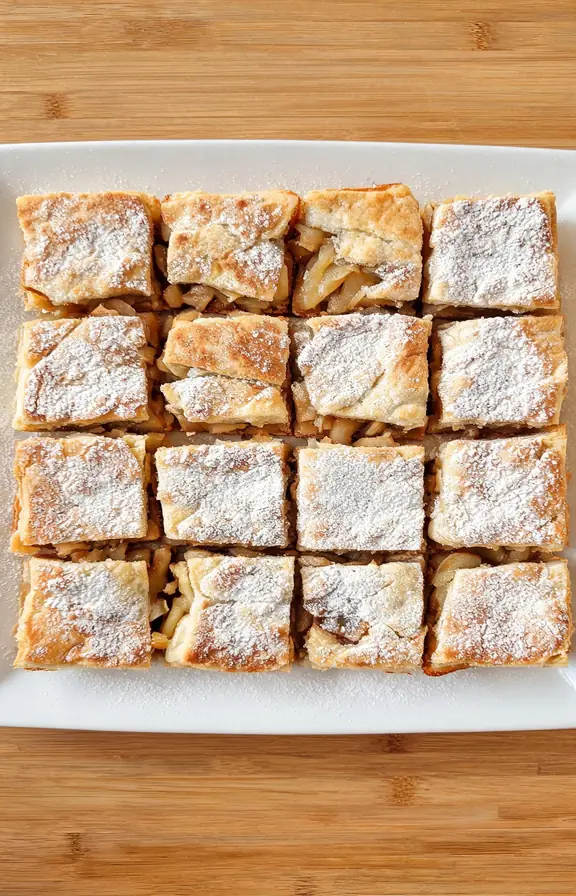
Use one egg beaten with a tablespoon of milk. Apply it in one light, even pass with a pastry brush, since heavy brushing can pool in the docking holes and gum up the delicate top layers.
A light sprinkle of coarse sugar over the egg wash adds crunch and a bit of sparkle without weighing down the pastry.
Frequently Asked Questions
Apple Pie Bars with Puff Pastry
Crisp, flaky puff pastry layered around a glossy cinnamon apple filling. Blind baking the bottom and docking both sheets keeps every bite crisp instead of soggy.
- 9×13 inch baking pan
- Parchment paper
- Rolling pin
- Fork (for docking)
- Large mixing bowl
- Pastry brush
- Sharp knife or pizza cutter
- Wire cooling rack
- 2 sheets (about 1 lb / 490g total) frozen puff pastry, thawed
- 6 cups (about 6 medium) peeled, thinly sliced tart apples such as Granny Smith or Honeycrisp
- 2/3 cup (135g) granulated sugar
- 1/3 cup (65g) packed light brown sugar
- 3 tablespoons (24g) cornstarch
- 1 tablespoon (15ml) fresh lemon juice
- 1 1/2 teaspoons ground cinnamon
- 1/4 teaspoon ground nutmeg
- 1/4 teaspoon fine sea salt
- 2 tablespoons (28g) unsalted butter, cut into small pieces
- 1 large egg
- 1 tablespoon whole milk
- 2 tablespoons coarse or turbinado sugar (optional)
- Blind bake the bottom layer Preheat the oven to 400°F (200°C). Line a 9×13 inch pan with parchment paper, leaving an overhang on the long sides. Roll the first sheet of puff pastry slightly to fit the pan, then press it into the base. Prick the entire surface with a fork in a staggered pattern about 1 inch apart. Bake for 10 minutes, until just set and lightly golden at the edges, but not fully browned. Remove and let cool for 10 minutes while you make the filling.
- Make the apple filling In a large bowl, toss the sliced apples with the granulated sugar, brown sugar, cornstarch, lemon juice, cinnamon, nutmeg, and salt until evenly coated. Let the mixture sit for 10 minutes so the sugar draws out some juice. If a noticeable pool of liquid collects at the bottom, drain off about 2 tablespoons before assembling.
- Assemble the bars Spread the apple filling evenly over the cooled, blind-baked bottom layer. Dot the surface with the small pieces of butter. Roll out the second sheet of puff pastry to fit the pan and lay it over the filling, tucking or trimming the edges as needed.
- Dock and egg wash the top Prick the top layer of pastry all over with a fork, spacing the holes about 1 inch apart. Whisk the egg with the milk and brush a thin, even layer over the top. Sprinkle with coarse sugar if using.
- Bake until golden Reduce the oven temperature to 375°F (190°C). Bake for 30 to 35 minutes, until the top is deep golden brown and you can see the filling bubbling gently through the docking holes. Tent loosely with foil if the top browns before the center finishes baking.
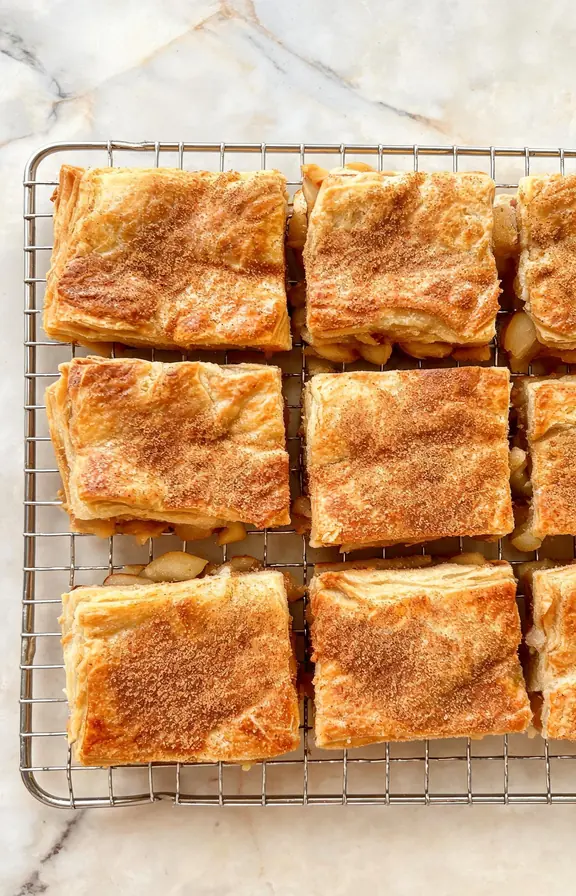
- Cool completely before slicing Lift the bars out of the pan using the parchment overhang and transfer to a wire rack. Cool for at least 2 hours before slicing into 16 squares. Cutting too early will cause the filling to spill out and the layers to compress.
Nutritional values are estimates calculated using standard USDA food composition data. Actual values will vary based on the specific brand of puff pastry, apple variety, and exact bar size after slicing.