Our site contains ads and uses Amazon affiliate links. We may earn a small commission at no extra cost to you. We know ads can be distracting, and we’re sorry for any inconvenience they cause. It helps us keep the site running. Thanks for your understanding and supporting us!
Type marshmallow frosting into any recipe site and you mostly get the same shortcut: butter, powdered sugar, and a tub of marshmallow fluff.
That is marshmallow buttercream, and it is a fine frosting, but it is not the original marshmallow frosting bakers have made since long before fluff existed in a jar.
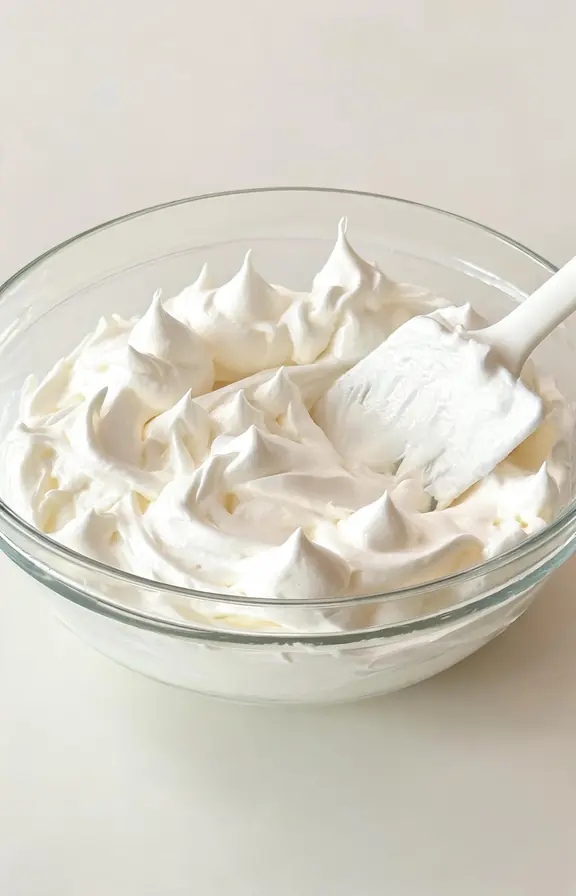
The real version is closer to a stabilized seven minute frosting. Egg whites and sugar are cooked together, then whipped into a cloud that is naturally fat free, pipes into tall swirls, and can be browned with a torch like a toasted campfire marshmallow.
This recipe fixes the two complaints that show up in nearly every comment section on marshmallow frosting posts: weeping after a few hours, and the lingering worry about eating undercooked egg whites. Here is exactly what changes that:
- why cooking the egg whites to a specific temperature matters for both safety and texture,
- how sugar’s hygroscopic nature controls weeping in humid kitchens,
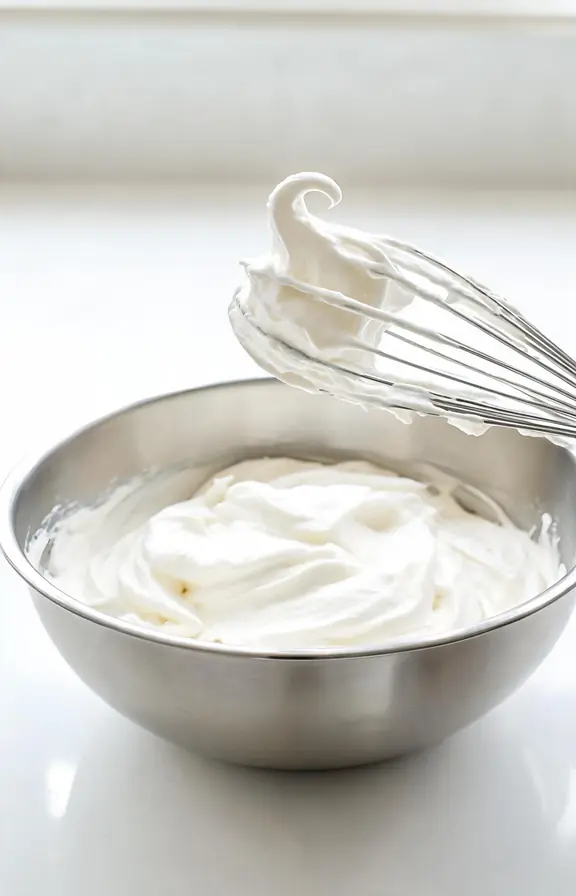
- how to read visual cues for true stiff peaks instead of guessing,
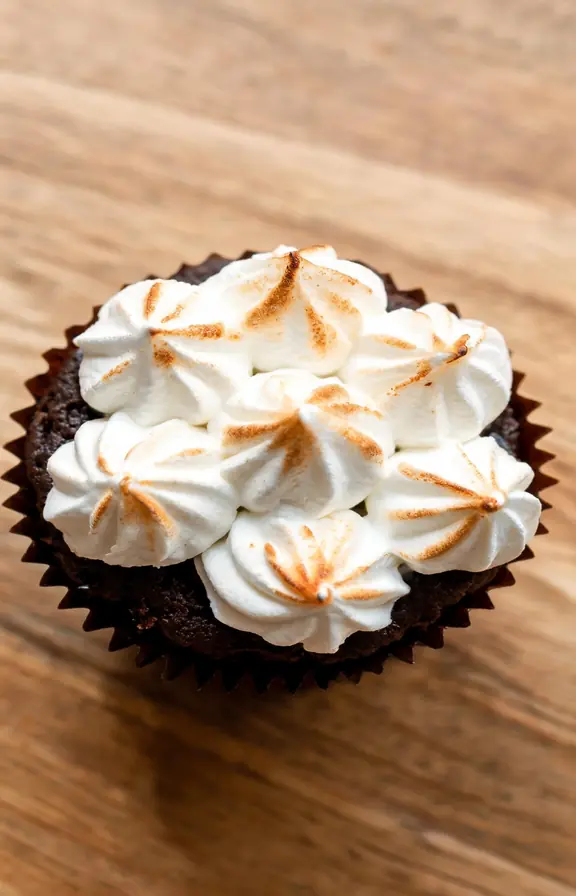
- exactly how this frosting behaves under a kitchen torch.
Why This Is the Real Marshmallow Frosting, Not the Fluff Shortcut
Marshmallow fluff did not exist until the early 1900s. The original marshmallow frosting predates it by decades and uses the same method as a classic seven minute frosting, egg whites and sugar whipped together over heat.
We already have a recipe for homemade marshmallow fluff made completely from scratch, which is the right pick when you want a spreadable jar to stir into other recipes or sandwich cookies.
This frosting is different. It is whipped fresh to order, used the same day, and never contains butter.
Because there is no fat in the formula, this frosting tastes lighter and less heavy than a buttercream and fluff hybrid. The texture sits closer to the topping on a lemon meringue pie than to a typical layer cake frosting.
The Food Safety Step Most Recipes Skip Completely
Most homemade marshmallow frosting recipes online whip raw egg whites and sugar together and stop there. That shortcut leaves the eggs uncooked.
The USDA Food Safety and Inspection Service notes that egg white sets between roughly 144°F and 149°F, and dishes built on raw whipped whites cannot be guaranteed safe unless the eggs have been pasteurized first.
Why Marshmallow Frosting Weeps, and the Sugar Science That Stops It
Marshmallow frosting that turns sticky or beads with moisture after a few hours has usually been under sweetened or under cooked. Sugar is not only there for flavor, it physically holds the foam together.
Granulated sugar is hygroscopic, meaning it binds water molecules inside the protein network instead of letting that water collect on the surface and weep out. Cutting the sugar in this recipe, even by a couple of tablespoons, noticeably shortens how long the frosting holds its shape.
Humidity in your kitchen plays a role too. On a muggy day, the sugar in the frosting pulls moisture from the air almost as easily as it holds onto its own. A small pinch of cream of tartar added to the egg whites before cooking gives the foam extra structure that helps counter this.
Reading Stiff Peaks: What to Look, Feel, and Listen For
Piping, Spreading, and Torching: Using It the Right Way
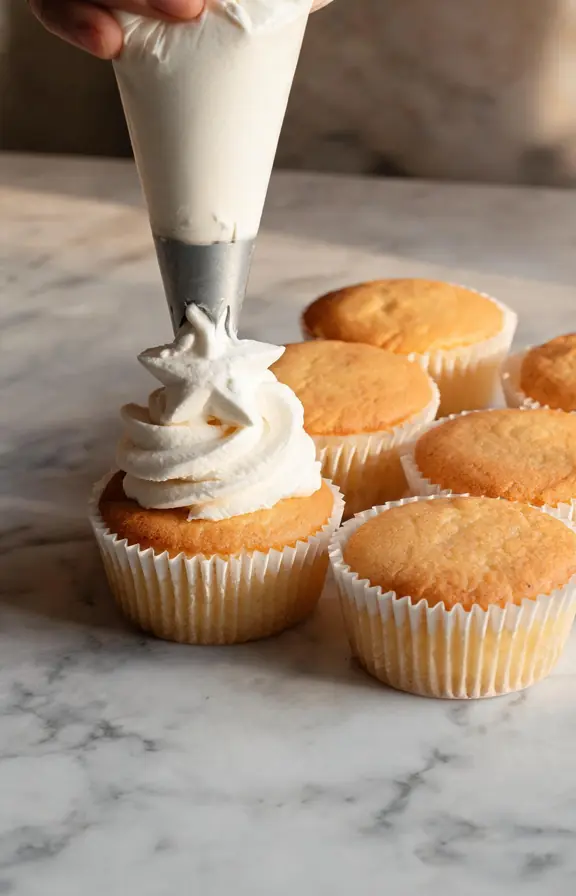
This frosting pipes beautifully because it holds air without any fat weighing it down. A large open star tip gives the cleanest, tallest swirls on cupcakes.
For a smooth spread over a full cake, work fast. The frosting begins to set as it cools, so plan to frost within 15 minutes of finishing the whip.
To torch it, hold the flame about 4 inches from the surface and move it constantly in small circles. Sugar caramelizes starting around 320°F, and a kitchen torch flame easily exceeds that, so a slow, steady pass browns the peaks evenly without scorching them.
Storage and How Long It Actually Holds at Room Temperature
This frosting is best the day it is made. At room temperature, loosely covered, it holds its texture for about 24 hours before the surface starts to dull and soften.
Refrigeration is not ideal here. Cold air can deflate the meringue structure and bring out the same weeping the sugar is meant to prevent. If you must refrigerate a frosted dessert, bring it back to room temperature before serving for the best texture.
This frosting does not freeze well. The foam structure collapses on thawing and cannot be rewhipped back to its original volume.
Frequently Asked Questions
Marshmallow Frosting
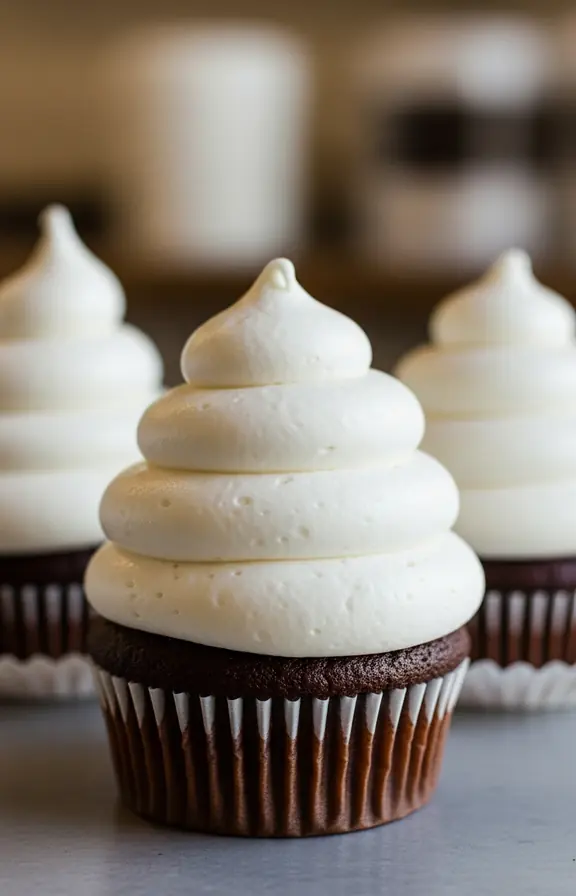
Glossy, fat free marshmallow frosting made the original way, with cooked egg whites and sugar whipped into stiff peaks. Pipeable, torchable, and ready in under 20 minutes.
- Heatproof mixing bowl or double boiler
- Medium saucepan
- Stand mixer or hand mixer
- Instant read or candy thermometer
- Rubber spatula
- Piping bag and large star tip (optional)
- Kitchen torch (optional)
- 4 large egg whites, room temperature
- 1 cup (200g) granulated sugar
- 1/4 teaspoon cream of tartar
- Pinch of fine sea salt
- 2 tablespoons (30ml) water
- 1 teaspoon vanilla extract
- Set up the double boiler Add 1 to 2 inches of water to a saucepan and bring it to a gentle simmer. Combine the egg whites, sugar, cream of tartar, salt, and water in a heatproof bowl that fits over the saucepan without touching the water.
- Cook to 160°F Set the bowl over the simmering water and whisk constantly. Continue whisking for 5 to 7 minutes until the mixture reaches exactly 160°F on a thermometer and feels completely smooth, not gritty, when rubbed between two fingers.
- Whip to stiff peaks Transfer the mixture to a stand mixer fitted with the whisk attachment. Whip on high speed for 5 to 7 minutes until the frosting is glossy, holds stiff peaks, and the bowl feels cool to the touch.
- Add vanilla Add the vanilla extract during the last minute of whipping and mix just until combined.
- Use immediately Pipe or spread the frosting within 15 minutes of finishing, since it begins to set as it cools. If torching, do this step right before serving for the best look.
Nutritional values are estimates calculated using standard USDA food composition data. Actual values will vary based on specific egg size, brand of sugar, and exact serving portion.