Our site contains ads and uses Amazon affiliate links. We may earn a small commission at no extra cost to you. We know ads can be distracting, and we’re sorry for any inconvenience they cause. It helps us keep the site running. Thanks for your understanding and supporting us!
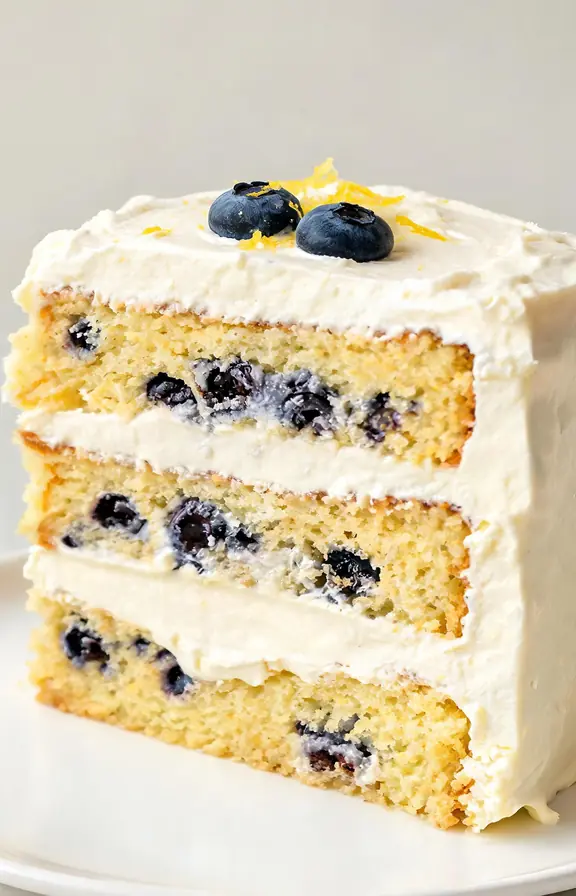
Most lemon blueberry layer cakes fail in one of two predictable ways. Either the crumb turns dense and slightly gummy from too much acid fighting the gluten, or the blueberries sink straight to the bottom of every layer.
Neither problem is about your oven or your ingredients being wrong. It is about ratios and timing that most recipes never explain.
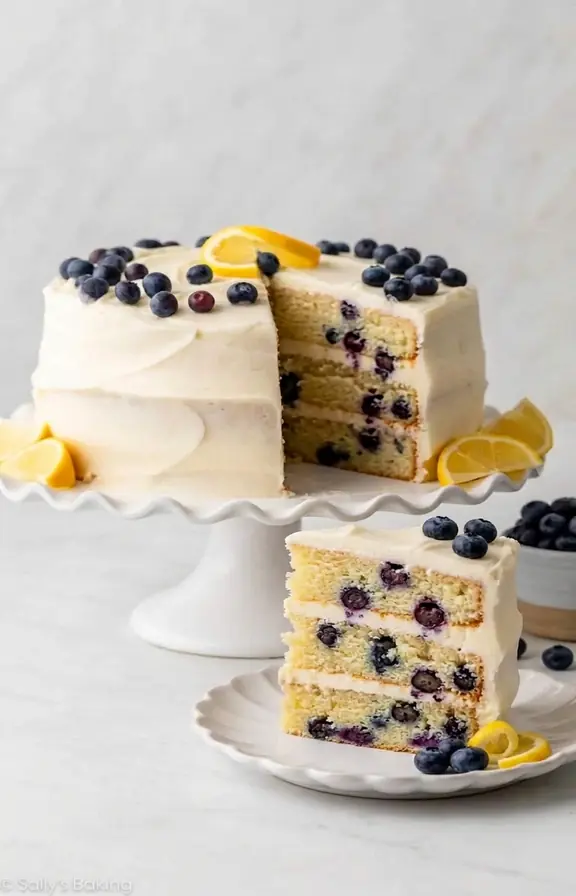
This article walks through the actual mechanics behind a lemon blueberry layer cake that holds its shape, keeps its fruit suspended, and stays moist for days. Then it gives you the full recipe, built around those mechanics from the ground up.
Why Lemon Blueberry Cakes Turn Gummy, Dense, or Bland
Lemon juice is acidic, and acid changes how gluten behaves. A little acid relaxes the protein bonds in flour and gives you a tender crumb.
Too much acid without enough fat or buttermilk to buffer it does the opposite. It disrupts structure so badly that the cake cannot hold its air bubbles, and you end up with a wet, slightly gummy layer instead of a light one.
The second common failure is flavor, not texture. Bottled lemon juice and lemon extract both taste flat next to fresh zest, because the essential oils that carry true lemon flavor live in the zest, not the juice.
The Acid-Gluten Balance That Makes This Crumb So Tender
Buttermilk is the ingredient doing the real work here. Its lactic acid gently weakens gluten bonds without the sharp, moisture-heavy hit that straight lemon juice delivers.
That is why this recipe keeps lemon juice modest and lets buttermilk carry most of the acidity. You still get a soft, tender crumb, but the structure stays intact enough to support three layers and a full pound of blueberries.
Room temperature eggs and butter matter here too. Cold ingredients tighten fat and stop it from trapping air properly, which leaves you fighting the acid problem with a weaker structure to begin with.
Why Blueberries Really Sink (And the Fix That Actually Works)
Blueberries sink for one simple physical reason. They are denser than cake batter, so gravity pulls them down before the structure sets.
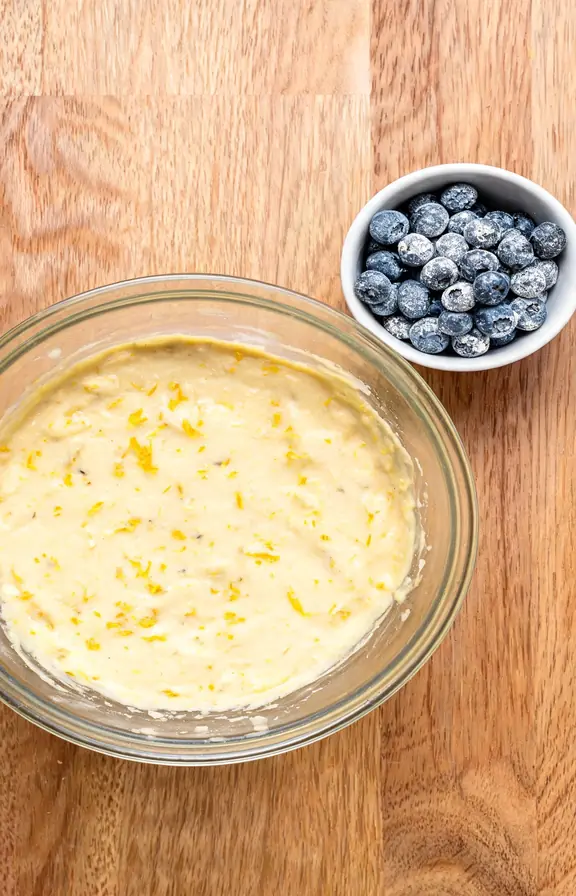
A thin, runny batter has almost no resistance to offer, so the berries drop straight through it during baking. A thicker batter physically slows that fall down long enough for the crumb to set around the fruit.
Tossing berries in flour works for a second reason beyond adding grip. The flour coating absorbs the thin layer of surface moisture on each berry, which briefly increases friction between the berry and the surrounding batter.
Baking three thinner 8 inch layers instead of two thick 9 inch ones gives you a shorter fall distance and a shorter bake time. Both work in your favor against sinking fruit.
Layering, Crumb Coats, and Keeping the Cake From Sliding
A layer cake slides for one main reason. The filling between layers is too soft, too thick, or the layers were still warm when stacked.
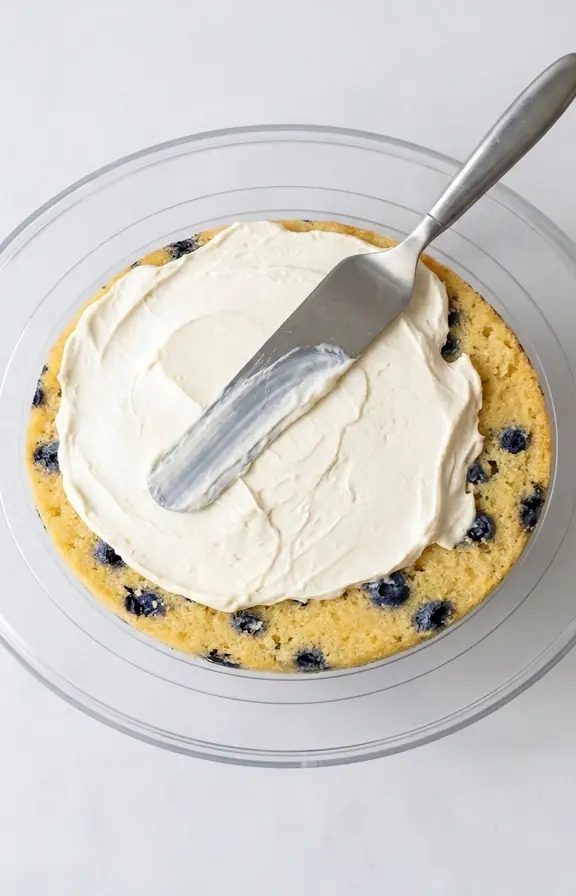
Level each cooled layer with a serrated knife before stacking. Domed tops create gaps that trap air and destabilize the whole structure once you add weight on top.
Pipe a thick dam of frosting around the outer edge of each layer before adding filling in the center. This dam stops any softer filling, like lemon curd, from squeezing out under pressure.
Always apply a thin crumb coat first and chill it for fifteen minutes before the final layer of frosting. This traps loose crumbs so your finished cake looks clean instead of speckled.
Cream Cheese Frosting or Lemon Buttercream: Which One Actually Holds Up
Cream cheese frosting is the more forgiving choice for warm weather and outdoor events. Its structure comes partly from fat, not just whipped sugar, so it resists melting and sliding better once the cake sits out.
This foolproof cream cheese frosting recipe that pipes cleanly and holds its shape for hours is the version this cake was built around. Its slight tang also balances the sweetness of the blueberries better than a plain sugar based frosting.
Lemon buttercream, on the other hand, gives you a brighter, more citrus forward flavor and holds piped details like rosettes more crisply. If you want that route instead, this silky Italian buttercream recipe that takes lemon curd beautifully is the sturdier of the buttercream options for a tall layer cake.
For a lighter, less sweet finish that still holds its shape on a hot day, this stabilized whipped cream frosting recipe built to hold its shape all day is worth trying on the top layer only, since it is softer than either buttercream or cream cheese frosting.
Freezing Layers Without Losing Moisture
Baking the layers a day or two ahead and freezing them unfrosted actually improves the final cake. The freeze locks in moisture and makes the layers easier to level and stack cleanly.
Wrap each cooled layer tightly in plastic wrap while it is still slightly cool, not fully room temperature. Trapping a small amount of that residual moisture inside the wrap keeps the crumb from drying out in the freezer.
Frequently Asked Questions
Lemon Blueberry Layer Cake
Three tender, moist layers packed with fresh blueberries and real lemon zest, finished with a tangy cream cheese frosting. Built to slice cleanly and hold its shape at room temperature.
- Three 8-inch round cake pans
- Stand mixer or hand mixer
- Kitchen scale (recommended for flour accuracy)
- Fine zester or microplane
- Serrated knife (for leveling layers)
- Offset spatula
- Cake turntable (optional, but helpful)
- Bench scraper
- 375g (3 cups) all-purpose flour
- 1 tablespoon baking powder
- 1/2 teaspoon baking soda
- 1 teaspoon fine sea salt
- 226g (1 cup) unsalted butter, softened
- 120ml (1/2 cup) vegetable oil
- 400g (2 cups) granulated sugar
- 4 large eggs, room temperature
- 2 tablespoons lemon zest (about 3 medium lemons)
- 1 teaspoon vanilla extract
- 240ml (1 cup) buttermilk, room temperature
- 80ml (1/3 cup) fresh lemon juice
- 300g (2 cups) fresh blueberries
- 2 tablespoons all-purpose flour (for tossing berries, taken from the total above)
- 450g (16 oz) full-fat brick cream cheese, cold
- 170g (3/4 cup) unsalted butter, softened
- 600g (5 cups) powdered sugar, sifted
- 1 tablespoon lemon zest
- Pinch of fine sea salt
- Prep the pans and berries Preheat the oven to 350°F (175°C). Grease three 8-inch round cake pans and line the bottoms with parchment. Toss the blueberries in the 2 tablespoons of flour taken from the total flour amount, then set aside.
- Mix the dry ingredients Whisk together the remaining flour, baking powder, baking soda, and salt in a medium bowl. Set aside.
- Cream butter, oil, and sugar In a stand mixer, beat the softened butter, oil, and sugar on medium-high speed for 3 to 4 minutes until pale and fluffy. This step traps the air that gives your layers lift, so do not rush it.
- Add eggs, zest, and vanilla Add the eggs one at a time, beating well after each addition. Mix in the lemon zest and vanilla extract until evenly distributed.
- Alternate dry and wet ingredients Combine the buttermilk and lemon juice in a small bowl. Add the dry ingredients to the batter in three parts, alternating with the buttermilk mixture, beginning and ending with the dry ingredients. Mix on low speed just until combined after each addition.
- Fold in the blueberries Gently fold the flour-coated blueberries into the batter by hand using a rubber spatula. Fold just until distributed. Overmixing at this stage will bruise the berries and tint the batter gray.
- Divide and bake Divide the batter evenly between the three prepared pans using a kitchen scale for accuracy. Bake for 26 to 30 minutes, or until a toothpick inserted into the center comes out clean and the top springs back when touched gently.
- Cool completely Cool the layers in their pans for 10 minutes, then turn out onto wire racks to cool completely, at least 1 hour. Layers must be fully cool before frosting or the frosting will melt and slide.
- Make the frosting Beat the cold cream cheese and softened butter together until smooth, about 2 minutes. Add the powdered sugar gradually on low speed, then add the lemon zest and salt. Beat on high for 1 minute until light and fluffy.
- Level, fill, and crumb coat Use a serrated knife to level the domed top of each cooled layer. Stack the layers with a thin, even layer of frosting between each. Apply a thin crumb coat around the whole cake and refrigerate for 15 minutes.
- Final frost and chill Apply the remaining frosting in a smooth, even layer over the top and sides. Refrigerate for at least 30 minutes before slicing to help the layers set. Bring to room temperature for 20 to 30 minutes before serving for the best flavor and texture.
Nutritional values are estimates calculated using standard USDA food composition data. Actual values will vary based on exact ingredient brands, blueberry size, and slice size.