Our site contains ads and uses Amazon affiliate links. We may earn a small commission at no extra cost to you. We know ads can be distracting, and we’re sorry for any inconvenience they cause. It helps us keep the site running. Thanks for your understanding and supporting us!
Most rice krispie chocolate chip cookies lose their crunch within a day. The cereal goes soft, the edges turn chewy all the way through, and the cookie starts to taste like a regular chocolate chip cookie with a few stray flakes mixed in.
That is not a storage problem. It is a moisture problem that starts before the cookies ever reach the oven.
This article breaks down the actual mechanics behind a rice krispie chocolate chip cookie that keeps its crunch, then gives you the full recipe built around those mechanics from the start.
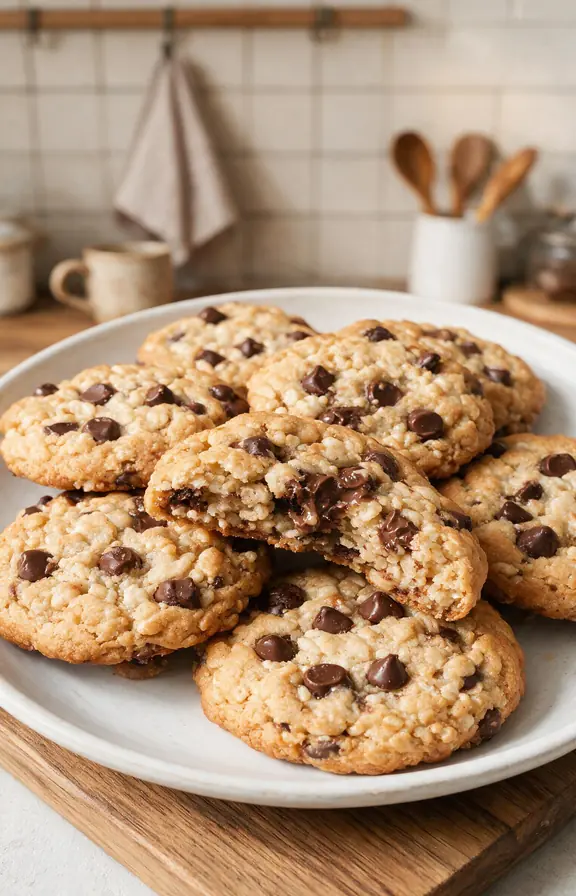
Why Rice Krispies Go Soft in Cookies (And How to Stop It)
Rice krispies are puffed rice grains, and puffing is a starch process. Heat turns trapped moisture into steam, the steam forces the grain to expand, and the walls of that expanded structure are thin, glassy, and full of tiny air pockets, a structure explained in detail by food science reporting on why Rice Krispies snap, crackle, and pop.
That same glassy structure is what makes them crunchy in a bowl of milk, and it is also what makes them fragile around liquid. Cookie dough is full of liquid, from butter to eggs to brown sugar’s own moisture content.
The longer the cereal sits inside that wet dough before baking, the more moisture it absorbs, and the softer it becomes before the oven ever gets a chance to set the structure.
The Double Coating Technique That Gives Every Bite a Crunchy Shell
Most recipes fold rice krispies into the dough and stop there. That gives you scattered pockets of crunch, but plenty of bites land on soft dough instead.
Rolling each portioned dough ball in a second, dry layer of cereal right before it goes into the oven solves that. The dry cereal on the outside never touches wet dough long enough to soften, so it toasts in the oven instead and forms a crackly shell around the whole cookie.
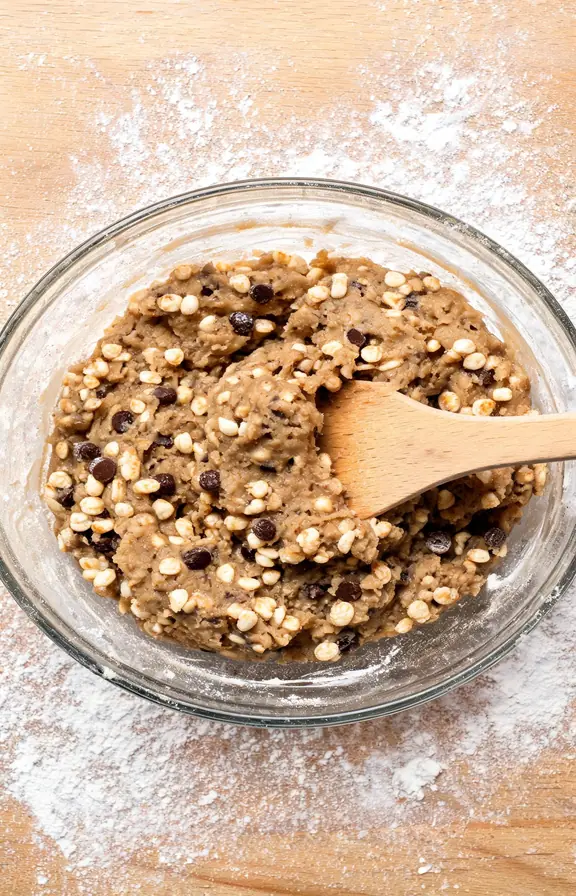
Since chilling the whole dough works against the cereal, this recipe solves both problems at once. Freeze the shaped dough balls for just 10 minutes before baking, long enough to firm the butter without giving the cereal time to soften.
Balancing Chewy Centers Against Crunchy Edges
A cookie that is crunchy all the way through usually means it is overbaked. The goal here is a chewy center with a crunchy shell, not a crunchy cookie from edge to edge.
Brown sugar is doing the heavy lifting for chew. Its molasses content holds onto moisture far more than granulated sugar does, so a higher ratio of brown to white sugar keeps the center soft even as the edges and cereal coating crisp up.
Pull the cookies out while the centers still look slightly underdone and glossy. They firm up as they cool on the tray, a stage bakers call carryover cooking, and pulling them too late is the single most common reason home bakers end up with a hard, dry cookie.
Scooping, Spacing, and Even Baking
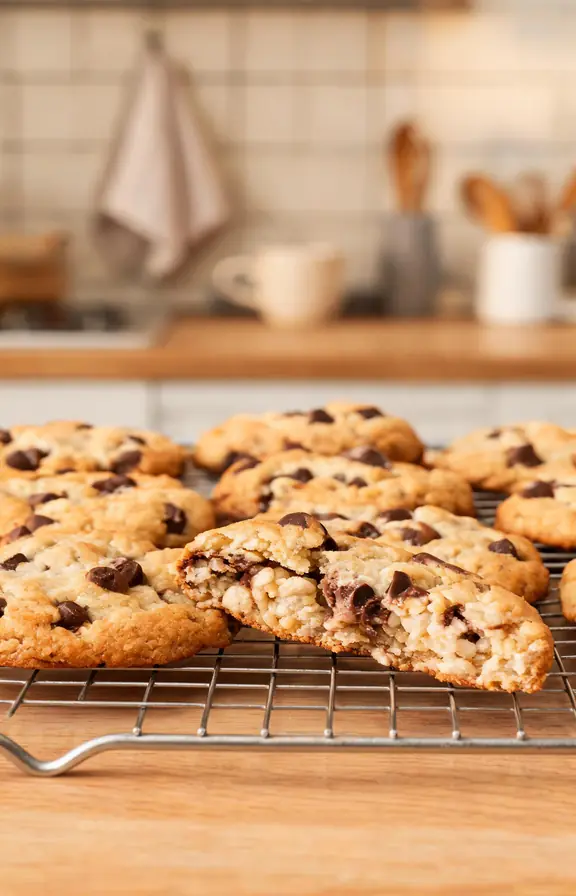
Use a medium cookie scoop for consistent sizing. Uneven dough balls bake unevenly, and smaller cookies finish crisping before larger ones catch up.
Space dough balls at least two inches apart. Rice krispie cookies spread slightly less than a standard chocolate chip cookie because the cereal adds bulk, but crowding still traps steam and softens the edges of neighboring cookies.
Rotate the baking sheet halfway through baking if your oven runs unevenly. This keeps the crunch consistent across the whole tray instead of crisp on one side and pale on the other.
Storing and Freezing Without Losing the Crunch
Humidity is the enemy of a crunchy cookie once it is baked. An airtight container is essential, but so is letting the cookies cool completely first, since sealing in warm cookies traps steam that softens them from the inside.
Add a slice of bread to the storage container if you want to actively fight softening. The bread’s moisture draws humidity away from the cookies, and you can swap it for a fresh slice every day or two.
Frequently Asked Questions
Rice Krispie Chocolate Chip Cookies
Buttery chocolate chip cookies with crispy edges, a chewy center, and a double layer of rice krispies for a crunchy shell that holds up for days.
- Stand mixer or hand mixer
- Medium cookie scoop
- Two baking sheets
- Parchment paper or silicone mats
- Shallow bowl for coating
- Wire cooling rack
- 280g (1 cup) unsalted butter, room temperature
- 200g (1 cup) light brown sugar, packed
- 100g (1/2 cup) granulated sugar
- 1 large egg, room temperature
- 1 teaspoon vanilla extract
- 315g (2 1/2 cups) all-purpose flour
- 1 teaspoon baking soda
- 1/2 teaspoon fine sea salt
- 1 cup rice krispies cereal, for the dough
- 1 1/2 cups semi-sweet chocolate chips
- 1 cup rice krispies cereal, for coating
- Preheat and prep Preheat the oven to 350°F (175°C). Line two baking sheets with parchment paper. Pour the coating cup of rice krispies into a shallow bowl and set aside.
- Cream butter and sugars In a stand mixer, beat the softened butter, brown sugar, and granulated sugar on medium speed for 2 to 3 minutes until light and fluffy. Scrape down the bowl once during mixing.
- Add egg and vanilla Beat in the egg and vanilla extract until fully combined and the mixture looks smooth.
- Mix in dry ingredients Whisk together the flour, baking soda, and salt in a separate bowl. Add to the butter mixture in two additions, mixing on low speed just until no dry streaks remain.
- Fold in cereal and chocolate Gently fold in the first cup of rice krispies and the chocolate chips by hand using a rubber spatula. Fold just until distributed to avoid crushing the cereal.
- Scoop and coat Scoop the dough into 24 even balls using a medium cookie scoop. Roll each ball in the reserved dry rice krispies, pressing gently so the cereal sticks to the outside.
- Quick freeze Place the coated dough balls on the prepared baking sheets, spaced two inches apart. Freeze for 10 minutes to firm the butter before baking.
- Bake Bake for 10 to 12 minutes, until the edges are light golden brown and the centers still look slightly underset. Rotate the pan halfway through for even baking.
- Cool on the pan Let the cookies cool on the baking sheet for 5 minutes to finish setting, then transfer to a wire rack to cool completely before storing.
Nutritional values are estimates calculated using standard USDA food composition data. Actual values will vary based on exact ingredient brands and cookie size.