Our site contains ads and uses Amazon affiliate links. We may earn a small commission at no extra cost to you. We know ads can be distracting, and we’re sorry for any inconvenience they cause. It helps us keep the site running. Thanks for your understanding and supporting us!
Every home baker has made blueberry muffins that came out flat, dense, or rubbery.
Usually the recipe was not wrong. The technique was.
This article breaks down the exact wet-ingredient ratio science that bakeries use, explains why your mixer has been working against you, and walks you through a four-sense Sensory Checkpoint Method so you always know when your muffins are done.
No special equipment. No chilling the batter overnight. Just real, tested science you can apply on any weeknight.
Why No-Mixer Is Actually Better for Muffins
Electric mixers are brilliant for cakes and frosting. For muffins, they are a liability.
Muffin batter is a chemically leavened quick bread. Its rise comes entirely from carbon dioxide bubbles produced by baking powder and baking soda reacting with acids and heat.
When you over-develop gluten by mixing too long, those gas bubbles cannot expand freely. The result is a dense, rubbery muffin with a pointed peak instead of a smooth dome.
Serious Eats has extensively documented that excess gluten development is the number one cause of tough, dense muffin texture.
A hand whisk and a rubber spatula give you far more tactile control. You feel the batter come together in a way a stand mixer never allows.
The Triple Moisture Trio: The Ratio Secret No One Explains
Most recipes use either butter or oil as the fat source.
The bakers who consistently produce the moistest muffins use three moisture contributors simultaneously. Each one does a completely different job.
1. Melted butter (for flavor depth)
Butter contains around 16 to 18 percent water. When it melts, that water creates steam during baking, which contributes to rise and an open crumb.
Using melted rather than creamed butter also means you do not need a mixer at all. You lose nothing in terms of moisture and gain a richer flavor that oil alone cannot replicate.
2. Neutral oil (for lasting softness)
Butter firms up as it cools because its fat crystallizes. Oil does not.
A muffin made with butter only goes stale and feels dry by day two. Adding two tablespoons of a neutral oil like grapeseed or sunflower alongside the butter keeps the crumb soft and pliable on day three.
This is the commercial bakery trick. The ratio of butter to oil should be roughly 2:1 for the best balance of flavor and longevity.
3. Full-fat Greek yogurt (for tenderness and rise)
Greek yogurt is acidic. That acid reacts with baking soda to produce extra leavening lift that baking powder alone cannot achieve.
Simultaneously, the protein in the yogurt sets into a tender but sturdy crumb structure. Sour cream works identically if you prefer it.
This is the ingredient that makes the difference between a home muffin and a bakery muffin.
The Two-Stage Oven Method for Bakery Domes
The dome is not cosmetic. It is a structural indicator of internal steam pressure.
A flat muffin top means the surface set too slowly, allowing gases to escape sideways instead of pushing upward through the top.
The fix is a temperature blast at the start. Preheat to 425°F (220°C) and bake for the first 5 minutes at that temperature.
This causes rapid steam formation and a sudden upward push. Then drop immediately to 375°F (190°C) and finish baking for 13 to 15 more minutes.
The exterior sets fast enough to trap the dome, and the lower temperature cooks the interior through without drying it out.
The Blueberry Suspension Method (Beyond the Flour Trick)
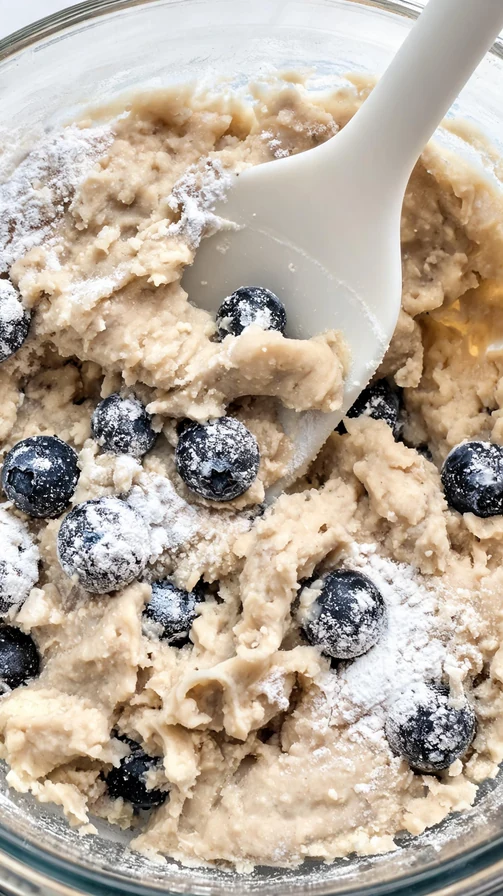
You have probably read that tossing blueberries in flour prevents sinking.
In practice, flour coating alone does very little. Blueberries sink primarily because of how the batter is scooped, not from gravity during baking.
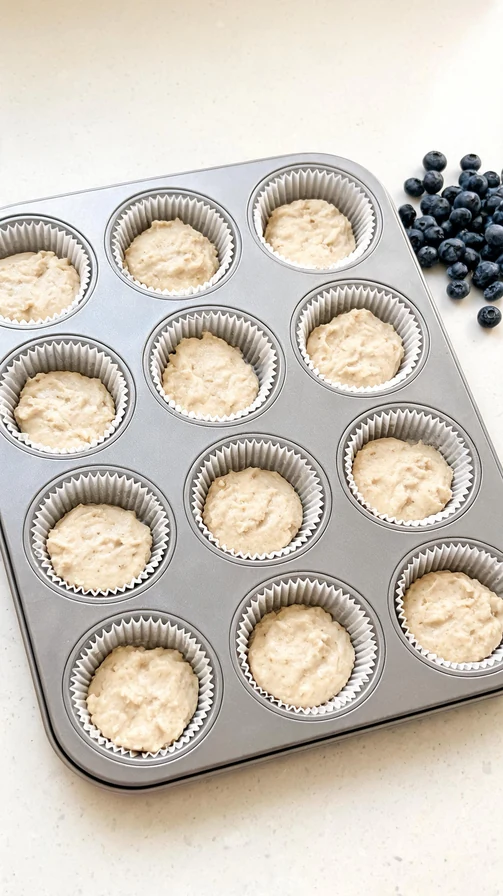
Here is the method that actually works. Before folding in berries, place one tablespoon of plain batter into each muffin cup first.
This creates a solid base layer. Then fold your blueberries into the remaining batter and scoop on top. Blueberries now have no direct path to the tin bottom.
Combine this with a thick batter and you get perfect berry distribution from top to bottom on every single muffin.
The Sensory Checkpoint Method
Most recipes tell you to insert a toothpick. That is a bare minimum test.
Here is a four-sense method that works even if your oven runs hot or cold:
When three or more of these cues align, your muffins are done regardless of what the timer says.
Fresh vs. Frozen Blueberries: The Honest Answer
Fresh blueberries give you slightly cleaner pockets of fruit. Use them when they are in season and reasonably priced.
Frozen blueberries work perfectly well if you keep them frozen solid until the moment you fold them in.
Never thaw frozen blueberries first. Thawing releases the juice and you end up with purple-streaked batter that looks unappealing and has a noticeably wetter texture.
Fold frozen berries in as your very last step and get the muffins into the oven within five minutes of mixing.
How to Store and Reheat Without Losing Moisture
Line your storage container with a paper towel on the bottom and another on top of the muffins.
The paper towels absorb condensation as the muffins cool, preventing the soggy-bottom problem that makes day-two muffins disappointing.
At room temperature with this method, muffins stay fresh for three days. For longer storage, wrap each muffin individually in plastic wrap and freeze for up to three months.
To reheat, microwave a single muffin for 20 to 25 seconds. For a crustier exterior, place unwrapped muffins in a 300°F (150°C) oven for five minutes.
Frequently Asked Questions
Moist Fluffy No-Mixer Blueberry Muffins
Bake moist, fluffy no-mixer blueberry muffins in under 30 minutes with this easy recipe. Bursting with juicy berries, they’re perfect for breakfast, snacks, or dessert.
- Standard 12-cup muffin tin
- 12 paper muffin liners
- Large mixing bowl and medium mixing bowl
- Rubber spatula
- Whisk
- Ice cream scoop or large spoon
- Wire cooling rack
- 2 cups (250g) all-purpose flour, spooned and leveled
- 3/4 cup (150g) granulated sugar
- 2 1/2 teaspoons baking powder
- 1/4 teaspoon baking soda
- 1/2 teaspoon fine sea salt
- 1 teaspoon cinnamon (optional but recommended)
- 4 tablespoons (56g) unsalted butter, melted and cooled 5 minutes
- 2 tablespoons (30ml) neutral oil (grapeseed, sunflower, or canola)
- 1/2 cup (120g) full-fat Greek yogurt, room temperature
- 2 large eggs, room temperature
- 1/4 cup (60ml) whole milk, room temperature
- 1 1/2 teaspoons pure vanilla extract
- 1 tablespoon fresh lemon juice
- 1 1/2 cups (225g) fresh or frozen blueberries
- 1 tablespoon all-purpose flour (for coating berries, optional)
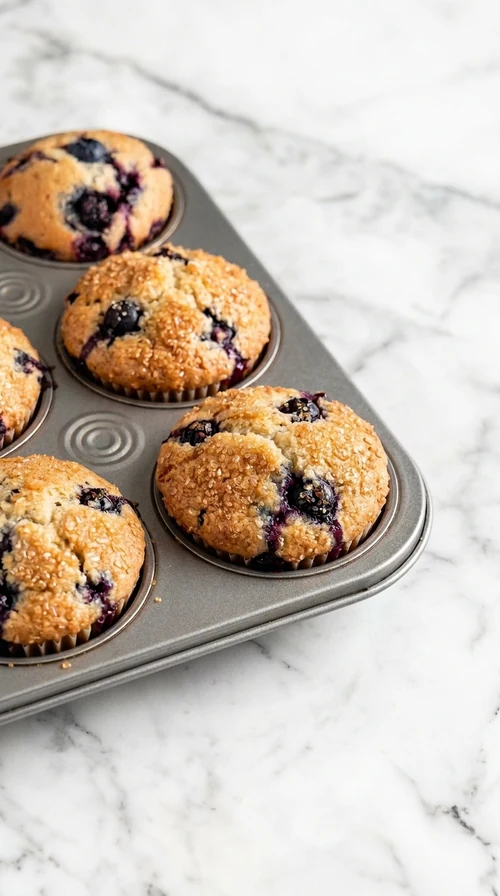
- 2 tablespoons turbinado or coarse sugar (for topping, optional)
- Preheat Set your oven to 425°F (220°C). Line a 12-cup muffin tin with paper liners. Leave eggs and yogurt on the counter now if they are cold.
- Mix dry ingredients In a large bowl, whisk together flour, sugar, baking powder, baking soda, salt, and cinnamon. Whisk for 20 full seconds to ensure leaveners are evenly distributed.
- Mix wet ingredients In a medium bowl, whisk together melted butter, oil, Greek yogurt, eggs, milk, vanilla extract, and lemon juice until fully combined and slightly frothy, about 30 seconds.
- Combine (the critical step) Pour the wet mixture into the dry ingredients. Using a rubber spatula, fold together with slow, deliberate strokes. Count your strokes. Stop at 10 to 12 folds. The batter will be lumpy. That is correct.
- Add blueberries (layering method) Place one tablespoon of plain batter into each muffin cup first. Fold blueberries into the remaining batter with 3 to 4 gentle folds. Scoop the blueberry batter on top of the base layer, filling cups all the way to the top. Sprinkle turbinado sugar over each muffin if using.
- Two-stage bake Bake at 425°F (220°C) for 5 minutes. Without opening the oven door, reduce to 375°F (190°C) and continue baking for 13 to 15 more minutes. A toothpick inserted in the center should come out with moist crumbs but no wet batter.
- Cool Let muffins sit in the pan for 5 minutes only. Transfer to a wire rack immediately. Leaving them in the hot pan longer causes the bottoms to steam and go soggy.
Nutritional values are estimates calculated using standard USDA food data. Actual values may vary based on specific ingredient brands and portion sizes.