Our site contains ads and uses Amazon affiliate links. We may earn a small commission at no extra cost to you. We know ads can be distracting, and we’re sorry for any inconvenience they cause. It helps us keep the site running. Thanks for your understanding and supporting us!
Most fresh strawberry pie recipes ask you to mash a portion of the berries, then add a separate cup of water before cooking the glaze. That water is doing real damage to your pie. It dilutes the one flavor you are trying to showcase.
The fix is simpler than it sounds. Let the sugar pull the juice out of the berries first, then use that juice instead of plain water.
This recipe also tackles the other problem nobody explains well: why some strawberry pies turn to soup by hour two while others slice cleanly the next day. The answer is thickener choice, not luck.
Here is exactly what you will learn:
- why macerating before glazing changes the entire flavor of the pie,
- how cornstarch and pectin behave differently inside a juicy berry filling,
- the blind-baking method that keeps your crust crisp under wet fruit,
- how to keep this pie stable for a full afternoon outdoors.
Why a Glaze Made With Plain Water Mutes Strawberry Flavor
Strawberries are roughly 91 percent water by weight, but that water carries most of the fruit’s aroma compounds and natural sugars.
When you mash berries and immediately add a separate cup of tap water to build your glaze, you are pouring in flavorless liquid right next to the most flavorful liquid in your kitchen.
Maceration solves this. Toss your halved strawberries with sugar and let them sit. Osmosis pulls water out of the berry cells and across the cell membrane, carrying dissolved sugars, acids, and aromatic compounds with it.
Within 30 minutes, you will have a pool of deep red juice sitting at the bottom of your bowl. That juice is concentrated strawberry flavor, and it is exactly what your glaze should be built from instead of water.
Cornstarch Alone vs a Cornstarch and Pectin Blend
Cornstarch is the standard thickener for fresh strawberry pie because it sets clear and glossy, which is exactly the look you want under bright red berries. Cornstarch is a fine white starch derived from corn, frequently used for its thickening properties when heated.
The problem is structural. Cornstarch gels are heat-reversible, meaning they soften noticeably once a pie sits in a warm kitchen or on a picnic table for a few hours.
Strawberries themselves are naturally low in pectin compared to fruits like apples or cranberries, so the fruit cannot help reinforce the structure on its own. Adding a small amount of powdered fruit pectin alongside the cornstarch builds a second, heat-stable support network inside the same filling.
If you have ever made a no-bake filling like the one in our silky chocolate mousse recipe, you already understand how different setting mechanisms change a dessert’s final texture.
Blind Baking: The Step That Decides Whether Your Crust Survives
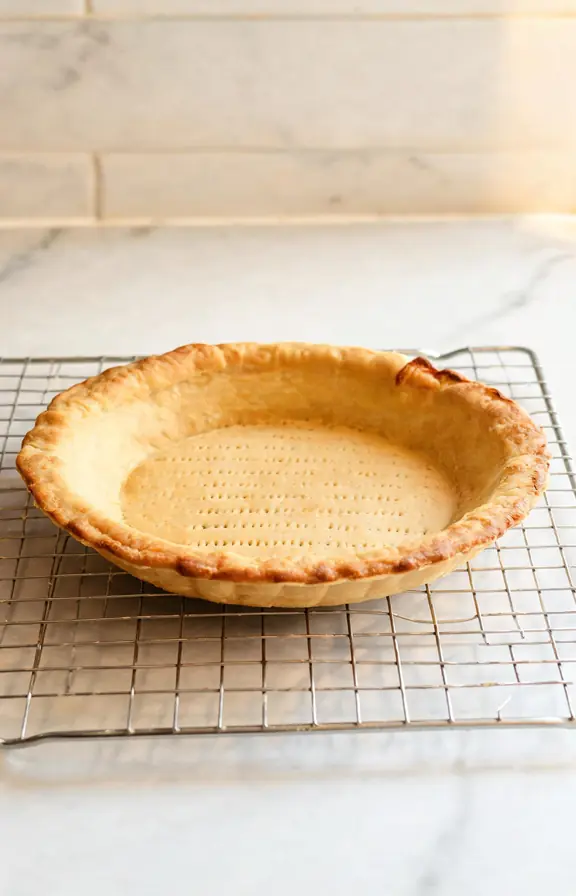
Fresh strawberry pie filling is never baked. It is cooked on the stovetop, cooled, then poured into an already-baked shell. That means the crust gets exactly one chance to become crisp, and it has to survive hours of contact with wet fruit afterward.
Roll out your dough, fit it into the pie plate, then dock the bottom thoroughly with a fork. Line the shell with parchment paper and fill it completely with pie weights or dried beans.
Bake at 425°F for 15 minutes with the weights in place, then remove the parchment and weights and bake for another 8 to 10 minutes until the entire base, not just the rim, is golden brown. A pale bottom crust is the single biggest cause of a soggy fresh strawberry pie.
Building the Filling: Whole Berries vs Sliced Berries
This recipe uses a mix of both. About a third of your strawberries get crushed and cooked into the glaze base, while the rest stay whole or halved and get folded in raw at the end.
Crushing only a portion of the fruit, rather than slicing every single berry, gives you better structural integrity. Whole and halved berries hold their shape and create visible texture, while the crushed portion becomes the glue that binds everything together.
Reserve your prettiest, most uniform berries for the top layer. Arrange them pointed-side up in slightly overlapping rows so the glaze coats every surface without pooling unevenly.
Why Chilling Time Matters More Than Most Bakers Assume
A fresh strawberry pie needs a full 3 hours in the refrigerator before slicing, and this is not optional. The cornstarch and pectin network in the glaze continues firming up well after the filling looks set on the counter.
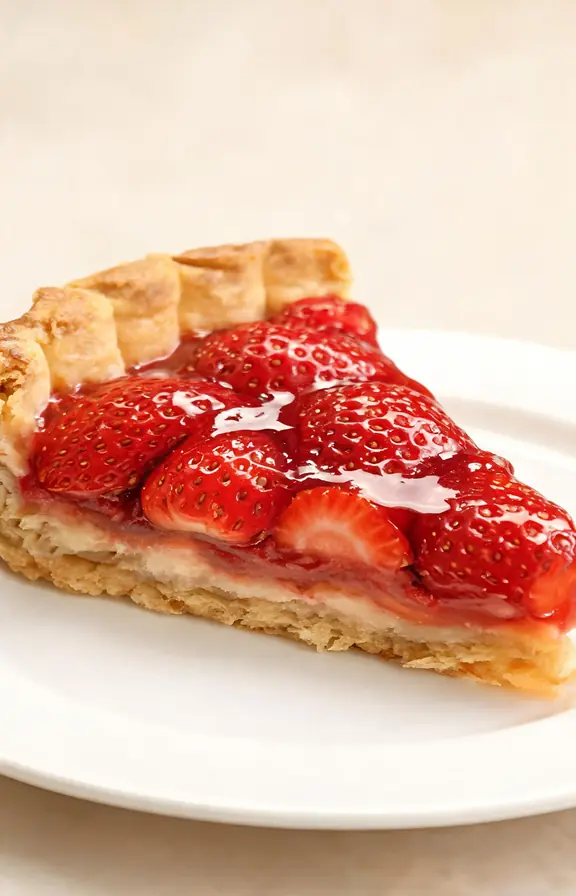
Slicing too early collapses that still-developing structure, which is why an impatient first cut often looks runny even when the same pie would have sliced perfectly clean an hour later.
If you are making this pie ahead for a gathering, refrigerating it overnight actually improves the slice quality rather than hurting it, unlike many baked fruit pies that are best the day they are made.
Keeping This Pie Stable for Picnics and Warm-Weather Gatherings
This is the part competing recipes rarely address directly. A pie that sets beautifully in a cold refrigerator can still slump within an hour on an 80°F picnic table.
The cornstarch and pectin blend described above is your first defense, since pectin’s gel does not reverse with mild warming the way a pure cornstarch gel does.
Your second defense is timing. Keep the pie chilled until 20 to 30 minutes before serving.
Then transport it in an insulated cooler bag rather than leaving it in a hot car or direct sun. A pie that starts cold stays structurally sound far longer than one that starts at room temperature.
For a finishing touch that also adds a layer of insulation against melting, a billowy topping like the one in our stabilized whipped cream frosting that holds its shape all day works beautifully piped around the pie’s edge.
Frequently Asked Questions
Homemade Strawberry Pie
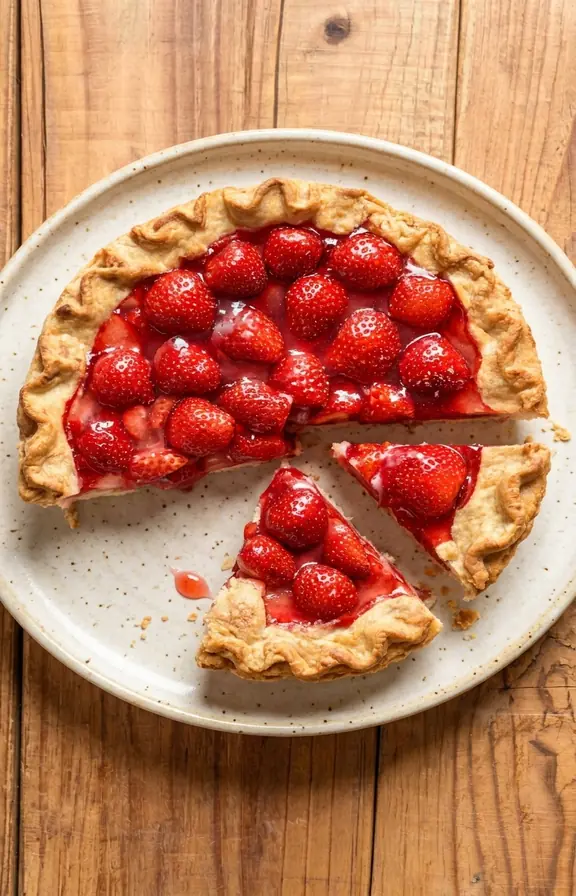
Glossy, fully glazed fresh strawberry pie built on a juice-yield glaze method that concentrates real berry flavor. A cornstarch-pectin blend keeps the filling sliceable for hours, even outdoors.
- 9-inch pie plate, preferably glass
- Rolling pin
- Pie weights or dried beans
- Parchment paper
- Fine mesh strainer
- Medium saucepan
- Liquid measuring cup
- Potato masher or fork
- 1 single 9-inch pie crust, homemade or store-bought
- 2 lbs (900g) fresh strawberries, hulled and halved, divided
- 3/4 cup (150g) granulated sugar
- 3 tablespoons (24g) cornstarch
- 1 teaspoon powdered fruit pectin
- 1 tablespoon fresh lemon juice
- Pinch of fine sea salt
- Blind bake the crust Roll out the pie dough and fit it into a 9-inch pie plate. Dock the bottom thoroughly with a fork. Line with parchment paper and fill completely with pie weights or dried beans. Bake at 425°F for 15 minutes, then remove the weights and parchment and bake for another 8 to 10 minutes until the entire base is evenly golden brown. Cool completely on a wire rack.
- Macerate the strawberries Set aside about two thirds of the halved strawberries for the topping. Crush the remaining third with a fork or potato masher in a bowl, then toss with the sugar. Let sit for 30 minutes, stirring once halfway through, until a deep red pool of juice has formed at the bottom of the bowl.
- Measure the juice and build the glaze Strain the macerated berries through a fine mesh strainer set over a measuring cup, pressing gently to extract the juice. You should have roughly 3/4 to 1 cup of liquid. Whisk the cornstarch and pectin together in a small bowl to prevent clumping, then whisk this mixture into the strained juice along with the lemon juice and salt.
- Cook the glaze Pour the juice and thickener mixture into a saucepan along with the crushed strawberry solids. Bring to a gentle simmer over medium heat, stirring constantly. Cook for 4 to 5 minutes until the mixture turns deep red, translucent, and thick enough to coat the back of a spoon. Remove from heat and let cool to room temperature, about 20 minutes.
- Assemble the pie Gently fold the reserved whole and halved strawberries into the cooled glaze until every piece is coated. Pour the mixture into the blind-baked crust, arranging the prettiest berries pointed-side up near the top for an even, glossy finish.
- Chill before slicing Refrigerate the assembled pie uncovered for the first hour to allow the surface to set, then cover loosely and chill for a minimum of 3 hours total before slicing. The filling will continue firming up during this time, so resist cutting into it early.
- Serve Slice with a sharp, thin knife wiped clean between cuts for the cleanest presentation. Serve cold, optionally topped with lightly sweetened whipped cream.
Nutritional values are estimates calculated using standard USDA food composition data. Actual values will vary based on strawberry ripeness, crust ingredients, and exact slice size.