Our site contains ads and uses Amazon affiliate links. We may earn a small commission at no extra cost to you. We know ads can be distracting, and we’re sorry for any inconvenience they cause. It helps us keep the site running. Thanks for your understanding and supporting us!
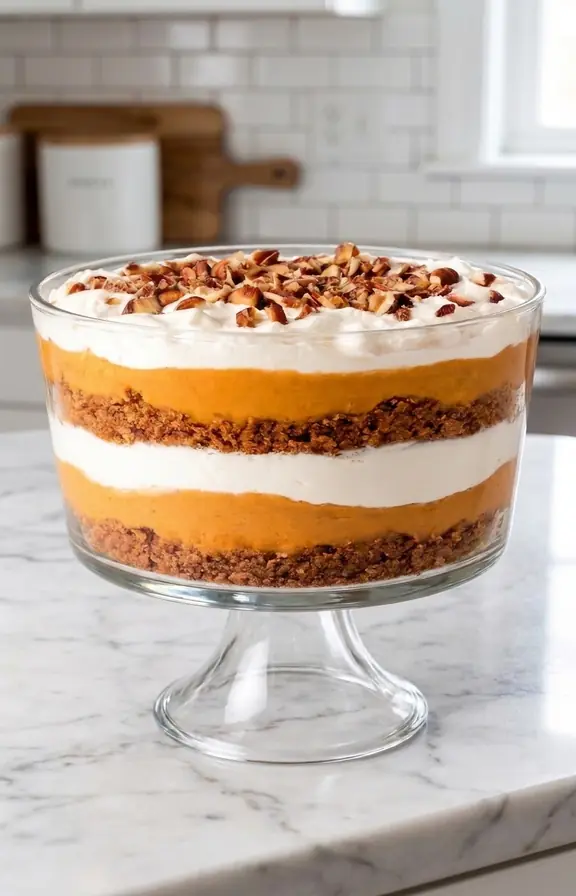
A pumpkin trifle looks easy right up until you slice into it the next day. The bottom has turned to mush, the whipped cream has slumped, and the crisp gingersnap layer is gone.
That is not bad luck. It is moisture, and it moves through a trifle the same way it moves through soil.
This article walks through exactly why that happens, then builds a version designed to fight it from the first layer.
Why Pumpkin Trifle Layers Turn Watery Instead of Set
Canned pumpkin puree looks thick straight out of the can. It is not as dry as it looks.
Pumpkin puree is close to ninety percent water by weight. Fold it straight into a cream cheese filling and that water has nowhere to go but into the layer below it.
The cookie crumbs sitting under that filling act like a sponge. Within a few hours they absorb enough moisture to turn from crisp crumbs into a soft, gummy layer that never firms back up.
The Two-Lever Fix: A Blotted Filling and Stabilized Cream
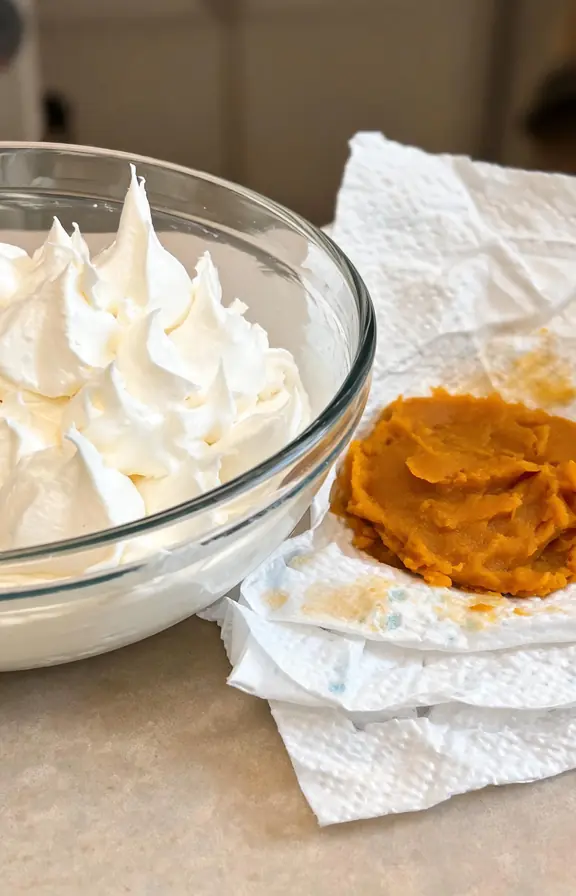
Blotting the pumpkin puree between paper towels for a few minutes pulls out a meaningful amount of surface water before it touches the cream cheese.
That single step keeps the filling thick enough to hold its shape when you spoon it over crumbs, instead of slowly soaking downward.
The second lever is the whipped cream. Plain whipped cream is mostly trapped air held by a thin network of fat, and that structure collapses within a few hours at refrigerator temperature.
Full-fat block cream cheese solves a similar problem on the filling side. It carries less water than tub-style cream cheese, and its structure holds firm even after hours in the fridge.
Our silky cream cheese frosting recipe explains why cold, full-fat block cream cheese behaves so differently from the tub version, and the same rule applies here.
Building Layers That Hold for Two Days, Not Two Hours
Cookie choice matters more than most recipes admit. Gingersnaps hold their crunch far longer than soft spice cake because they start with almost no moisture of their own.
A cake layer starts damp and only gets softer. A gingersnap layer starts dry, so it can absorb some moisture from the filling and still keep bite for a full day.
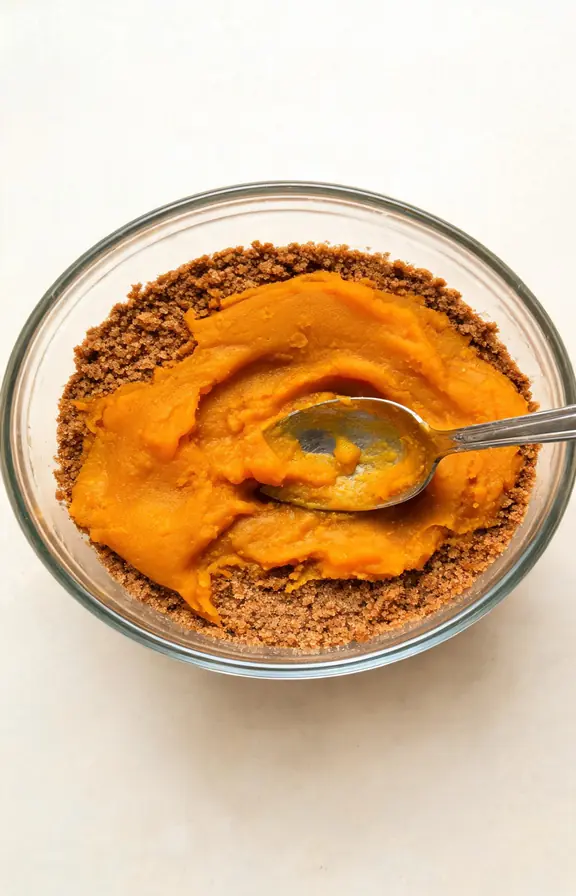
Keep the crumb layer thin. A thick cookie layer has more surface area touching the filling, which speeds up softening instead of slowing it down.
Make the filling and cream layers noticeably thicker than the crumb layer. That ratio keeps the crunch factor concentrated instead of spread thin and lost.
Is Pumpkin Trifle the Same Thing as Pumpkin Cheesecake?
Not exactly, even though the flavors overlap. A trifle is defined by its layers, built in a clear glass dish so you can see the structure.
Pumpkin cheesecake bakes into a single dense disc with a crust on the bottom only. This trifle borrows the cheesecake flavor profile, then spreads it across repeating layers with cookies mixed throughout instead of just on the bottom.
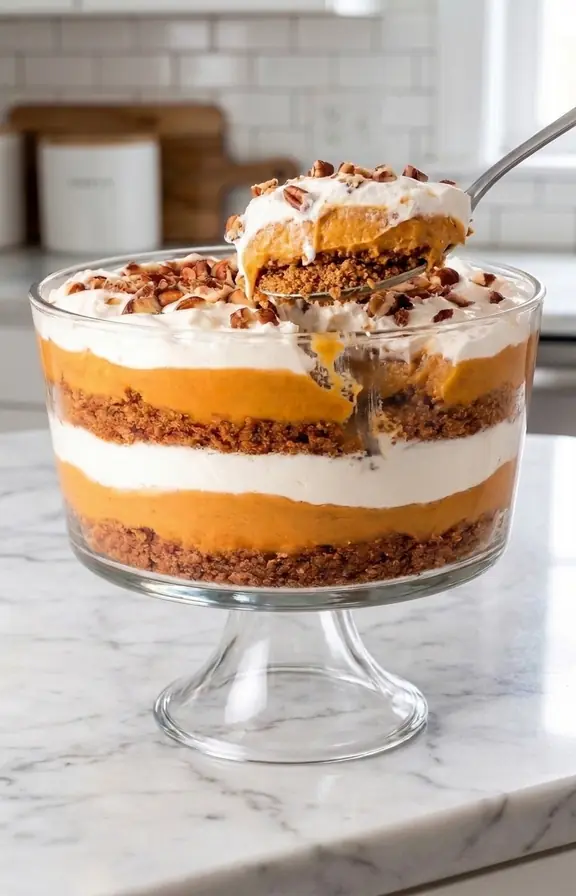
If you want that same pumpkin cheesecake flavor without any layering at all, our three-ingredient no-bake cheesecake filling is the base this trifle’s filling was built from.
Frequently Asked Questions
Easy Pumpkin Trifle
A no-bake layered pumpkin dessert with blotted pumpkin cheesecake filling, gelatin-stabilized whipped cream, and crunchy gingersnap crumbs, built to stay set for two days instead of one.
- Trifle bowl or large clear glass bowl
- Stand mixer or hand mixer
- Paper towels (for blotting pumpkin)
- Small microwave-safe bowl (for gelatin)
- Zip-top bag and rolling pin (for crushing cookies)
- Rubber spatula
- Kitchen scale (recommended)
- 280g (about 32 cookies) gingersnap cookies, crushed
- 450g (16 oz, 2 blocks) full-fat cream cheese, softened
- 120g (1 cup) powdered sugar
- 370g (1 3/4 cups) pumpkin puree, blotted
- 2 teaspoons pumpkin pie spice
- 1 teaspoon vanilla extract
- 1 teaspoon unflavored gelatin
- 1 tablespoon cold water
- 480ml (2 cups) heavy whipping cream, cold
- 65g (1/2 cup) powdered sugar
- 1 teaspoon vanilla extract
- 70g (1/2 cup) toasted pecans, chopped
- 2 tablespoons reserved gingersnap crumbs
- Bloom the gelatin Sprinkle 1 teaspoon unflavored gelatin over 1 tablespoon cold water in a small microwave-safe bowl. Let it sit for 5 minutes until wrinkled and firm. Microwave for 5 to 10 seconds until fully melted and clear, then set aside to cool slightly.
- Blot the pumpkin Spread the pumpkin puree between two layers of paper towels. Press gently to absorb excess moisture for a few minutes. Set aside.
- Make the pumpkin filling Beat the softened cream cheese in a large bowl until smooth and lump-free, about 2 minutes. Add the powdered sugar and beat until combined. Mix in the blotted pumpkin, pumpkin pie spice, and vanilla extract until fully incorporated.
- Whip the stabilized cream In a separate cold bowl, beat the heavy whipping cream on medium speed until soft peaks form. Add the powdered sugar and vanilla extract and continue beating. With the mixer running, stream in the cooled gelatin mixture and beat until stiff peaks form.
- Crush the cookies Place the gingersnap cookies in a zip-top bag and crush with a rolling pin into fine crumbs. Reserve 2 tablespoons of crumbs for the topping.
- Layer the trifle In a trifle bowl, spread a thin layer of gingersnap crumbs on the bottom. Spoon a layer of pumpkin filling on top, followed by a layer of stabilized whipped cream. Repeat the layers two more times, ending with whipped cream on top.
- Top and chill Sprinkle the toasted pecans and the reserved gingersnap crumbs over the top layer. Cover and refrigerate for at least 4 hours, or overnight, before serving.
Nutritional values are estimates calculated using standard USDA food composition data. Actual values will vary based on exact ingredient brands, cookie size, and topping amount.