Our site contains ads and uses Amazon affiliate links. We may earn a small commission at no extra cost to you. We know ads can be distracting, and we’re sorry for any inconvenience they cause. It helps us keep the site running. Thanks for your understanding and supporting us!
Recipe at a Glance
- Prep Time: 10 minutes
- Cook Time: 15 minutes
- Total Time: 25 minutes
- Servings: 4 servings
- Diet Type: Vegetarian
- Cuisine: French
Are you craving a breakfast that feels indulgent yet comes together in minutes?
Classic French toast transforms humble bread into a golden, custardy masterpiece that your family will devour.
The secret lies in using day-old bread and finding the perfect egg-to-milk ratio, which prevents soggy centers while creating those irresistible caramelized edges.
This foolproof recipe delivers restaurant-quality results at home, complete with maple syrup dripping down every delicious bite.
Why This Recipe Stands Out
- The combination of cinnamon, vanilla, and nutmeg creates a warm, comforting flavor profile that elevates basic bread into something special.
- Day-old bread absorbs the custard mixture perfectly without becoming mushy or falling apart during cooking.
- Butter-fried slices develop a crispy, caramelized exterior while staying creamy inside.
- Maple syrup adds authentic sweetness with subtle woody undertones that complement the spiced bread beautifully.
- This recipe serves four people, making it ideal for family breakfasts or weekend brunch gatherings.
Tips for Success
- Use thick-cut bread (at least three-quarter inch slices) so your French toast maintains structural integrity while absorbing custard.
- Slice your bread the day before and leave it uncovered overnight to allow it to dry out slightly.
- Whisk your egg mixture thoroughly to distribute cinnamon and vanilla evenly throughout each slice.
- Let each bread slice soak for exactly two seconds per side, no longer, to prevent oversaturation.
- Use a nonstick skillet or well-seasoned cast iron to prevent sticking without excess oil.
- Cook over medium heat rather than high heat to ensure the interior cooks through before the exterior burns.
- Keep finished French toast warm on a plate in a 200-degree oven while you cook remaining batches.
Common Mistakes to Avoid
- Using fresh bread causes French toast to become soggy and fall apart during cooking or eating.
- Oversaturating bread in the custard mixture results in a mushy texture rather than a custardy center.
- Cooking at too high a temperature burns the exterior before the inside cooks through properly.
- Skipping the cinnamon and nutmeg creates a one-dimensional vanilla flavor that lacks warmth and depth.
- Forgetting to whisk the eggs and milk thoroughly leaves unmixed streaks of egg white in your finished toast.
- Using low-quality or imitation maple syrup diminishes the sophisticated flavor your homemade French toast deserves.
Creative Serving Ideas
- Top your French toast with fresh berries, whipped cream, and a drizzle of pure maple syrup for an elegant brunch presentation.
- Layer sliced bananas, toasted pecans, and a dusting of powdered sugar for a decadent twist.
- Serve alongside crispy bacon and fresh fruit for a complete breakfast spread.
- Create a French toast board with various toppings including granola, Greek yogurt, fresh honey, and chocolate chips for guests to customize.
- Sandwich your cooked French toast with cream cheese and jam for a delightful dessert-like treat.
- Pair with a fruit compote made from blueberries or strawberries for added tartness and color.
Frequently Asked Questions
Can I Make French Toast Ahead of Time?
Yes, you can prepare the custard mixture the night before and store it in the refrigerator in a sealed container.
You can also cook your French toast in advance and reheat it in a 350-degree oven for five minutes before serving.
However, freshly cooked French toast tastes best immediately after cooking while the exterior remains crispy.
What Type of Bread Works Best?
Brioche, challah, and thick-cut white bread are ideal choices for their rich texture and custard-absorbing qualities.
Avoid thin sandwich bread or overly dense whole wheat varieties that don’t cook evenly.
Day-old bread works significantly better than fresh bread because it has lost surface moisture.
Can I Use Milk Alternatives?
Yes, almond milk, oat milk, or cashew milk work beautifully as substitutes for dairy milk.
Avoid very thin milk alternatives like skim almond milk, as they lack the richness needed for proper custard formation.
Coconut milk creates an especially luxurious, creamy custard mixture.
How Do I Keep French Toast Crispy?
Cook your slices on a preheated, well-buttered skillet over medium heat for optimal crispiness.
Avoid stacking warm French toast on top of each other, as steam creates sogginess.
Place finished slices on a wire rack in a warm oven instead of a solid plate.
Can I Freeze Cooked French Toast?
Absolutely, you can freeze cooked French toast in a freezer-safe container for up to three months.
Reheat frozen slices directly in a toaster or 350-degree oven until warmed through and crispy.
This makes French toast an excellent make-ahead breakfast option for busy mornings.
Ingredients You’ll Need
- 8 slices day-old bread (brioche or challah preferred)
- 3 large eggs
- 1/2 cup whole milk
- 1 teaspoon vanilla extract
- 1 teaspoon ground cinnamon
- 1/4 teaspoon ground nutmeg
- 1/4 teaspoon salt
- 2 tablespoons butter (for cooking)
- Pure maple syrup (for serving)
- Powdered sugar (optional, for garnish)
Tools to Use
- Shallow bowl or wide dish
- Whisk
- Large nonstick skillet or cast iron pan
- Spatula
- Tongs
- Cutting board
- Serrated bread knife
- Wire rack
- Baking sheet
- Measuring cups and spoons
How to Make the Classic French Toast With Maple Syrup
Step-1: Prepare Your Bread
Slice your day-old bread into thick pieces, approximately three-quarter inch to one inch thick.
If your bread is fresh, slice it and place slices uncovered on a baking sheet for several hours to dry slightly.
Thicker slices prevent the bread from falling apart when dipped in the custard mixture.
Step-2: Whisk the Custard Mixture
Crack three large eggs into a shallow bowl or wide dish.
Add one-half cup of whole milk, one teaspoon vanilla extract, one teaspoon ground cinnamon, one-quarter teaspoon ground nutmeg, and one-quarter teaspoon salt.
Whisk vigorously for about one minute until the mixture is well combined and slightly frothy.
Ensure no streaks of egg white remain visible in your custard.
Step-3: Heat Your Skillet
Place a large nonstick skillet or cast iron pan over medium heat.
Allow the pan to preheat for two to three minutes until it’s evenly heated.
Add one tablespoon of butter and let it melt completely, coating the entire cooking surface.
Step-4: Dip the Bread
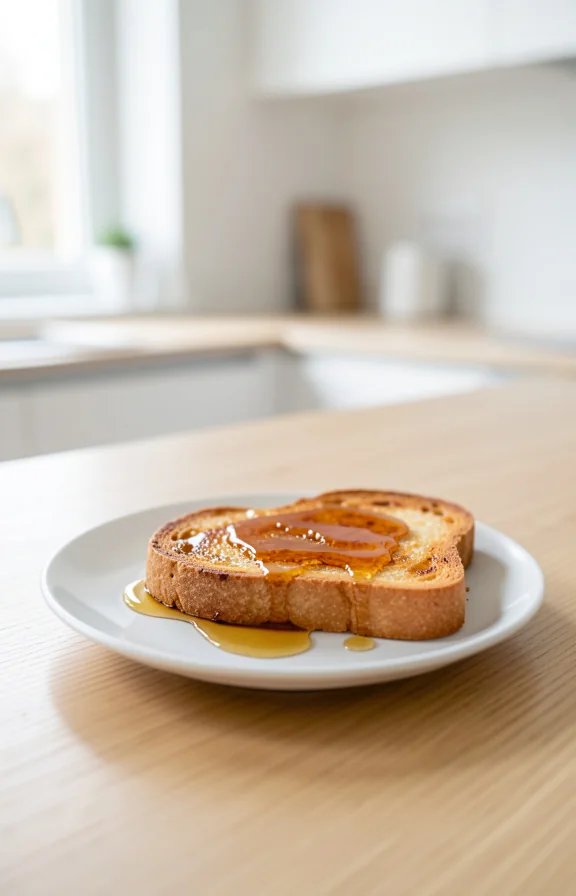
Take one slice of bread and dip it into the custard mixture for exactly two seconds on each side.
Dipping too quickly leaves the center dry, while dipping too long creates a mushy interior.
Gently shake off any excess custard before placing the slice onto your preheated skillet.
Step-5: Cook the First Side
Once your dipped bread hits the hot skillet, listen for a satisfying sizzle that indicates proper cooking.
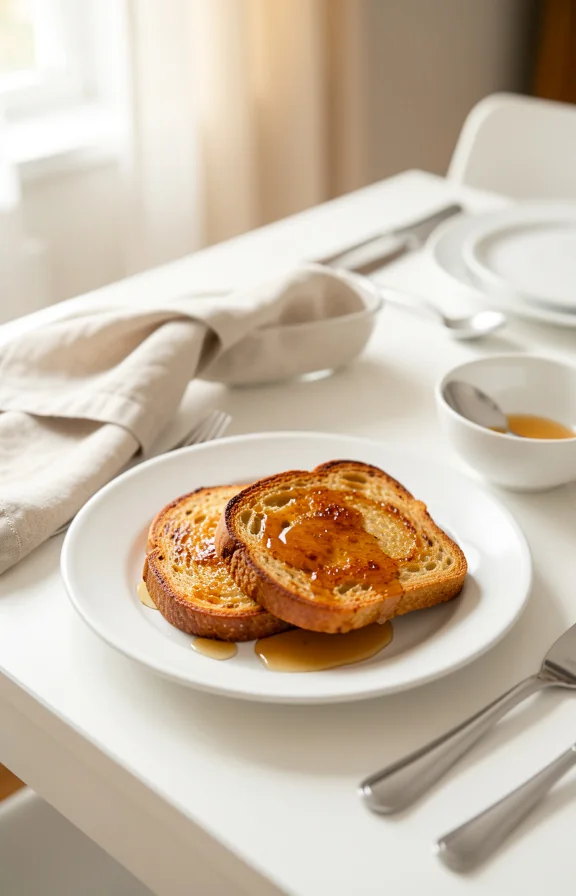
Cook undisturbed for three to four minutes until the bottom develops a beautiful golden-brown color with crispy, caramelized edges.
Resist the urge to move or flip your French toast prematurely, as this prevents proper browning.
Step-6: Flip and Cook the Second Side
Using a spatula or tongs, carefully flip your French toast over in one smooth motion.
Cook the second side for another three to four minutes until it matches the color and crispiness of the first side.
The exterior should be deep golden brown while the interior remains creamy and custard-like.
Step-7: Keep Warm While Cooking Remaining Slices
Transfer your finished French toast to a wire rack placed on a baking sheet and keep it warm in a 200-degree oven.
Using a wire rack allows steam to escape, preventing the bottom from becoming soggy.
Repeat steps four through six with your remaining bread slices, adding more butter to the skillet as needed.
Step-8: Serve With Maple Syrup
Arrange your warm French toast on serving plates and drizzle generously with pure maple syrup.
Add optional toppings such as powdered sugar, fresh berries, whipped cream, or toasted nuts.
Serve immediately while the exterior is still crispy and the interior remains warm and custardy.
Nutritional Information
Per serving (2 slices):
- Calories: 320
- Protein: 10g
- Fat: 12g
- Carbohydrates: 42g
- Fiber: 1g
- Sodium: 380mg
- Sugar: 15g
Note: Nutritional values are approximate and may vary based on specific ingredient brands used.