Our site contains ads and uses Amazon affiliate links. We may earn a small commission at no extra cost to you. We know ads can be distracting, and we’re sorry for any inconvenience they cause. It helps us keep the site running. Thanks for your understanding and supporting us!
Most pumpkin thumbprint cookies spread flat in the oven. The baker blames the recipe. But the real problem is almost always the pumpkin itself.
Canned pumpkin puree contains significant moisture. That moisture softens the butter-flour structure and causes the cookies to melt outward before the edges set. The result is a flat cookie with a blown-out thumbprint and filling that slides off the sides.
This recipe treats pumpkin for what it is: a high-moisture ingredient that needs to be handled deliberately. The dough uses a shortbread ratio that accounts for the extra liquid. The chilling step is not optional. And the filling goes in after baking, not before, which is what every top competitor gets wrong.
Why Most Pumpkin Thumbprint Cookies Spread and Crack
Thumbprint cookies depend on one structural principle: the fat-to-flour ratio must be high enough to produce a tender crumb but low enough to hold the cookie’s dome shape under heat.
Traditional shortbread uses a 1:2:3 ratio of sugar to butter to flour. It works because the dough contains no additional moisture beyond what the butter carries.
When you add pumpkin puree, you add water. A standard 15-ounce can of pumpkin puree is roughly 85 to 90 percent water by weight. Even two tablespoons of puree in a small batch adds meaningful liquid to the dough.
That extra moisture keeps the gluten from setting quickly in the oven, which gives the fat more time to melt and push the cookie outward before structure forms.
The fix is not to add more flour. Adding flour makes the cookie dry and chalky. The fix is to chill the dough until the fat is firm again, then bake quickly at a slightly higher temperature. This sets the exterior before the center has time to spread.
The Fat Ratio That Keeps These Cookies Tender Without Falling Apart
Shortbread gets its name from the fat content that shortens the gluten strands and produces a crumbly, melt-in-the-mouth texture.
The key variable is how much butter you use relative to flour. Too little butter and the cookie is dry and tough. Too much butter and the cookie cannot hold its shape.
For a pumpkin spice thumbprint, the butter content needs to be slightly lower than classic shortbread to compensate for the moisture coming from the pumpkin puree.
This recipe uses a ratio of approximately 1:2.5 butter to flour by weight, which produces a dough that is firm enough to chill and shape but soft enough to hold a thumbprint without cracking.
Brown butter is an optional but significant upgrade here. Browning the butter removes some of its water content and concentrates the milk solids into nutty, caramelized compounds that amplify the warm spice flavors in the dough.
According to food science research on the Maillard reaction, browning dairy fat at around 250°F produces hundreds of new flavor compounds that regular melted butter simply cannot match.
The recipe below uses regular softened butter for ease, but the brown butter variation is outlined at the end of the instructions section.
How to Get a Deep, Clean Thumbprint Every Time
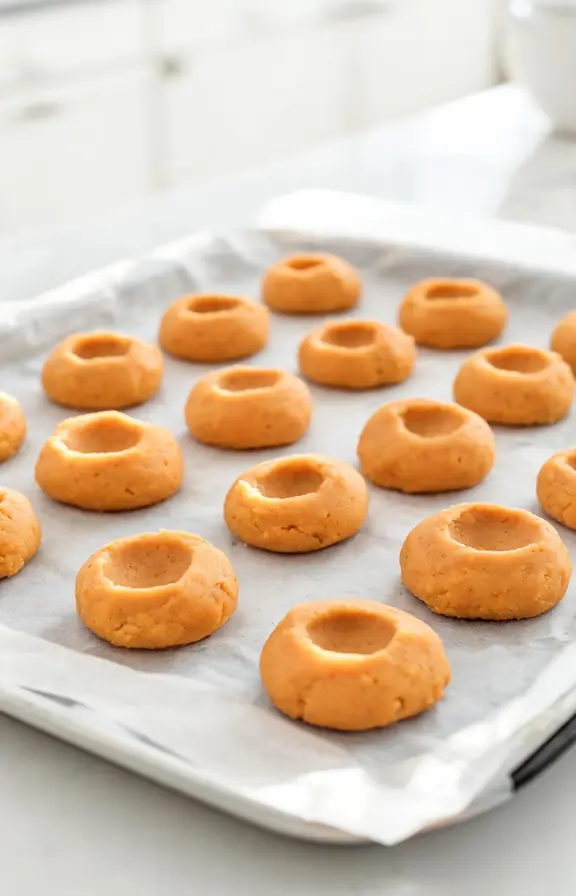
The indentation technique matters more than most bakers realize. The standard method is to press your thumb straight down into the center of a dough ball.
This works for standard shortbread. It fails for pumpkin dough because the sides of the wet dough split under lateral pressure.
A better method: use the rounded back of a half-teaspoon measuring spoon or a cork from a wine bottle. Press with a twisting motion rather than straight down.
The twisting action compresses the dough evenly around the well rather than pushing it outward, which keeps the walls intact. Do this while the cookies are still warm from the oven, within 60 seconds of pulling them out.
The depth of your indentation also determines how much filling each cookie can hold. A shallow well (about 4mm deep) holds just enough filling to sit flush with the surface.
A deeper well (6 to 8mm) creates a cookie that looks dramatic and holds a generous filling. Go for depth here. The pumpkin spice filling in this recipe is thick enough to sit proud of the cookie surface without sliding off.
If you are building a cookie tray for Thanksgiving or a holiday cookie exchange, consistent well depth across all 24 cookies makes the finished tray look professional.
For more ideas on creating beautiful cookie presentations, see how to get a bakery-quality finish on decorated cookies with the right icing technique.
The Pumpkin Spice Filling: Thick Enough to Hold Its Shape
Most published pumpkin thumbprint recipes use one of three fillings: straight pumpkin puree (too wet, slides out), cream cheese blended with pumpkin (better but often too soft to hold a clean shape), or white chocolate ganache tinted with pumpkin spice (solid flavor but hides the actual pumpkin).
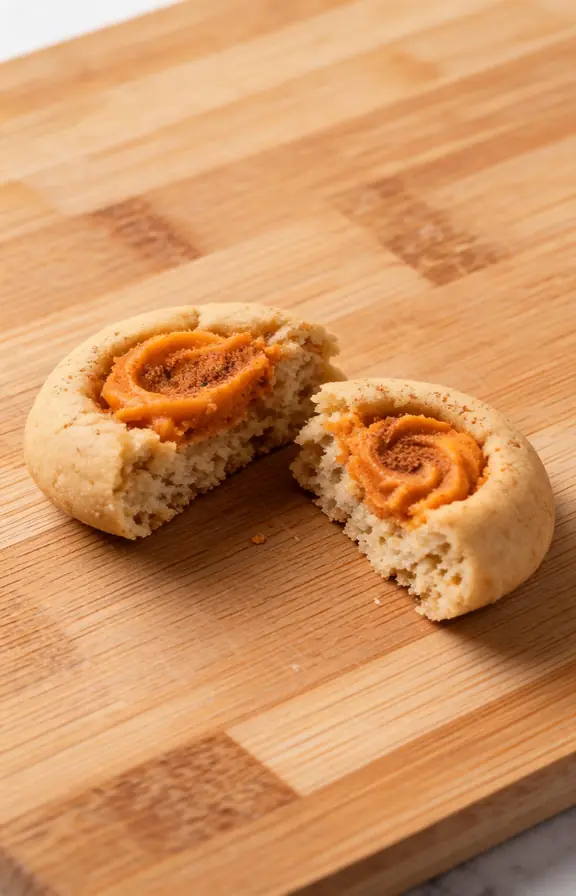
This recipe takes a different approach. The filling uses cream cheese as the structural base with a small amount of powdered sugar for sweetness and a measured quantity of pumpkin puree for flavor.
The ratio is deliberately low on puree: only two tablespoons per batch. This keeps the filling thick enough to pipe, hold its shape at room temperature, and stay put when the cookie is tilted.
The filling is also spiced independently from the cookie dough. This is an intentional double-layer approach. The dough carries cinnamon, nutmeg, and a small amount of ginger.
The filling carries the same spices at a lighter concentration. When you eat the cookie whole, the two spice layers compound into something that tastes significantly more complex than a single-spice-layer cookie.
If you love spiced cream cheese in your fall baking, the same silky cream cheese base technique that works perfectly on pumpkin bars and spiced cakes also works beautifully here as the filling foundation.
Storing, Stacking, and Freezing These Cookies
Pumpkin spice thumbprint cookies store well but have specific needs because of the cream cheese filling. Any cookie with a cream cheese-based center must be refrigerated after the first day at room temperature.
Cream cheese at room temperature for more than two hours enters the food safety risk zone.
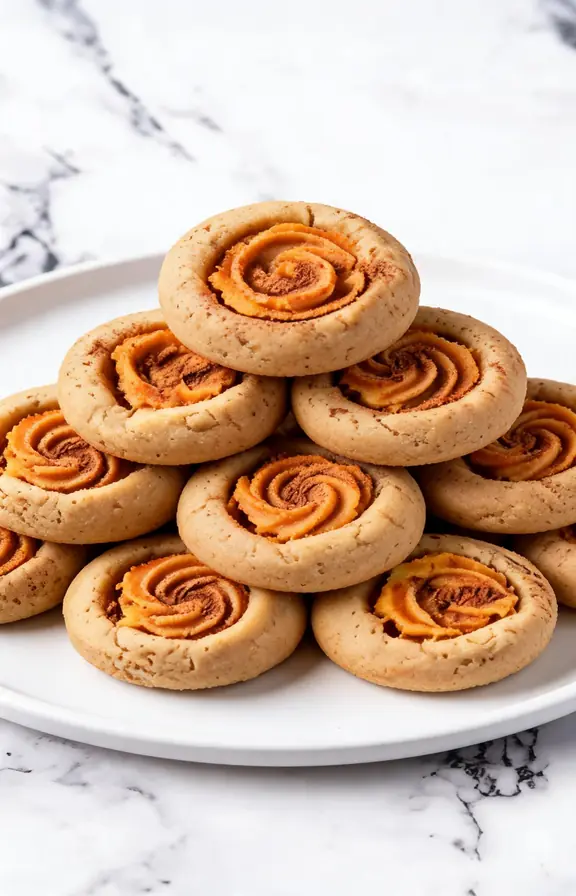
Store filled cookies in a single layer in an airtight container in the refrigerator for up to four days. Do not stack them without parchment between layers. The cream cheese filling will bond to the bottom of the cookie above it and pull the filling out when you separate them.
For freezing, freeze the unfilled cookie shells only. Wrap cooled shells in a single layer on a parchment-lined tray for two hours, then transfer to a zip-top bag. Freeze for up to two months.
When ready to serve, thaw at room temperature for 30 minutes, re-press the indentation with your spoon if it has puffed slightly, fill, and serve. This method gives you a genuinely fresh cookie at any point during the fall season with minimal same-day effort.
Frequently Asked Questions
Pumpkin Spice Thumbprint Cookies
Tender pumpkin spice shortbread cookies with a creamy pumpkin cream cheese filling. Chilled dough stops spreading. Filling goes in after baking for a clean, deep well every time.
- Large mixing bowl
- Rubber spatula or wooden spoon
- Cookie scoop (1 tablespoon size)
- Two rimmed baking sheets
- Parchment paper
- Half-teaspoon measuring spoon (for pressing indentations)
- Wire cooling rack
- Piping bag or zip-top bag with corner snipped (for filling)
- Electric hand mixer (for filling only)
- 1 cup (225g) unsalted butter, softened to room temperature
- 2/3 cup (133g) granulated sugar
- 1/4 cup (60g) pure pumpkin puree (not pumpkin pie filling)
- 1 large egg yolk, room temperature
- 1 teaspoon pure vanilla extract
- 2 1/2 cups (312g) all-purpose flour
- 1 1/2 teaspoons pumpkin pie spice
- 1/2 teaspoon ground cinnamon
- 1/4 teaspoon fine sea salt
- 6 oz (170g) full-fat block cream cheese, room temperature
- 3/4 cup (90g) powdered sugar, sifted
- 2 tablespoons (30g) pure pumpkin puree
- 1/2 teaspoon pumpkin pie spice
- 1/4 teaspoon pure vanilla extract
- Make the cookie dough In a large bowl, beat the softened butter and granulated sugar together with a wooden spoon or rubber spatula until pale and fluffy, about 2 minutes by hand. Add the pumpkin puree, egg yolk, and vanilla extract. Mix until fully combined. The mixture may look slightly curdled after adding the pumpkin. This is normal and will smooth out once the flour is added. Add the flour, pumpkin pie spice, cinnamon, and salt. Mix until no dry streaks remain and a soft dough forms. Do not overmix. The dough will be soft but should not be sticky to the touch.
- Shape and chill the dough Line two baking sheets with parchment paper. Scoop the dough into 1-tablespoon portions and roll each between your palms into a smooth ball. Place the balls 2 inches apart on the prepared baking sheets. Do not press the indentation yet. Cover the trays loosely with plastic wrap and refrigerate for at least 30 minutes. Do not skip this step. The chill time is what prevents the cookies from spreading flat in the oven.
- Bake the cookies Preheat the oven to 350°F (175°C). Bake the chilled dough balls one tray at a time for 11 to 13 minutes, until the edges are pale golden and the tops look set and slightly matte. The centers will look underdone. That is correct. They firm up as they cool.
- Press the indentations immediately after baking Remove the tray from the oven. Within 60 seconds, press the back of a rounded half-teaspoon measuring spoon into the center of each cookie using a firm twisting motion. Press to a depth of about 6 to 8mm. Work quickly while the cookies are warm and pliable. If any cracks form along the edges, smooth them immediately with a damp fingertip. Transfer the cookies to a wire rack and allow to cool completely before filling. This takes about 30 minutes.
- Make the pumpkin cream cheese filling In a medium bowl, beat the room-temperature cream cheese with an electric hand mixer on medium speed for 1 to 2 minutes until completely smooth with no lumps. Add the sifted powdered sugar, pumpkin puree, pumpkin pie spice, and vanilla. Beat on low to combine, then increase to medium-high and whip for 1 minute until the filling is fluffy and holds a soft peak. The filling should be thick enough to pipe without drooping. If it feels too soft, refrigerate for 10 minutes before filling the cookies.
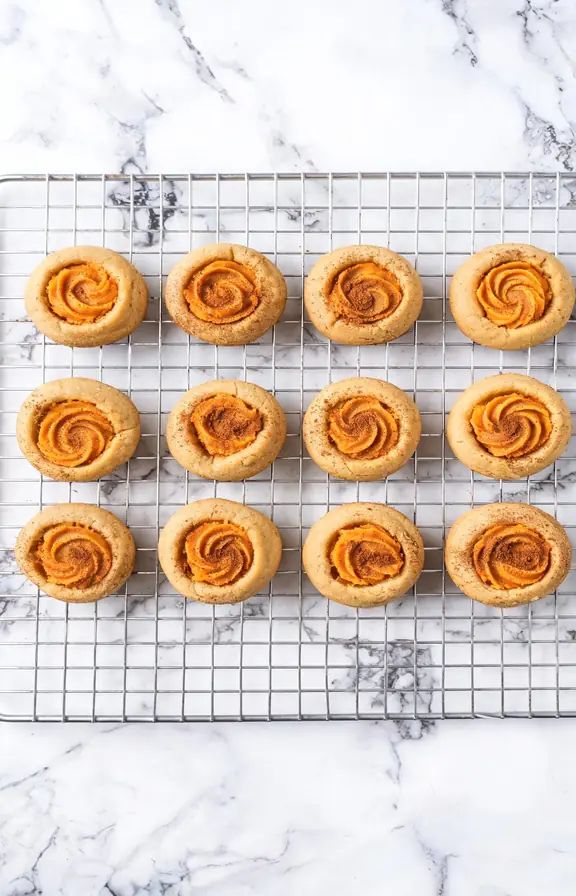
- Fill and serve Transfer the filling to a piping bag or a zip-top bag with one corner snipped off. Pipe the filling into each indentation, starting at the center and working outward in a small circular motion to fill the well completely. The filling should sit slightly proud of the cookie surface. Dust lightly with a pinch of cinnamon or pumpkin pie spice for a finished look. Serve immediately or refrigerate in a single layer until ready to serve.
Nutritional values are estimates calculated using standard USDA food composition data. Actual values will vary based on specific brands of cream cheese, butter, and pumpkin puree used, and the exact size of each cookie.