Our site contains ads and uses Amazon affiliate links. We may earn a small commission at no extra cost to you. We know ads can be distracting, and we’re sorry for any inconvenience they cause. It helps us keep the site running. Thanks for your understanding and supporting us!
📊Recipe at a Glance
- Prep Time: 20 minutes (plus 1-2 hours rise time)
- Cook Time: 20-25 minutes
- Total Time: 2 hours 45 minutes
- Servings: 10-12 muffins
- Diet Type: Vegetarian
- Cuisine: American
Forget everything you know about store-bought English muffins.
Those pale, rubbery discs do not deserve a place on your breakfast table.
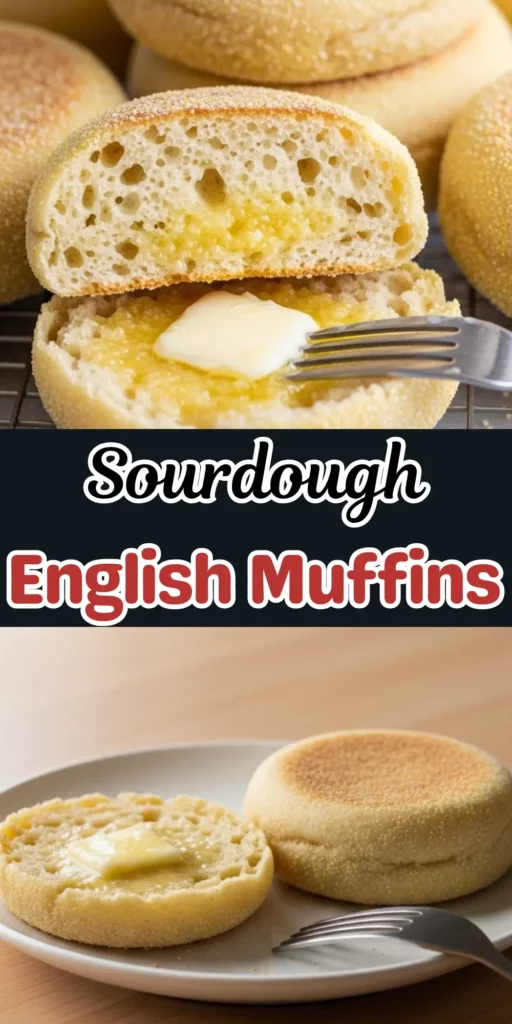
These sourdough discard English muffins are the real deal. Crispy on the outside. Pillowy and tangy on the inside.
Loaded with deep, craggly nooks built for melted butter. They come together with pantry staples and your leftover discard.
One batch and you will never reach for a store-bought package again.
Why This Recipe Stands Out
- Zero Waste Baking: This recipe gives new life to sourdough discard that would otherwise go to waste.
- No Special Equipment Needed: You do not need a stand mixer. A bowl and a wooden spoon are enough.
- Better Than Store-Bought: These muffins are free from preservatives, hidden sugars, and artificial additives.
- Make-Ahead Friendly: You can prepare the dough overnight and cook them fresh in the morning.
- Perfect Nooks and Crannies: The right hydration and griddle technique creates those signature butter-catching pockets.
- Flexible Recipe: You can make them same-day or use a cold overnight ferment for deeper flavor.
Ingredients You’ll Need
For the Dough:
- 2¾ cups (350g) bread flour or all-purpose flour
- ⅔ cup (140g) sourdough discard (unfed)
- 1 cup (240g) warm whole milk
- 2 tablespoons (28g) unsalted butter, softened
- 1 tablespoon honey
- 1 teaspoon instant yeast
- 2 teaspoons kosher salt
For Dusting:
- ½ cup cornmeal or semolina flour (for dusting pan and muffins)
Tools to Use
- Large mixing bowl
- Wooden spoon or dough whisk
- Stand mixer with dough hook (optional)
- Rolling pin
- 3-inch round biscuit cutter or drinking glass
- Cast iron skillet or griddle
- Baking sheet
- Wire cooling rack
- Kitchen scale
- Plastic wrap or damp kitchen towel
- Dough scraper or spatula
How to Make the Sourdough Discard English Muffins
Step-1: Mix the Wet Ingredients
Pour the warm milk into a large mixing bowl.
Add the softened butter and honey.
Whisk everything together until the butter is fully incorporated.
Sprinkle the instant yeast over the surface of the milk mixture.
Let it sit for 5 to 10 minutes until it turns slightly foamy.
Add the sourdough discard and stir gently until everything is combined.
Step-2: Add the Dry Ingredients and Form the Dough
Add the bread flour and kosher salt to the wet mixture.
Stir with a wooden spoon or dough whisk until a shaggy dough forms.
If using a stand mixer, switch to the dough hook and knead on medium-low for 5 to 7 minutes.
If kneading by hand, turn the dough onto a lightly floured surface and knead for 8 to 10 minutes.
The dough should feel soft, smooth, and slightly tacky but not sticky.
If the dough is too sticky, add flour one tablespoon at a time.
Step-3: First Rise
Lightly oil a large bowl and place the dough inside.
Cover the bowl with plastic wrap or a damp kitchen towel.
Set the bowl in a warm spot in your kitchen.
Let the dough rise for 60 to 90 minutes until it has doubled in size.
For a deeper, tangier flavor, place the covered bowl in the refrigerator and let it cold-proof overnight for up to 12 hours.
Step-4: Shape the Muffins
Generously dust a clean work surface and a baking sheet with cornmeal.
Turn the risen dough out onto the cornmeal-dusted surface.
Press or roll the dough to about ¾ to 1 inch thickness.
Use a 3-inch biscuit cutter or round glass to cut out your muffins.
Press each round into the cornmeal on both sides so they are fully coated.
Place the shaped muffins onto the prepared baking sheet.
Gather the dough scraps, stack them, re-roll, and cut more rounds.
Step-5: Second Rise
Cover the shaped muffins loosely with a kitchen towel.
Let them rest and puff up for 30 to 45 minutes.
They should look slightly puffy and airy before cooking.
Step-6: Cook on the Griddle
Heat a cast iron skillet or griddle over medium-low heat.
Do not add oil or butter to the pan; the cornmeal coating prevents sticking.
Carefully transfer 3 to 4 muffins to the pan, leaving space between them.
Cook them for 5 to 7 minutes on the first side without pressing them down.
Flip each muffin gently and cook for another 5 to 7 minutes on the other side.
The outside should be deep golden brown and the internal temperature should reach 200°F (93°C).
Remove the muffins and place them on a wire rack to cool.
Repeat with the remaining muffins.
Step-7: Split and Serve
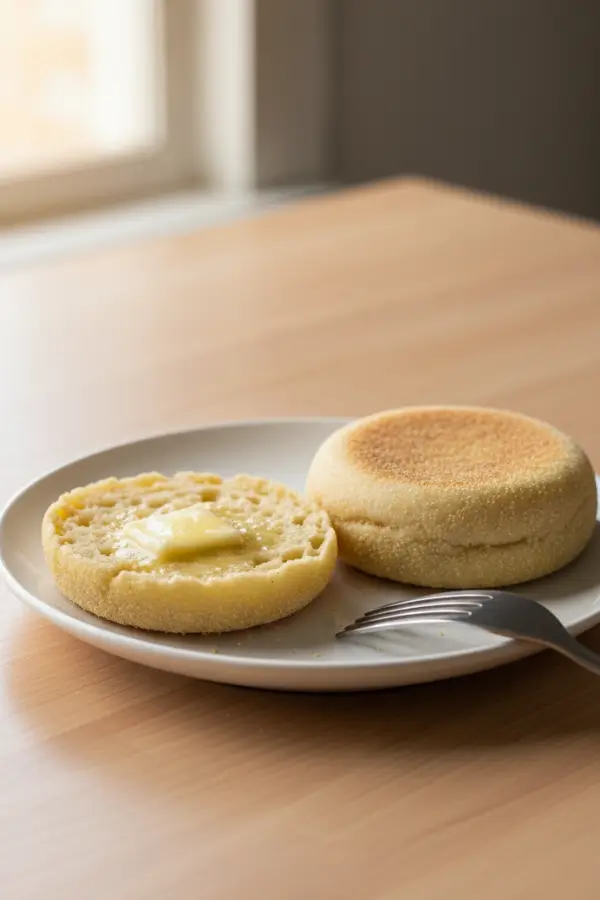
Allow the muffins to cool for at least 10 minutes before splitting.
Always use a fork to split them, not a knife.
Piercing around the edges with a fork preserves all the beautiful nooks and crannies inside.
Pop them in the toaster until golden and fragrant, then slather with your favorite toppings.
Related Recipes You’ll Love to Try
- Sourdough Discard Pretzel Bites: A Creative Recipe for Leftover Starter
- Sourdough Discard Magic: Bake Up a Batch of Blueberry Muffins
- Fresh & Flavorful: The Best Sourdough Discard Tortillas Recipe
- Sourdough Discard Cheese Crackers: Crispy, Cheesy & Zero Waste
Nutritional Information
Estimated per muffin (based on 10 servings):
- Calories: 185 kcal
- Protein: 6g
- Fat: 4g
- Carbohydrates: 32g
- Sodium: 310mg
Note: Nutritional values are estimates and may vary based on ingredients used.
Tips for Success
- Use Warm Milk: Milk that is too hot can kill the yeast. Aim for around 100-110°F (38-43°C).
- Do Not Skip the Cornmeal: Cornmeal on both sides of the muffin prevents sticking and gives the classic English muffin texture.
- Cook Low and Slow: Medium-low heat is essential. High heat burns the outside before the inside is cooked through.
- Check the Internal Temperature: Use a kitchen thermometer to confirm the muffins are done at 200°F (93°C).
- Fork Split for Best Results: A fork creates a rough, craggly surface that catches butter and toppings better than a smooth knife cut.
- Overnight Rise = Better Flavor: The cold overnight ferment in the fridge develops a richer, tangier sourdough flavor.
- Use Older Discard for More Tang: Discard that has been in the fridge for up to a week will give a more pronounced sour flavor.
Common Mistakes to Avoid
- Using Milk That Is Too Hot: Liquid above 120°F (49°C) will kill the yeast and prevent the dough from rising.
- Skipping the Second Rise: Cutting this short gives you dense, flat muffins without the airy interior.
- Cooking on High Heat: This scorches the cornmeal and leaves the center doughy. Always keep the heat at medium-low.
- Pressing the Muffins While Cooking: Resist the urge to flatten them on the griddle. Pressing squashes all the air pockets you worked hard to build.
- Slicing With a Knife: A knife compresses the crumb and ruins the texture. Always use a fork to split.
- Using Too Much Flour When Rolling: Extra flour makes the dough stiff and results in tough muffins. Use just enough to prevent sticking.
- Not Resting the Dough After Shaping: Always give the shaped muffins their second rise. This step is what gives them their light, open crumb.
Creative Serving Ideas
- Classic Butter and Honey: Toast the muffins and spread generously with salted butter and a drizzle of honey for a simple, satisfying breakfast.
- Breakfast Sandwich: Layer a fried egg, a slice of cheese, and crispy turkey bacon on a toasted muffin for a hearty morning meal.
- Jam and Cream Cheese: Spread a thick layer of cream cheese and your favorite homemade strawberry jam for a brunch-worthy treat.
- Mini Pizzas: Use toasted muffin halves as a pizza base. Add tomato sauce, mozzarella, and your favorite toppings, then broil until bubbly.
- Avocado Toast Style: Top a toasted muffin with smashed avocado, a squeeze of lemon, chili flakes, and a poached egg.
- Side Instead of Dinner Rolls: Serve warm muffins alongside soups or stews as a rustic, satisfying bread substitute.
- Peanut Butter and Banana: Spread natural peanut butter on a toasted muffin and top with sliced banana for a quick, nourishing snack.
Frequently Asked Questions
Can I Use Active Sourdough Starter Instead of Discard?
Yes, active starter will work beautifully in this recipe.
If your starter is active and bubbly, you may be able to reduce or omit the commercial yeast.
Keep in mind the rise time may vary depending on how vigorous your starter is.
Do I Have to Use Yeast if I Am Using Sourdough Discard?
For this recipe, commercial yeast is recommended when using discard.
Discard alone does not have enough active wild yeast to reliably leaven the dough.
Adding a small amount of instant yeast ensures a consistent, predictable rise.
How Do I Store Sourdough Discard English Muffins?
Store cooled muffins in an airtight container at room temperature for up to 5 days.
For longer storage, freeze them in a zip-lock bag for up to 3 months.
Reheat frozen muffins by popping them directly into the toaster from frozen.
Why Are My English Muffins Dense?
Dense muffins are usually caused by skipping the second rise or using dough that did not rise enough during the first proof.
Make sure your yeast is fresh and your milk is warm enough to activate it.
Cooking on too high heat can also make the outside set too quickly, preventing the inside from opening up.
Can I Make the Dough Without a Stand Mixer?
Absolutely. This recipe works perfectly when mixed and kneaded entirely by hand.
Knead the dough on a lightly floured surface for about 8 to 10 minutes until smooth and elastic.
The process takes a little more effort but produces equally delicious results.
What is the Best Pan to Cook English Muffins On?
A cast iron skillet is the top choice for even, consistent heat distribution.
A flat griddle or non-stick skillet will also work well.
Avoid thin pans that create hot spots, as these will burn the cornmeal before the muffin cooks through.
Can I Make These Dairy-Free?
Yes, you can substitute a plant-based milk such as oat milk or almond milk for the dairy milk.
Use dairy-free butter in the same quantity as called for in the recipe.
The texture and flavor will be slightly different but still delicious.