Our site contains ads and uses Amazon affiliate links. We may earn a small commission at no extra cost to you. We know ads can be distracting, and we’re sorry for any inconvenience they cause. It helps us keep the site running. Thanks for your understanding and supporting us!
Recipe at a Glance
- Prep Time: 15 minutes
- Cook Time: 22-25 minutes
- Total Time: 40 minutes
- Servings: 12 muffins
- Diet Type: Vegan, Dairy-Free, Egg-Free
- Cuisine: American
Are you searching for a tender, moist vegan muffin that captures the bright essence of fresh lemons without any dairy or eggs?
These vegan lemon poppy seed muffins deliver that perfect balance of zesty citrus flavor and delicate crumb that you’ve been craving.
The secret lies in using aquafaba and plant-based milk to create a structure as reliable as traditional baking, while poppy seeds add those lovely little bursts of nuttiness throughout.
Your mornings will never be the same once you experience the aroma of these golden muffins fresh from the oven, their tops glistening with a simple lemon glaze.
Why This Recipe Stands Out
- Uses aquafaba to replace eggs for an incredibly fluffy texture that rivals conventional muffins.
- Features fresh lemon juice and zest for authentic citrus brightness without artificial flavoring.
- Includes poppy seeds for visual appeal and subtle nutty undertones that complement the lemon perfectly.
- Topped with a tangy lemon glaze that adds moisture and enhances the flavor profile.
- Requires simple pantry staples that you likely already have on hand.
- Produces muffins that stay moist for up to four days when stored properly.
Tips for Success
- Use fresh lemons rather than bottled juice to ensure vibrant, authentic flavor in every bite.
- Whisk the aquafaba for two minutes until it becomes frothy before mixing with other wet ingredients.
- Don’t overmix the batter once you combine wet and dry ingredients, as this can make the muffins dense.
- Fill your muffin cups only three-quarters full so they have room to rise properly.
- Place a small bowl of water on the oven rack below your muffins to add moisture to the baking environment.
- Let your muffins cool in the pan for five minutes before transferring them to a wire rack.
- Make the glaze while muffins are still warm so it soaks into the tops beautifully.
Common Mistakes to Avoid
- Skipping the zest step, which removes much of the lemon’s aromatic oils and concentrated flavor.
- Using plant-based milk that’s too thick or creamy, which can result in a heavy, gluey crumb.
- Opening the oven door before the minimum baking time has elapsed, causing your muffins to fall flat.
- Measuring flour by scooping directly from the bag instead of spooning and leveling, which can lead to dry muffins.
- Baking at an incorrect oven temperature, as even a 25-degree difference can affect rise and texture.
- Forgetting to grease your muffin cups well, which causes muffins to stick and tear when removed.
Creative Serving Ideas
- Serve your muffins warm with a dollop of coconut whipped cream for an indulgent breakfast treat.
- Pair them with hot chamomile tea for a soothing afternoon snack with complementary flavors.
- Slice them in half and layer with vegan butter and jam for a sweet breakfast sandwich.
- Crumble one muffin over coconut yogurt and granola to create a delightful parfait.
- Pack them in lunchboxes alongside fresh fruit for a naturally sweet midday pick-me-up.
- Dust the tops with additional poppy seeds and edible flowers for a stunning presentation at brunch gatherings.
Frequently Asked Questions
Can I Make These Muffins Without Aquafaba?
Yes, you can substitute aquafaba with a commercial egg replacer following the package instructions, typically using about three tablespoons per egg.
However, aquafaba provides superior lift and structure, so the texture may be slightly less fluffy.
Applesauce is another option, though it will make the muffins denser and more cake-like in texture.
How Long Do These Muffins Stay Fresh?
Store your muffins in an airtight container at room temperature for up to four days.
You can also freeze them in a freezer-safe bag for up to three months, thawing them at room temperature as needed.
For best flavor and texture, consume them within two days of baking.
What Type of Plant-Based Milk Works Best?
Unsweetened almond milk and oat milk provide the best results due to their neutral flavor and ideal thickness.
Soy milk also works well and creates an especially tender crumb.
Avoid thick, creamy varieties like coconut milk, which can result in dense, heavy muffins.
Can I Use Dried Lemon Instead of Fresh?
Fresh lemon is ideal for maximum flavor and aroma, but you can use dried lemon zest if fresh isn’t available.
Use half the amount of dried zest since it’s more concentrated than fresh.
For lemon juice, bottled juice can work in a pinch, though fresh-squeezed provides superior brightness.
Is the Poppy Seed Glaze Necessary?
The glaze is optional but highly recommended, as it adds moisture, visual appeal, and extra lemon flavor to your muffins.
If you prefer less sweetness, you can skip the glaze entirely and simply dust with powdered sugar.
The muffins will still be delicious and tender without it.
Ingredients You’ll Need
- 2 cups all-purpose flour
- 1 tablespoon poppy seeds
- 2 teaspoons baking powder
- 1/2 teaspoon salt
- 1/2 cup unsweetened plant-based milk
- 1/3 cup aquafaba (liquid from one can of chickpeas)
- 1/3 cup neutral oil such as coconut or vegetable oil
- 3/4 cup granulated sugar
- Zest of 2 fresh lemons
- 1/4 cup fresh lemon juice
- 1 teaspoon vanilla extract
- 1 cup powdered sugar for the glaze
- 2-3 tablespoons fresh lemon juice for the glaze
Tools to Use
- 12-cup muffin tin
- Muffin liners or parchment paper
- Medium mixing bowls
- Large mixing bowl
- Whisk
- Electric mixer or hand mixer
- Microplane zester or box grater
- Lemon juicer or citrus squeezer
- Measuring cups and spoons
- Wooden spoon or spatula
- Wire cooling rack
- Oven thermometer
How to Make the Vegan Lemon Poppy Seed Muffins
Step-1: Prepare Your Oven and Pan
Preheat your oven to 375 degrees Fahrenheit and position the rack in the center.
Line your muffin tin with parchment paper liners or insert silicone liners, ensuring they fit snugly.
Alternatively, grease each cup thoroughly with coconut oil to prevent sticking.
Step-2: Combine Dry Ingredients
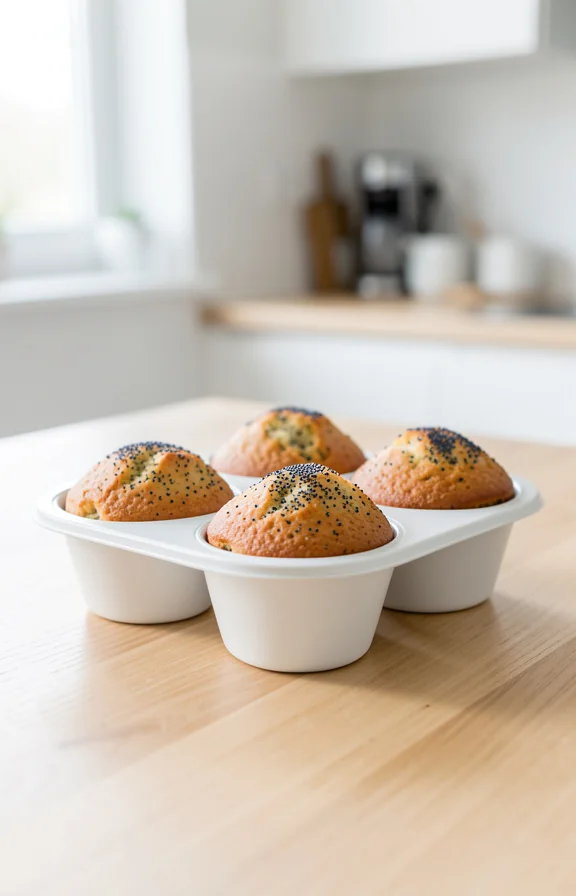
In a medium mixing bowl, whisk together flour, poppy seeds, baking powder, and salt.
Set this mixture aside and make sure there are no lumps of baking powder hiding in the flour.
Step-3: Prepare Wet Ingredients
Pour the aquafaba into a large mixing bowl and whisk vigorously for approximately two minutes until it becomes frothy and pale.
The aquafaba should increase slightly in volume and look like egg whites with visible foam.
Step-4: Mix Wet Ingredients Together
Add the plant-based milk, oil, sugar, lemon zest, lemon juice, and vanilla extract to your whisked aquafaba.
Using an electric mixer on medium speed, blend these ingredients for one to two minutes until well combined.
The mixture should be homogeneous with the lemon zest evenly distributed.
Step-5: Combine Wet and Dry Ingredients
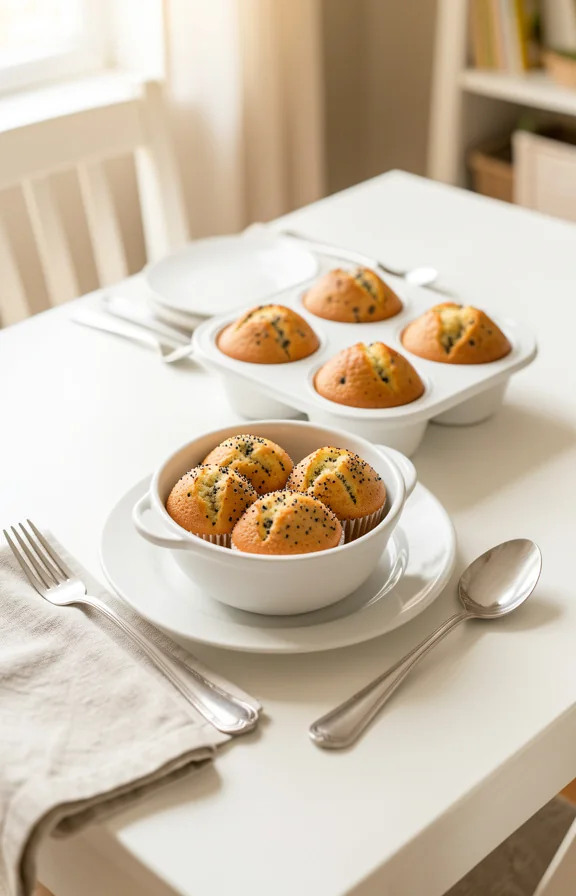
Pour the dry ingredient mixture into the wet mixture and fold gently with a spatula until just combined.
Stop mixing as soon as you see no visible flour streaks, as overmixing develops gluten and creates tough muffins.
A few small lumps in the batter are perfectly fine and actually desirable.
Step-6: Fill Muffin Cups
Using a cookie scoop or spoon, divide the batter evenly among your prepared muffin cups.
Fill each cup approximately three-quarters full to allow room for rise without overflow.
Step-7: Bake the Muffins
Place the muffin tin in your preheated oven and bake for 22 to 25 minutes.
The muffins are done when a toothpick inserted into the center comes out clean or with just a few moist crumbs.
The tops should be lightly golden brown and spring back when gently touched.
Step-8: Cool the Muffins
Remove the muffin tin from the oven and let it rest on a wire cooling rack for five minutes.
This brief resting period allows the muffins to set while remaining moist and tender.
Gently turn out the muffins from the tin and place them directly on the cooling rack.
Step-9: Prepare the Lemon Glaze
While muffins are still warm, whisk together powdered sugar and fresh lemon juice in a small bowl.
Add the lemon juice gradually until you reach a pourable consistency that’s thicker than water.
The glaze should slowly drip down the sides of the muffins without running off completely.
Step-10: Glaze the Muffins
Drizzle the lemon glaze over each warm muffin using a spoon or small whisk.
The warm muffins will absorb some of the glaze, creating a moist exterior and bright flavor boost.
Allow the glaze to set for ten to fifteen minutes before serving.
Nutritional Information
Per muffin (approximately):
- Calories: 280
- Protein: 4 grams
- Fat: 12 grams
- Carbohydrates: 42 grams
- Sodium: 190 milligrams
- Fiber: 0 grams
- Sugar: 28 grams
Note: Nutritional values are approximate and may vary based on specific ingredient brands used.