Our site contains ads and uses Amazon affiliate links. We may earn a small commission at no extra cost to you. We know ads can be distracting, and we’re sorry for any inconvenience they cause. It helps us keep the site running. Thanks for your understanding and supporting us!
Most lemon poppy seed cakes have one of two problems. The seeds sink into a dark layer at the bottom of the pan, or the seeds taste faintly bitter and crunchy in a way that fights the lemon flavor.
Both problems trace back to the same mistake: adding raw, dry poppy seeds straight into the batter.
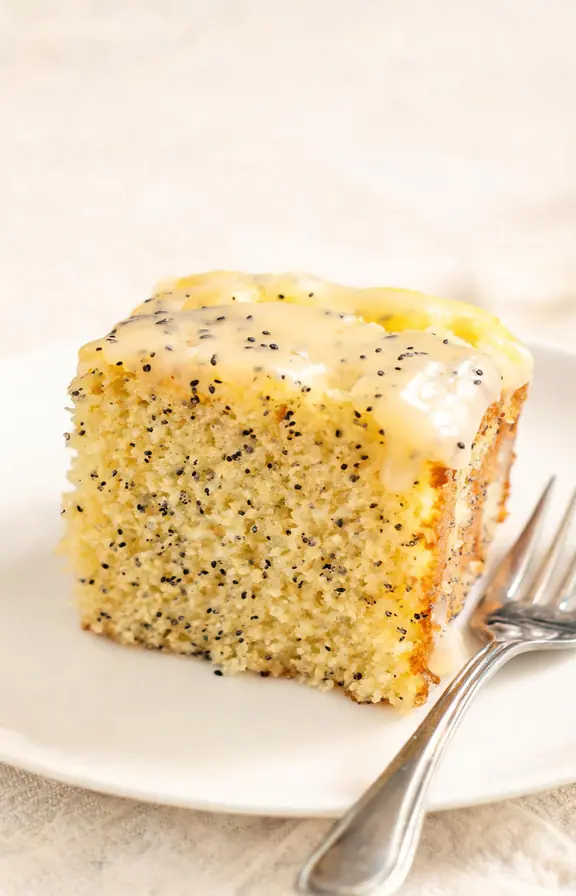
Poppy seeds are tiny oil filled seeds with a tough outer coat. Left dry, they are heavy relative to their size and slide straight through thin batter as it bakes.
This recipe fixes that with a short list of deliberate choices:
- why blooming poppy seeds in hot milk changes both texture and flavor,
- how rubbing zest into sugar unlocks more lemon flavor than juice alone,
- why cake flour and a butter and oil blend work together for crumb and moisture,
- exactly how to tell when the cake is actually done instead of just golden on top.
Why Poppy Seeds Sink and Taste Bitter in Most Recipes
Poppy seeds are almost entirely oil and hull. That hull is hard, and it does not absorb liquid quickly at room temperature.
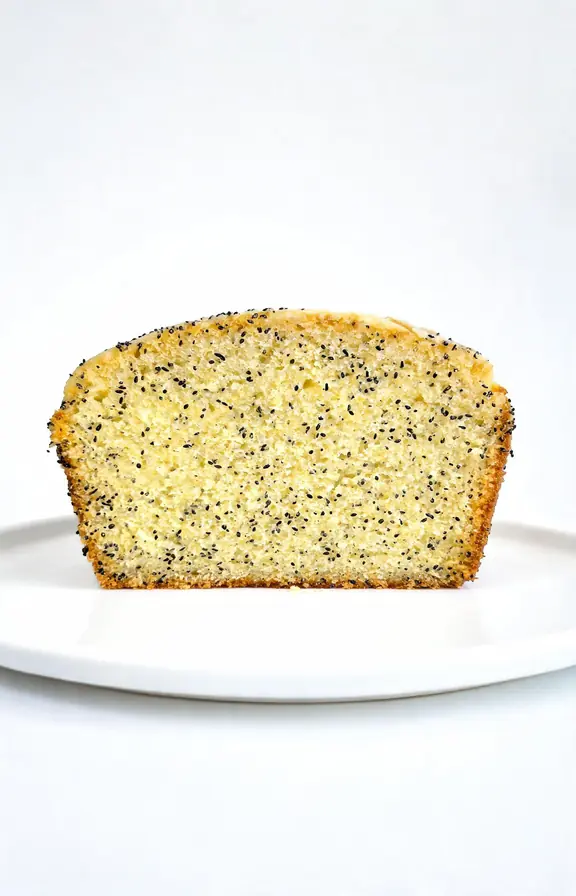
When you stir dry seeds into a thin cake batter, gravity wins during the first few minutes in the oven, before the structure sets. The seeds drift down and collect in a dense layer at the bottom.
The bitterness problem is separate. Raw poppy seed hulls contain compounds that read as sharp and slightly medicinal when they have not been softened. Toasting or soaking breaks that down.
The Lemon Sugar Rub: Getting Real Lemon Flavor, Not Just Lemon Color
Lemon juice alone gives you tang. It does very little for aroma, because the fragrant oils live in the zest, not the juice.
Rubbing fresh zest directly into granulated sugar with your fingertips breaks open the oil glands in the peel. The sugar turns pale yellow and smells noticeably more lemony within about a minute of rubbing.
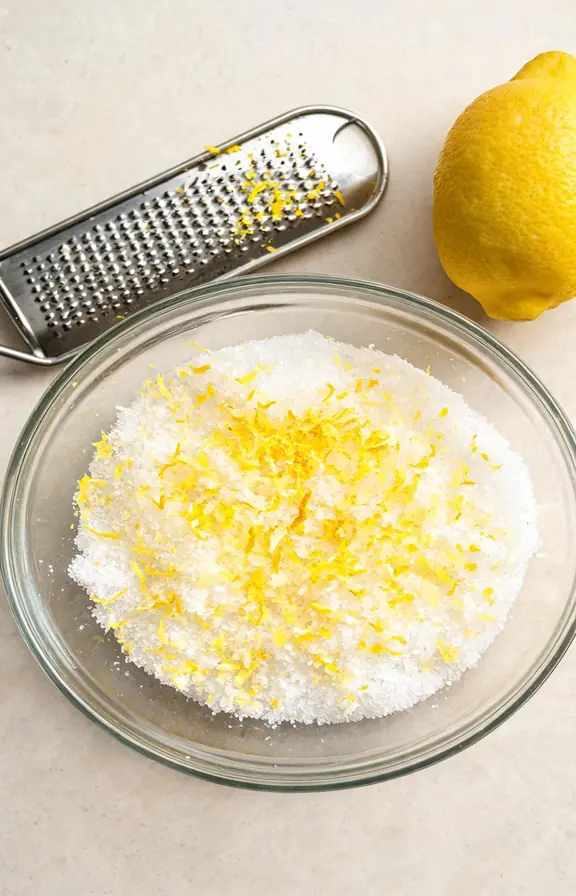
This is a five second step that most bakers skip entirely, tossing zest in at the end instead. Rubbing it into the sugar first means that oil disperses evenly through the whole batter rather than sitting in isolated flecks.
Butter and Oil Together: Why One Fat Alone Is Not Enough
Butter brings flavor. It also solidifies as it cools, which can leave a cake feeling slightly dry by the second day.
Oil stays liquid at room temperature, which keeps the crumb soft far longer. Used alone, though, oil cakes can taste a little flat and one dimensional.
Combining both gives you the buttery flavor people expect from a bakery cake along with the extended moisture retention that a pure oil cake delivers. Sour cream adds a third layer of moisture along with a gentle tang that plays well against the lemon.
How to Bloom Poppy Seeds Correctly
Bring milk just to a simmer, not a full rolling boil. Pour it directly over the poppy seeds in a small bowl.
Let the mixture sit undisturbed for 15 minutes. You will notice the seeds swell slightly and the milk takes on a faint gray tint as it absorbs their surface oils.
Let the bloomed seeds cool to room temperature before folding them into the batter. Adding them while still warm can start melting the butter in the batter unevenly, which affects how the cake rises.
How to Know Your Cake Is Actually Done
Storing and Freezing Lemon Poppy Seed Cake
Glazed cake keeps well at room temperature, tightly covered, for up to three days. After that the glaze starts to soften and the crumb loses some structure.
To freeze, wrap the unglazed cake tightly in plastic wrap, then in foil. It holds well for up to three months this way.
Thaw overnight in the refrigerator, then bring to room temperature before glazing and serving. Glazing before freezing tends to make the glaze crack and separate once thawed.
If you love the citrus and mascarpone combination, this no-bake lemon tiramisu with creamy mascarpone layers is a good next make, and it needs no oven at all.
Frequently Asked Questions
Lemon Poppy Seed Cake
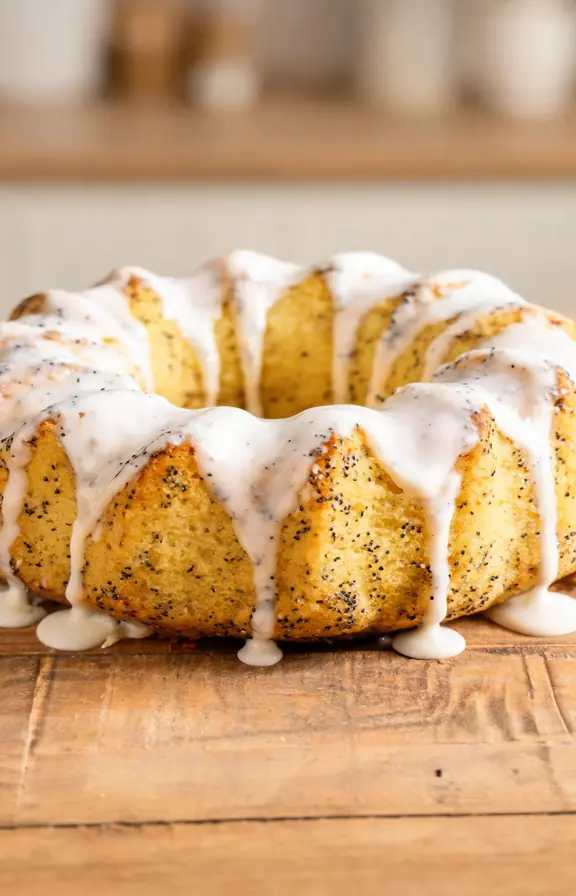
A moist bundt cake with bloomed poppy seeds that stay evenly suspended, a lemon sugar rub for real citrus flavor throughout, and a simple lemon glaze on top.
- 10-cup bundt pan
- Stand mixer or hand mixer
- Small saucepan (for blooming seeds)
- Kitchen scale
- Microplane zester
- Wire cooling rack
- Whisk
- 3 tablespoons (30g) poppy seeds
- 1/4 cup (60ml) whole milk, heated to a simmer
- 2 3/4 cups (330g) cake flour
- 2 teaspoons (9g) baking powder
- 1/2 teaspoon (3g) baking soda
- 1/2 teaspoon (3g) fine sea salt
- 1 cup (200g) granulated sugar
- Zest of 3 large lemons
- 1/2 cup (113g) unsalted butter, softened
- 1/3 cup (80ml) neutral oil
- 3 large eggs, room temperature
- 1 cup (240g) sour cream, room temperature
- 1/3 cup (80ml) fresh lemon juice
- 1 teaspoon (5ml) vanilla extract
- All of the bloomed poppy seeds (cooled)
- 1 cup (120g) powdered sugar, sifted
- 2 to 3 tablespoons fresh lemon juice
- 1/2 teaspoon lemon zest, for garnish
- Bloom the poppy seeds Heat the milk in a small saucepan until it just reaches a simmer. Pour it over the poppy seeds in a small bowl and stir once. Let it sit undisturbed for 15 minutes, then set aside to cool completely to room temperature before using.
- Prep and mix dry ingredients Preheat the oven to 350°F (175°C). Grease a 10-cup bundt pan thoroughly, including every groove, and dust lightly with flour. Whisk together the cake flour, baking powder, baking soda, and salt in a medium bowl. Set aside.
- Rub the zest into the sugar Add the sugar and lemon zest to the bowl of a stand mixer. Rub the zest into the sugar with your fingertips for about a minute, until the sugar turns pale yellow and smells strongly of lemon.
- Cream the fats and sugar Add the softened butter and oil to the lemon sugar. Beat on medium-high speed for 3 minutes, until pale and fluffy. Add the eggs one at a time, beating well after each addition, then mix in the vanilla.
- Combine wet and dry In a small bowl, stir together the sour cream and lemon juice. With the mixer on low, add the flour mixture in three additions, alternating with the sour cream mixture, beginning and ending with the flour. Mix just until no dry streaks remain.
- Fold in the poppy seeds Add the cooled bloomed poppy seeds to the batter. Fold gently with a spatula until evenly distributed. Avoid stirring vigorously, which can thin the batter and cause the seeds to sink.
- Bake Pour the batter into the prepared bundt pan and smooth the top. Bake for 50 to 55 minutes, until deep golden and a toothpick inserted in the thickest part comes out with a few moist crumbs. Cool in the pan for 15 minutes, then invert onto a wire rack to cool completely.
- Glaze and serve Whisk the powdered sugar with 2 tablespoons of lemon juice, adding more a teaspoon at a time until pourable but still thick. Pour over the completely cooled cake, letting it drip down the sides. Sprinkle with the reserved lemon zest before slicing.
Nutritional values are estimates calculated using standard USDA food composition data. Actual values will vary based on specific brands used, exact slice size, and ingredient substitutions.