Our site contains ads and uses Amazon affiliate links. We may earn a small commission at no extra cost to you. We know ads can be distracting, and we’re sorry for any inconvenience they cause. It helps us keep the site running. Thanks for your understanding and supporting us!
Most pumpkin roll failures happen at the exact same moment. The cake looks perfect, then it splits down the center the second you try to roll it.
That crack is not bad luck. It is a sign that the cake cooled too far before rolling, or that it was baked a few minutes too long.
This recipe walks through the mechanics behind every step, including why hot rolling works, how to pick the right pan, and how to keep the cream cheese filling thick enough to slice cleanly instead of oozing out the sides.
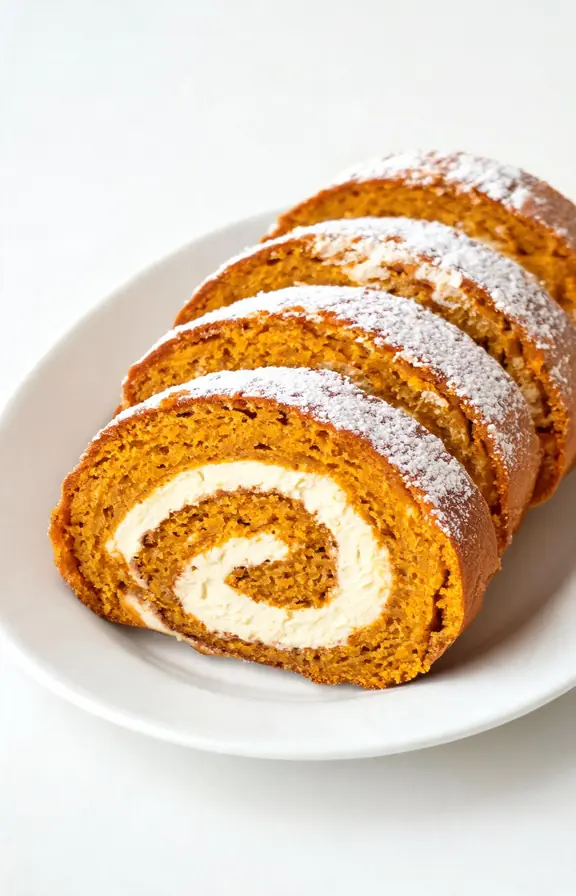
Why Pumpkin Rolls Crack (And How Hot Rolling Fixes It)
A pumpkin roll is a sponge cake, not a butter cake. It gets almost all of its structure from whipped eggs rather than from creamed butter and flour.
That whipped egg foam is soft and pliable while it is warm. As the cake cools, the starch in the flour firms up and the structure locks into whatever shape it is sitting in.
If that shape is flat on a cooling rack, the cake sets flat. Try to bend a set, cooled sponge and the outer surface stretches past its limit and splits.
Rolling the cake immediately, while the eggs and starch are still warm and flexible, lets the structure set into a curled shape instead of a flat one. By the time it cools completely, it has already learned to be a spiral.
Light Aluminum Sheet Pan vs. Dark Nonstick Pan: Which Bakes a More Flexible Roll
Pan choice affects how easily your cake rolls, and this is a detail most pumpkin roll recipes skip entirely.
A light aluminum jelly roll pan reflects heat rather than absorbing it. The cake bakes evenly and stays pale and tender, which means the crumb stays soft and bends easily around the filling.
A dark nonstick pan absorbs and holds more heat. It bakes the edges faster than the center, which can leave you with a drier, firmer edge that resists curling and is more prone to cracking right where you need flexibility most.
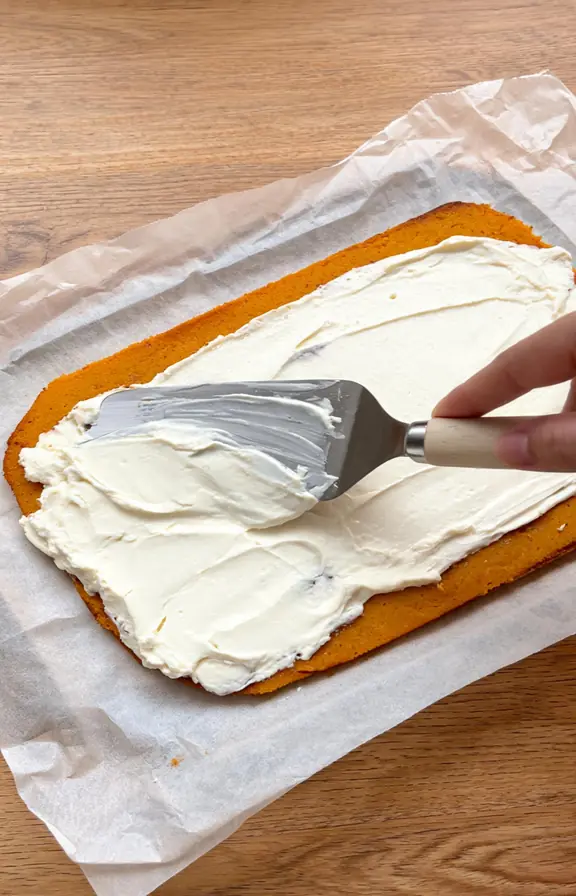
For this recipe, a light aluminum 15×10 inch jelly roll pan lined with parchment paper gives the most reliably flexible cake. If you only own a dark pan, check for doneness two minutes earlier than the recipe states.
Parchment Roll vs. Towel Roll: Why This Recipe Skips the Powdered Sugar Towel
Older pumpkin roll recipes call for flipping the hot cake onto a towel dusted with powdered sugar. It works, but it also means transferring a delicate hot cake onto fabric and hoping nothing tears.
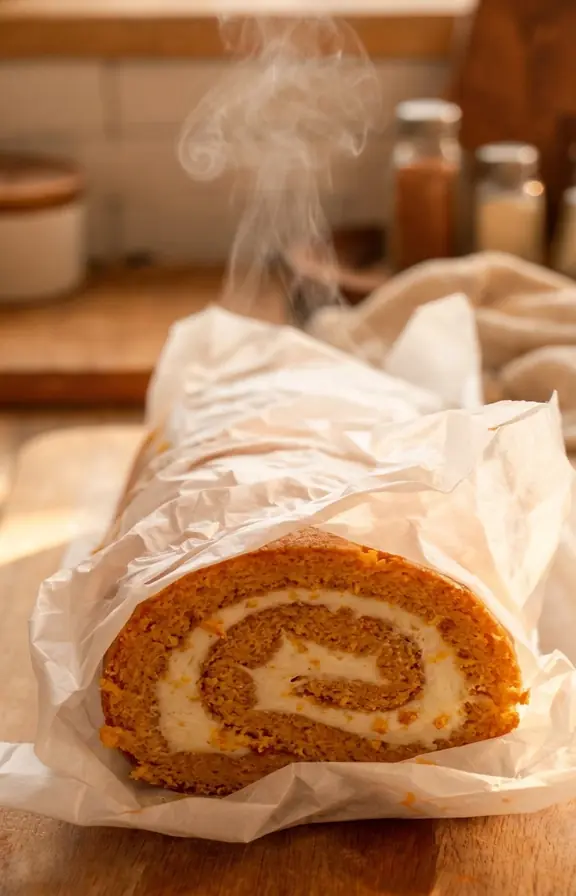
Rolling directly inside the parchment paper the cake baked on removes that risky flip entirely. The parchment already has the exact shape and grease-free surface the cake needs, and it peels away cleanly once you unroll for filling.
This method also keeps more moisture near the surface of the cake during cooling, since parchment does not pull moisture out of the crumb the way a cloth towel does.
Getting the Cream Cheese Filling Thick Enough to Slice Cleanly
A filling that is too soft will squeeze out the sides the moment you press down with a knife. Ratio is the fix, not more chilling time.
Full fat block cream cheese, not the spreadable tub style, is what gives this filling enough body to hold a slice’s edge. Tub cream cheese has extra water and stabilizers that make the filling loose no matter how long it chills.
Beat the butter first, then add cold cream cheese, then add the powdered sugar last. This order builds the same stable structure used in our foolproof cream cheese frosting method, which is thick enough to pipe and holds its shape at room temperature for hours.
Spread the filling in an even layer and leave a half inch border around all the edges. Filling that reaches the edge will squeeze out when you roll, no matter how thick it is.
Rolling in the Filling Without Squeezing It Out the Sides
Unroll the cooled cake slowly and gently, working from one end rather than forcing it flat all at once.
Spread the cream cheese filling with an offset spatula, using light pressure so you do not tear the crumb. Work from the center outward toward the edges.
Re-roll starting from the same short end the cake was originally rolled from, using the parchment as a guide but peeling it away as you go so it does not roll back inside the cake.
Wrap the finished roll tightly in plastic wrap and chill for at least one hour. This chill time sets the filling firm enough to slice cleanly, and it is not optional if you want neat spiral slices.
- Baked cake only: roll in parchment, wrap in plastic, refrigerate up to 2 days before filling
- Fully assembled roll: wrap tightly and refrigerate up to 4 days
- Freezing: wrap the filled, chilled roll in plastic then foil, freeze up to 2 months
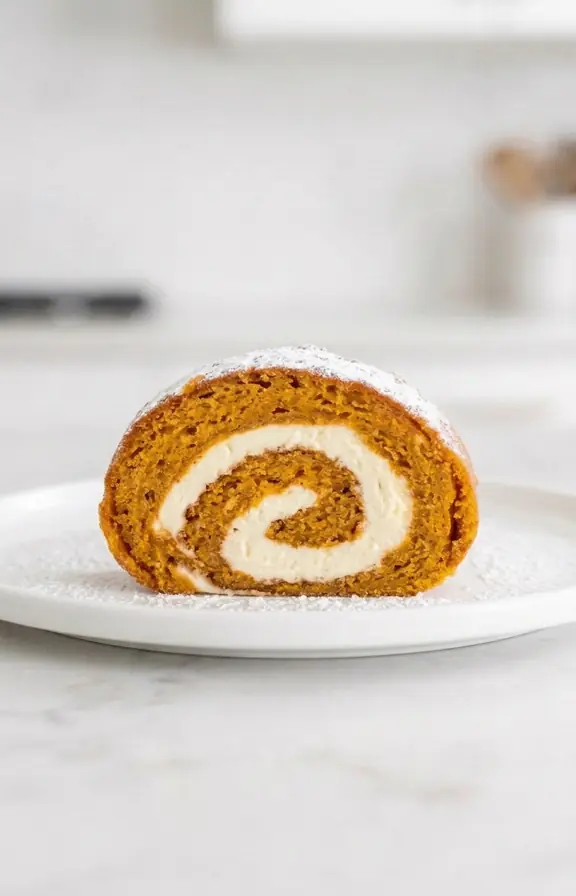
Slicing Without Squashing the Spiral
Use a sharp serrated knife, not a straight blade. A straight edge compresses the soft filling instead of cutting through it cleanly.
Dip the knife in hot water and wipe it dry between slices. This keeps the cut edge crisp and the cream cheese filling from smearing across the spiral.
Slice in one smooth downward motion rather than sawing back and forth, which can drag the filling and blur the spiral pattern you worked to create.
Frequently Asked Questions
Pumpkin Roll With Cream Cheese Filling
A soft, spiced pumpkin sponge rolled hot to prevent cracking, filled with a thick, sliceable cream cheese filling. Freezer friendly and perfect for making ahead of the holidays.
- 15×10 inch light aluminum jelly roll pan
- Parchment paper
- Electric mixer or stand mixer
- Offset spatula
- Fine mesh sifter
- Serrated knife
- Plastic wrap
- 3/4 cup (94g) all purpose flour
- 1 teaspoon baking powder
- 1/2 teaspoon baking soda
- 1/2 teaspoon fine sea salt
- 2 teaspoons ground cinnamon
- 1 teaspoon ground ginger
- 1/4 teaspoon ground cloves
- 3 large eggs, room temperature
- 1 cup (200g) granulated sugar
- 2/3 cup (160g) pumpkin puree
- 1 tablespoon powdered sugar, for dusting parchment
- 6 tablespoons (85g) unsalted butter, softened
- 8 oz (226g) full fat block cream cheese, cold
- 1 cup (120g) powdered sugar, sifted
- 1 teaspoon vanilla extract
- Extra powdered sugar, for dusting the finished roll
- Prepare the pan Preheat the oven to 375°F (190°C). Line a 15×10 inch light aluminum jelly roll pan with parchment paper, leaving a slight overhang on the short ends. Lightly grease the parchment.
- Mix the dry ingredients Whisk together the flour, baking powder, baking soda, salt, cinnamon, ginger, and cloves in a medium bowl. Set aside.
- Whip the eggs and sugar Beat the eggs and granulated sugar on high speed for 3 to 4 minutes until thick, pale, and roughly tripled in volume. This whipped egg foam is what gives the cake its structure, so do not rush this step.
- Combine batter Gently whisk the pumpkin puree into the egg mixture until just combined. Fold in the dry ingredients with a rubber spatula until no streaks of flour remain. Do not overmix, or you will deflate the egg foam.
- Bake Spread the batter evenly into the prepared pan. Bake for 13 to 15 minutes, until the top springs back when lightly touched and the edges just begin to pull away from the pan.
- Roll immediately Dust a clean surface with 1 tablespoon powdered sugar. Turn the hot cake out onto it, peel away the pan, and immediately roll the cake up from one short end, using the parchment paper as your rolling guide. Let cool completely in this rolled shape, about 1 hour.
- Make the filling Beat the softened butter alone until smooth. Add the cold cream cheese and beat until fully combined and lump-free. Add the sifted powdered sugar and vanilla, beating until thick and fluffy.
- Fill and re-roll Gently unroll the cooled cake. Spread the filling evenly, leaving a half inch border on all sides. Re-roll starting from the same short end, peeling away the parchment as you go.
- Chill and serve Wrap the roll tightly in plastic wrap and refrigerate for at least 1 hour. Dust with powdered sugar, slice with a serrated knife, and serve chilled.
Nutritional values are estimates calculated using standard USDA food composition data. Actual values will vary based on specific ingredient brands used and exact slice size after cutting.