Our site contains ads and uses Amazon affiliate links. We may earn a small commission at no extra cost to you. We know ads can be distracting, and we’re sorry for any inconvenience they cause. It helps us keep the site running. Thanks for your understanding and supporting us!
Most fresh peach cakes fail in the same way. The peaches sink straight to the bottom, the crumb turns gummy around the fruit, and the whole thing collapses when you cut it.
This recipe fixes every one of those problems. One bowl, a whisk, and about 15 minutes of hands-on time is all it takes.
No creaming step. No mixer. No waiting for butter to soften. Just ripe summer peaches folded into a light, oil-based batter that stays moist for three days at room temperature.
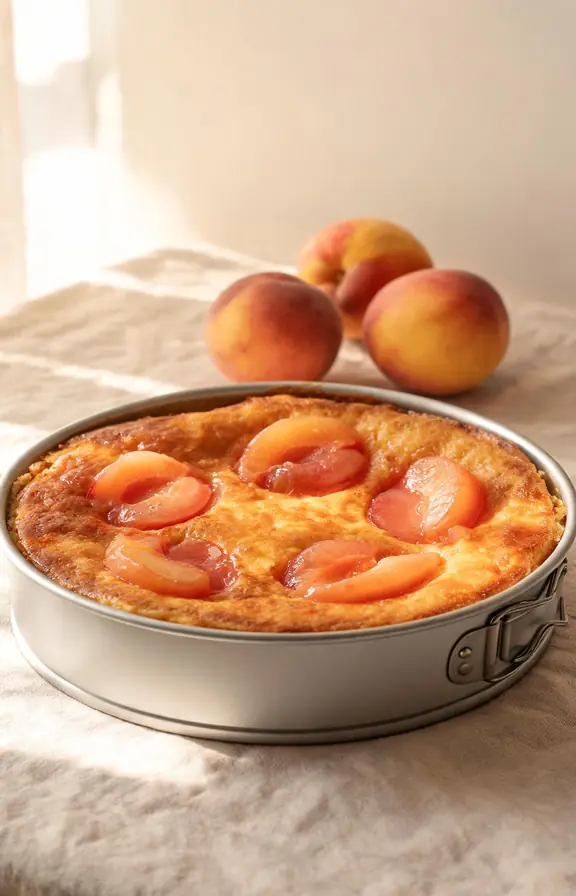
Why Oil Beats Butter in a Fresh Fruit Cake
Butter-based cakes feel firmer and richer. But fresh fruit introduces unpredictable moisture, and butter solidifies when the cake cools.
That solidification is exactly why butter-based peach cakes often feel dense and slightly gummy around the fruit the next day. The fat re-hardens and traps the juice from the peaches.
Oil stays liquid at room temperature. It coats the flour proteins more evenly than creamed butter does, which creates a shorter, more tender crumb. The cake stays soft on day one, day two, and day three.
Vegetable oil or a neutral-flavored oil like avocado or light olive oil all work. Avoid strong-flavored oils. The peaches should be the flavor, not the fat.
For a deeper look at the chemistry behind this, you can check why oil keeps cakes moist longer than butter in detail.
Choosing the Right Peaches: Freestone vs. Clingstone
Not all peaches behave the same in baking. Knowing the difference saves you 10 minutes of frustrating pitting work at the counter.
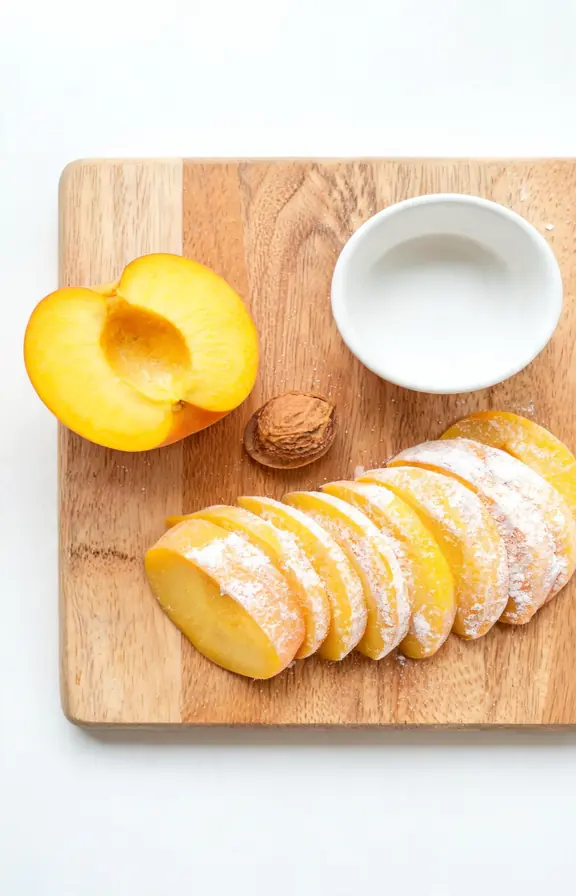
Freestone peaches have a pit that separates cleanly when you twist the fruit in half. They are the baking peach. Slicing is fast, clean, and the flesh holds its shape well under heat.
Clingstone peaches have flesh that grips the pit tightly. They are sweeter and juicier, which sounds appealing, but that extra juice turns into excess moisture in a cake batter. If you use clingstone varieties, blot the slices dry with paper towels before folding them in.
Yellow peaches hold their shape better than white peaches during baking. White peaches turn very soft and almost dissolve into the crumb.
Both taste excellent, but yellow gives you visible peach pieces in every slice. For a perfectly jammy, almost-invisible fruit texture, white peaches are ideal.
The Overmixing Problem and How the One-Bowl Method Solves It
Gluten forms when flour proteins hydrate and get worked. Every stir after the flour goes in develops more gluten. More gluten means a tougher, chewier crumb instead of a tender, cake-like one.
The one-bowl method minimizes this risk because there is no creaming step. Creaming incorporates air through friction. Without a mixer doing that work, you are not accidentally overworking the batter trying to achieve the right texture.
Whisk the wet ingredients together fully first. Add the dry ingredients all at once. Fold with a spatula using as few strokes as possible. Stop the moment the last streak of flour disappears. The batter will look slightly lumpy. That is correct.
Folding in the peaches takes another 4 to 5 strokes maximum. The fruit distributes evenly without needing more mixing than that.
Pan Choice and Why It Changes the Bake Time
A 9-inch springform pan is the standard for this cake, and the reason is release. Peach cakes are moist and fragile while warm. A springform lets you remove the sides without inverting the cake, which preserves the top layer of peaches completely.
A 9-inch round cake pan works fine but requires confident technique to unmold. Line the bottom with parchment and grease the sides generously. Let the cake cool for 20 minutes before attempting to turn it out.
A 9×9-inch square baking pan is the easiest option for beginners. No unmolding required. You serve directly from the pan. Bake time stays the same. The only trade-off is presentation since you lose the round shape.
A cast iron skillet creates beautifully caramelized edges and a slightly crispier bottom. If you enjoy that texture, our cast iron peach upside-down cake takes that concept even further with a caramel layer underneath.
The Sugar Crust: One Step That Most Recipes Skip
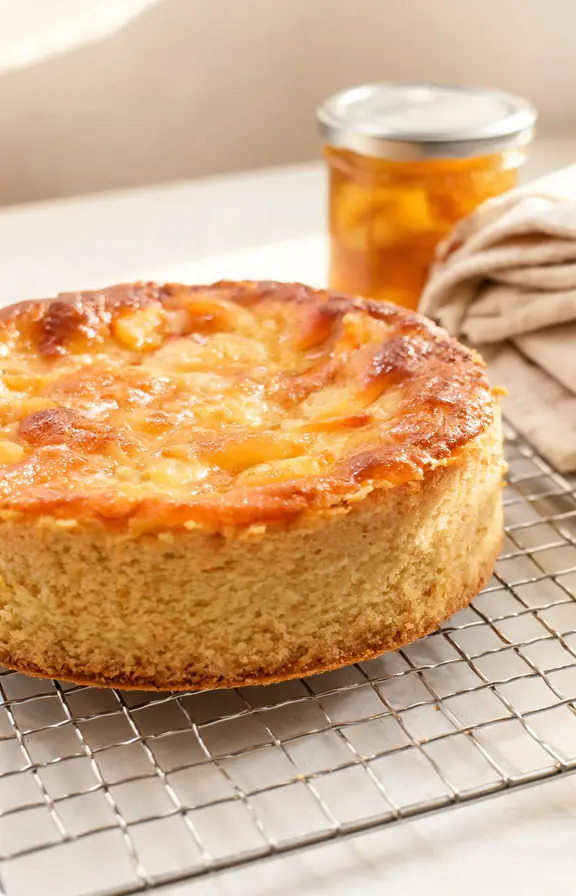
Before the cake goes into the oven, sprinkle two tablespoons of granulated sugar evenly over the top. This single step does three things that dramatically improve the finished cake.
First, the sugar crystals create a light crunch on the surface as they caramelize. It contrasts directly with the soft crumb underneath in a way that makes the texture feel intentional rather than accidental.
Second, the sugar draws moisture upward through the batter and concentrates it at the surface. This keeps the center of the cake slightly moister than it would be without the sugar cap.
Third, the caramelizing sugar produces Maillard reaction compounds at the surface of the cake, adding a warm, toffee-adjacent flavor note that pairs perfectly with fresh peach.
This is the same principle used on our 30-minute no-mixer blueberry muffins, where a simple sugar topping turns a plain muffin into something that looks and tastes bakery-grade.
How to Know When a Fresh Peach Cake Is Actually Done
A toothpick test alone is unreliable for fruit cakes. The toothpick can pass through a peach slice and come out clean while the batter around the fruit is still underbaked.
Peach Cake Flavor Variations Worth Trying
The base batter in this recipe is intentionally neutral. It supports a wide range of flavor additions without changing the structure or bake time.
Almond extract is the classic pairing. Stone fruits and almonds share benzaldehyde, the same aromatic compound. A quarter teaspoon of almond extract added alongside the vanilla intensifies the peach flavor without adding a separate taste.
Cinnamon and cardamom are the warm spice direction. One half teaspoon of cinnamon and one quarter teaspoon of cardamom whisked into the dry ingredients creates a flavor profile closer to a spiced stone fruit tart.
Lemon zest adds brightness. One teaspoon of fresh zest whisked into the wet ingredients before combining makes the peach flavor sharper and more distinct, especially when using peaches that are slightly less ripe than ideal.
For a richer, deeper sweetness, replace one quarter of the granulated sugar with light brown sugar. The molasses in the brown sugar creates a subtle caramel undertone that pairs especially well with yellow peaches.
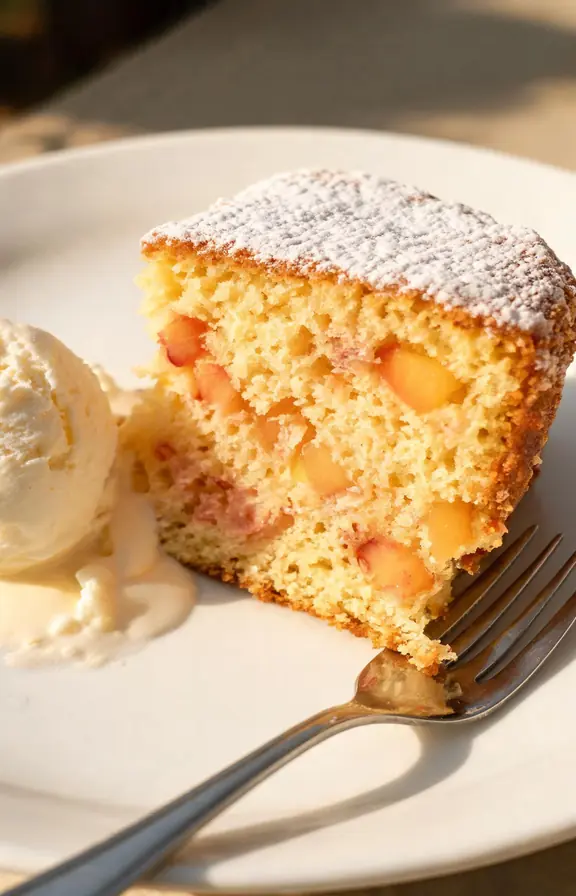
For something decadent without extra complexity, a dollop of cream or a scoop of vanilla ice cream at serving time works better than any frosting. This cake does not need decoration.
It needs cold dairy contrast. If you want to push into dessert territory, our golden peach crisp with oat topping uses the same seasonal fruit with a different texture profile worth bookmarking alongside this recipe.
Storage, Freezing, and Getting Ahead
At room temperature in an airtight container, this cake stays moist for three days. The oil-based crumb holds up better than butter cakes which dry out faster after the first day.
For refrigerator storage, wrap the cooled cake in plastic wrap and then in foil. It lasts up to five days refrigerated. Bring individual slices to room temperature for 20 minutes before eating. Cold oil-based cake can feel slightly dense straight from the refrigerator.
Freezing works well for this cake. Wrap slices individually in plastic wrap and then in a zip bag. Frozen slices keep for three months without losing quality.
Thaw overnight in the refrigerator or for two hours at room temperature. A brief 15-second microwave pulse on 50 percent power refreshes the texture without making it rubbery.
If you want to bake ahead for an event, this cake is actually better on day two. The crumb tightens overnight and slices cleanly without the crumble of a fresh-baked cake.
Frequently Asked Questions
Fresh Peach Cake Easy One Bowl No Mixer
Moist, tender fresh peach cake made in one bowl with no mixer. Oil-based batter stays soft for three days. Loaded with real peach pieces and finished with a light sugar crust.
- 9-inch springform pan (or 9×9-inch square baking pan)
- Large mixing bowl
- Whisk
- Rubber spatula
- Parchment paper
- Wire cooling rack
- Instant-read thermometer (optional but recommended)
- Pastry brush (for greasing pan)
- 1 and 1/2 cups (190g) all-purpose flour, spooned and leveled
- 1 and 1/2 teaspoons baking powder
- 1/4 teaspoon baking soda
- 1/2 teaspoon fine sea salt
- 1/2 teaspoon ground cinnamon
- 2/3 cup (133g) granulated sugar
- 1/2 cup (120ml) neutral oil (vegetable, avocado, or light olive oil)
- 1/2 cup (120g) full-fat Greek yogurt, room temperature
- 2 large eggs, room temperature
- 1 teaspoon pure vanilla extract
- 1/4 teaspoon almond extract (optional but recommended)
- 1 teaspoon fresh lemon zest
- 2 cups (about 3 medium) fresh peaches, peeled and sliced 1/2-inch thick
- 1 tablespoon all-purpose flour (for tossing peaches)
- 2 tablespoons granulated sugar (for the sugar crust topping)
- Step-1: Preheat and prepare pan Set oven to 350°F (177°C). Grease a 9-inch springform pan with oil or butter. Line the bottom with a round of parchment paper and grease the parchment too. Set aside on a flat surface.
- Step-2: Prep the peaches Peel and slice the peaches into 1/2-inch thick pieces. Place them in a small bowl and toss with 1 tablespoon of flour until lightly coated on all sides. Set aside. This flour coating is what keeps the peaches from sinking during baking.
- Step-3: Whisk the dry ingredients In your large mixing bowl, whisk together the flour, baking powder, baking soda, salt, and cinnamon. Make a well in the center by pushing the dry ingredients toward the edges of the bowl.
- Step-4: Add the wet ingredients Into the well, add the sugar, oil, Greek yogurt, eggs, vanilla extract, almond extract, and lemon zest. Whisk everything together starting from the center and working outward until the batter is smooth and no streaks of flour remain. The batter will be thick and creamy.
- Step-5: Fold in the peaches Add the flour-tossed peach slices to the batter. Using a rubber spatula, fold them in with 4 to 5 gentle strokes. Do not stir vigorously. Some peach slices will stick out at angles. That is fine. The goal is even distribution without overworking the batter.
- Step-6: Transfer and top with sugar Pour the batter into the prepared pan and spread it evenly with the spatula. Sprinkle 2 tablespoons of granulated sugar evenly over the entire surface of the batter. This creates the signature sugar crust during baking.
- Step-7: Bake without opening the oven Bake at 350°F (177°C) for 40 to 50 minutes. Do not open the oven door before the 35-minute mark. The cake is done when the top is deep golden brown, the edges pull away from the pan, and the center springs back when pressed gently. An instant-read thermometer inserted into the center (not into a peach slice) should read 200 to 205°F.
- Step-8: Cool before slicing Remove the cake from the oven and let it cool in the pan on a wire rack for 30 minutes. Run a thin knife around the inside edge of the pan before releasing the springform. Allow the cake to cool for at least 30 additional minutes before slicing. Oil-based cakes reach their final texture only after cooling fully.
Nutritional values are estimates calculated using standard USDA food data. Actual values may vary based on specific ingredient brands, peach variety, moisture content, and slice size.