Our site contains ads and uses Amazon affiliate links. We may earn a small commission at no extra cost to you. We know ads can be distracting, and we’re sorry for any inconvenience they cause. It helps us keep the site running. Thanks for your understanding and supporting us!
Most pumpkin bread recipes treat puree as a fixed variable and move straight to the flour.
But puree moisture is the biggest reason bakers end up with a gummy center. Get it right and the crumb turns tender and even.
This article covers what other recipes skip:
- why puree hydration changes crumb structure,
- what oil, butter, and brown butter each do to texture,
- doneness testing beyond the toothpick,
- why loaf pan material matters,
- and a frosting method that stops cream cheese frosting from sliding off.
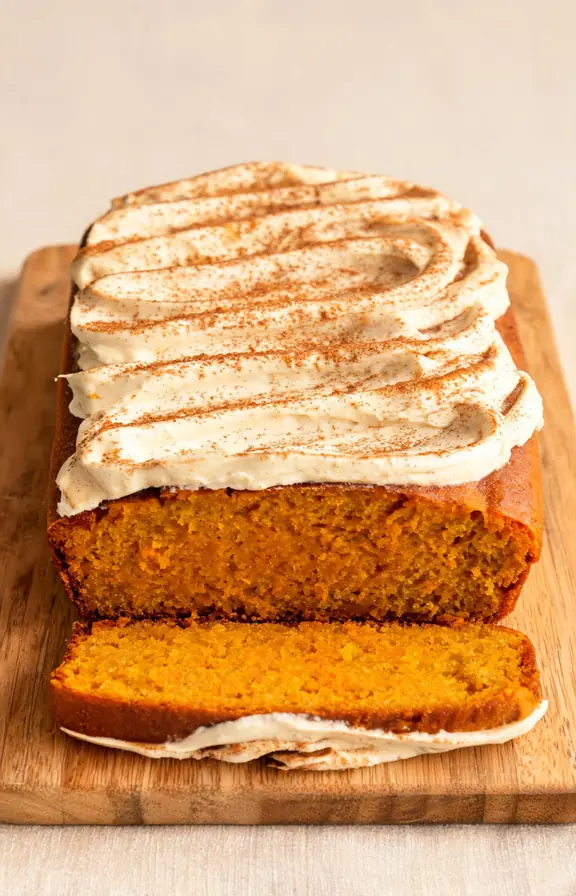
Why Pumpkin Puree Moisture Makes or Breaks This Bread
Canned pumpkin puree is cooked down and standardized before it reaches the shelf. Most brands land close to 90 percent water content, and recipes are written around that number.
Homemade puree almost never matches it. Fresh roasted pumpkin can run wetter depending on the variety and how long it roasted, which throws off the flour-to-liquid ratio the entire recipe depends on.
Extra water dilutes the starch network before it ever hits the oven. The batter can’t set properly around that extra moisture, and you end up with a dense, wet streak through the center that never fully bakes through.
Oil, Butter, or Brown Butter: What Each One Does to the Crumb
Oil stays liquid at room temperature. It coats flour proteins evenly and limits gluten development, which is why oil-based quick breads feel tender days after baking.
Butter solidifies as it cools, so a bread made with only melted butter firms up faster and loses that just-baked softness sooner.
This recipe splits the difference. Oil carries most of the moisture, while a small amount of browned butter adds a nutty, caramelized depth that plain oil can’t replicate on its own.
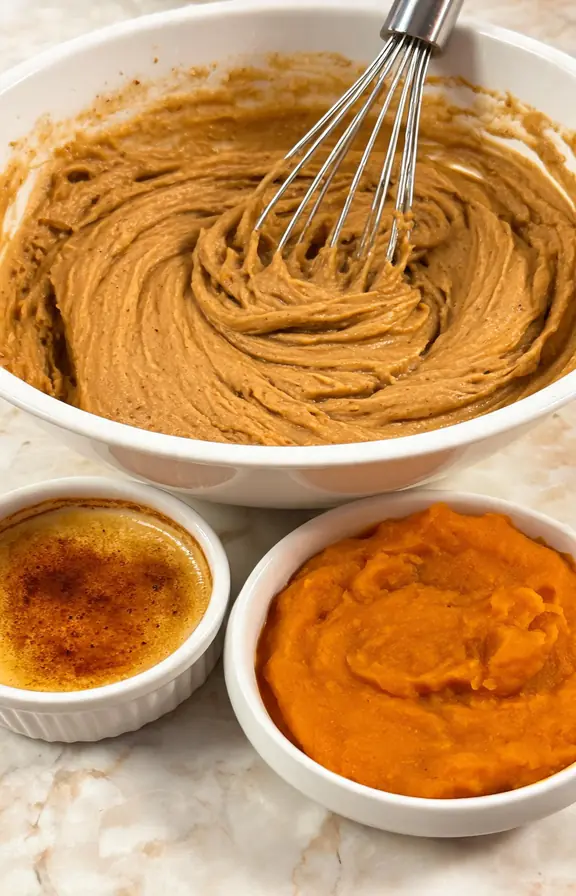
If you love that flavor direction, our Pumpkin Spice Cake with brown butter and maple cream cheese frosting pushes the same technique even further with a full brown butter base.
Doneness Testing Beyond the Toothpick
A toothpick tells you the surface has set. It does not tell you the center has fully cooked through, especially in a batter this dense with puree.
An instant-read thermometer is far more reliable. Insert it into the thickest part of the loaf and look for a reading between 200°F and 205°F.
Below that range, the starch network hasn’t finished gelatinizing and the center will taste raw and gummy even if the toothpick came out clean.
Metal vs. Glass Loaf Pan: Which One Bakes This Bread Better
This comparison rarely shows up in pumpkin bread recipes, but pan material changes how the batter cooks.
Metal pans conduct heat quickly, setting the crust faster with sharper color contrast against the crumb.
Glass insulates rather than conducts, so the batter heats slower and more evenly, usually needing a few extra minutes with less risk of a scorched top.
A light-colored metal pan is recommended here. With glass, tent the top loosely with foil after 40 minutes.
The Reverse-Creaming Method for Frosting That Won’t Slide Off
Most recipes tell you to bring cream cheese and butter to room temperature together and beat them at once. That is exactly what causes a soft, runny frosting that pools at the edges of a warm loaf.
This recipe flips the order. Beat cold butter alone first until it turns pale and smooth, then add cold cream cheese straight from the fridge.
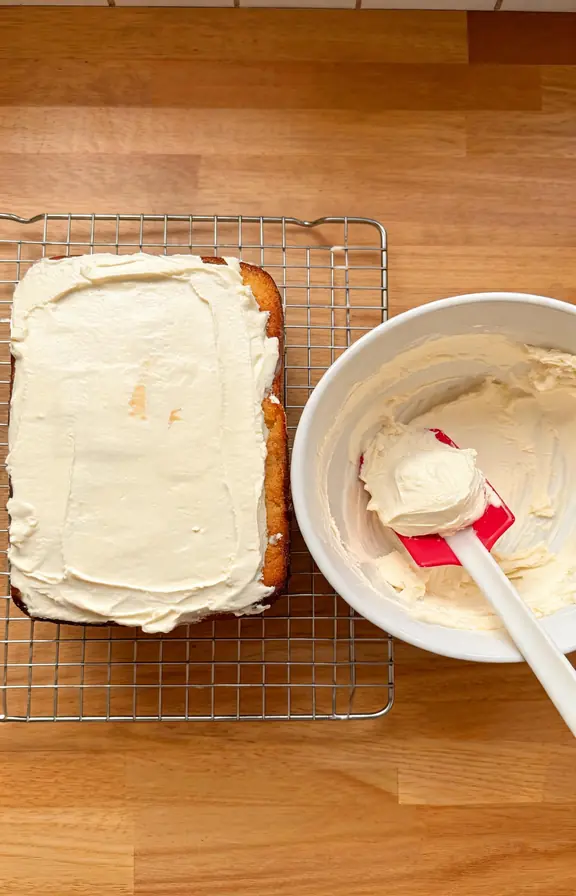
Building the fat structure with butter first, before the softer cream cheese joins in, keeps the frosting firmer and less prone to weeping once it’s spread.
- Frosting too soft: your cream cheese or butter was too warm. Chill the bowl for 10 minutes and re-beat.
- Frosting sliding off the loaf: the bread wasn’t fully cooled. Wait until it’s completely room temperature before frosting.
- Frosting grainy: your powdered sugar wasn’t sifted. Always sift before adding it in.
How to Store and Freeze Frosted vs. Unfrosted Pumpkin Bread
Unfrosted pumpkin bread holds up well at room temperature, wrapped tightly, for up to 4 days.
Once frosted, refrigerate it because of the cream cheese. It stays good for up to 5 days covered.
For freezing, freeze the loaf unfrosted, wrapped in plastic then foil, for up to 3 months. Thaw overnight in the fridge and frost right before serving.
Frequently Asked Questions
Pumpkin Bread with Cream Cheese Frosting
A moist, spiced pumpkin loaf built on an oil-and-browned-butter base, finished with a reverse-creamed cream cheese frosting that stays put instead of sliding off.
- 9×5 inch metal loaf pan
- Small saucepan (for browning butter)
- Two large mixing bowls
- Whisk and spatula
- Instant-read thermometer
- Wire cooling rack
- Hand mixer or stand mixer (for frosting)
- Fine mesh sieve (for sifting powdered sugar)
- 1 3/4 cups (220g) all-purpose flour
- 1 teaspoon baking soda
- 1/2 teaspoon baking powder
- 1 teaspoon fine sea salt
- 2 teaspoons pumpkin pie spice
- 1 3/4 cups (425g) pumpkin puree (canned, or homemade and blotted dry)
- 1 cup (200g) granulated sugar
- 1/2 cup (100g) light brown sugar
- 1/2 cup (120ml) neutral oil
- 1/4 cup (56g) unsalted butter, browned and slightly cooled
- 3 large eggs, room temperature
- 1 teaspoon vanilla extract
- 1/4 cup (60ml) buttermilk
- 4 tablespoons (56g) cold unsalted butter
- 4 ounces (113g) cold full-fat brick cream cheese
- 1 cup (115g) powdered sugar, sifted
- 1/2 teaspoon vanilla extract
- Pinch of fine sea salt
- Brown the butter Melt 1/4 cup (56g) of butter in a small saucepan over medium heat. Swirl constantly as it foams and turns golden brown with a nutty smell, about 4 to 5 minutes. Pour into a heatproof bowl immediately to stop cooking and let cool for 10 minutes.
- Prep the pan and preheat Preheat the oven to 350°F (175°C). Grease a 9×5 inch metal loaf pan and line the bottom with parchment paper, leaving an overhang on the long sides to help lift the loaf out later.
- Whisk the dry ingredients In a medium bowl, whisk together the flour, baking soda, baking powder, salt, and pumpkin pie spice until evenly combined. Set aside.
- Mix the wet ingredients In a large bowl, whisk the pumpkin puree, granulated sugar, and brown sugar until smooth. Whisk in the oil and cooled browned butter. Add the eggs one at a time, whisking after each. Whisk in the vanilla and buttermilk.
- Combine and pour Add the dry ingredients to the wet ingredients. Fold with a spatula just until no streaks of flour remain. Do not overmix, or the crumb will turn tough. Pour the batter into the prepared pan and smooth the top.
- Bake to temperature Bake for 60 to 65 minutes. Check at the 45 minute mark and tent loosely with foil if the top is browning too fast. The loaf is done when an instant-read thermometer inserted into the center reads 200°F to 205°F.
- Cool completely Cool the loaf in the pan for 15 minutes, then lift it out using the parchment overhang and transfer to a wire rack. Let it cool completely, about 1 hour, before frosting. Frosting a warm loaf will cause the frosting to slide right off.
- Make the frosting Beat the cold 4 tablespoons (56g) of butter alone on medium speed for 1 to 2 minutes until pale and smooth. Add the cold cream cheese and beat for another minute until just combined. Add the sifted powdered sugar, vanilla, and salt, and beat on low until smooth. Avoid overbeating.
- Frost and slice Spread the frosting evenly over the completely cooled loaf. Slice with a clean, warm knife for the neatest cuts. Refrigerate any leftovers, tightly covered, for up to 5 days.
Nutritional values are estimates calculated using standard USDA food composition data. Actual values will vary based on specific ingredient brands, pumpkin puree moisture level, and exact slice size.