Our site contains ads and uses Amazon affiliate links. We may earn a small commission at no extra cost to you. We know ads can be distracting, and we’re sorry for any inconvenience they cause. It helps us keep the site running. Thanks for your understanding and supporting us!
📊Recipe at a Glance
- Prep Time: 30 minutes (plus 90 minutes rise time)
- Cook Time: 25 minutes
- Total Time: Approximately 2.5 to 3 hours
- Servings: 8 bagels
- Diet Type: Vegetarian
- Cuisine: American (New York Style)
There is something truly magical about pulling a tray of golden, chewy bagels out of your own oven.
If you have been feeding your sourdough starter, you know that discard builds up fast. Instead of tossing it, put it to delicious use.
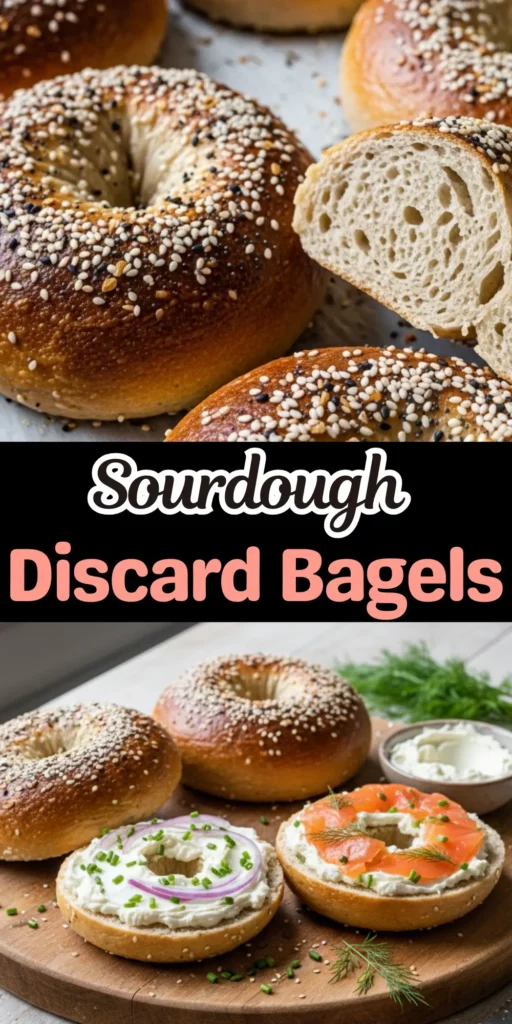
These sourdough discard bagels are my absolute weekend favorite. They smell incredible while baking.
They crackle beautifully when you slice them open. Best of all, they are surprisingly simple to make at home.
Why This Recipe Stands Out
- Uses up sourdough discard: so nothing goes to waste from your starter routine.
- Ready in under 3 hours: thanks to the addition of instant yeast alongside the discard.
- Delivers that authentic New York chew: from the quick boiling step before baking.
- Minimal prep time: with less than 30 minutes of active hands-on work.
- Highly customizable toppings: from everything bagel seasoning to sesame seeds to cinnamon sugar.
- Freezer-friendly: so you can bake a big batch and enjoy them all week long.
- Only pantry staples needed: beyond your sourdough discard.
Ingredients You’ll Need
For the Dough:
- 100g (about ½ cup) sourdough discard, room temperature
- 250g (about 1 cup) warm water (around 100 to 110°F)
- 500g (about 4 cups) bread flour (all-purpose flour also works)
- 40g (about 3 tablespoons) sugar
- 11g (about 2 teaspoons) salt
- 7g (about 2¼ teaspoons) instant yeast
For the Boiling Bath:
- Large pot of water
- 1 tablespoon baking soda
- 1 tablespoon honey or sugar
Optional Toppings:
- Everything bagel seasoning
- Sesame seeds
- Poppy seeds
- Flaky sea salt
- Cinnamon sugar
Tools to Use
- Stand mixer with dough hook attachment
- Large mixing bowl
- Plastic wrap or damp kitchen towel
- Large pot
- Slotted spoon or spider strainer
- Baking sheet
- Parchment paper
- Kitchen scale
- Bench scraper
How to Make the Sourdough Discard Bagels
Step-1: Mix the Dough
Add your sourdough discard and warm water to the bowl of a stand mixer.
Stir briefly to combine and create a milky-looking liquid.
Add the bread flour, instant yeast, sugar, and salt on top.
Mix on low speed for 2 minutes until a shaggy dough begins to form.
Increase to medium speed and knead the dough for 6 to 8 minutes until it is smooth and slightly tacky.
The dough will be stiff. This is completely normal for bagel dough.
If the dough feels too dry, add water one tablespoon at a time.
Step-2: First Rise
Lightly grease a large bowl with olive oil or neutral oil.
Transfer your dough into the greased bowl and turn it once to coat.
Cover the bowl tightly with plastic wrap or a damp kitchen towel.
Set the bowl in a warm spot and allow the dough to rise for 90 minutes.
It should look noticeably puffed and roughly doubled in size.
The kitchen will begin to carry a gentle, tangy, yeasty aroma at this point.
Step-3: Divide and Shape
Turn the risen dough out onto a lightly floured work surface.
Divide it into 8 equal pieces using a bench scraper or sharp knife.
Roll each piece into a smooth, tight ball using the base of your palm.
Press your thumb through the center of each ball to create a hole.
Gently stretch the hole to about 2 inches in diameter.
The hole will shrink during boiling and baking, so make it a little wider than you think you need.
Place the shaped bagels on a parchment-lined baking sheet.
Cover loosely with a kitchen towel and let them rest for 20 minutes.
Step-4: Prepare the Boiling Bath
Fill a large pot with water and bring it to a rolling boil over high heat.
Add 1 tablespoon of baking soda and 1 tablespoon of honey to the boiling water.
The baking soda creates the classic chewy crust that makes bagels so satisfying.
The honey adds a gorgeous golden color and a delicate sweetness to the outside.
Preheat your oven to 425°F (220°C) while the water heats up.
Step-5: Boil the Bagels
Carefully lower 2 to 3 bagels at a time into the boiling water.
Boil each bagel for 30 to 60 seconds per side.
You will notice them puffing up slightly and developing a smooth, shiny surface.
Use a slotted spoon or spider strainer to lift them out of the water.
Place the boiled bagels back onto the parchment-lined baking sheet.
Work in batches to avoid overcrowding the pot.
Step-6: Add Toppings and Bake
While the bagels are still wet and glistening from the boiling bath, add your toppings.
Sprinkle generously with everything bagel seasoning, sesame seeds, poppy seeds, or your topping of choice.
The moisture from boiling acts as a natural glue for the toppings.
Place the baking sheet on the center rack of your preheated oven.
Bake for 22 to 25 minutes until the bagels are deeply golden brown on top.
Your kitchen will smell absolutely incredible, warm and toasty with a beautiful sourdough tang.
Remove from the oven and let cool on the baking sheet for at least 10 minutes before slicing.
Related Recipes You’ll Love to Try
- Sourdough Discard Pretzel Bites: A Creative Recipe for Leftover Starter
- Sweet, Soft & Waste-Free Sourdough Discard Banana Bread Recipe
- Royal Icing Love Cookies: The Sweetest Treat for Any Celebration
- Sourdough Discard Cheese Crackers: Crispy, Cheesy & Zero Waste
Nutritional Information
Estimated per bagel (1 of 8 servings):
- Calories: 270 kcal
- Protein: 8g
- Fat: 1g
- Carbohydrates: 55g
- Sodium: 380mg
Note: Nutritional values are estimates and may vary based on specific ingredients used.
Tips for Success
- Use room temperature discard for the best dough consistency and rise. Cold discard straight from the fridge can slow things down.
- Weigh your ingredients using a kitchen scale. Baking by grams is far more accurate than cups and gives more consistent results.
- Do not skip the boiling step This is what gives bagels their iconic chewy crust and glossy exterior.
- Make the hole bigger than you think. It will shrink significantly during boiling and baking.
- Check your water temperature. Water that is too hot (above 120°F) will kill the yeast and prevent your dough from rising.
- Let them cool fully before storing. Storing warm bagels traps steam and makes them soggy.
- Freeze for later. Slice before freezing so you can pop them straight into the toaster without waiting.
Common Mistakes to Avoid
- Not kneading long enough. Under-kneaded dough produces dense, flat bagels. Knead for a full 6 to 8 minutes to develop proper gluten structure.
- Skipping the rest after shaping. Those 20 minutes of rest are important. They allow the gluten to relax and make shaping much easier.
- Boiling for too long. Over-boiling makes bagels dense and gummy inside. Keep it to 30 to 60 seconds per side.
- Using discard that is too old or off. Discard older than a week may have a very sharp, unpleasant sour smell. Use discard that is no older than 2 to 3 days for the best flavor.
- Overcrowding the boiling pot. Bagels need room to expand in the water. Boil only 2 to 3 at a time.
- Cutting the bagel before it cools. Cutting a hot bagel causes the interior to become gummy and sticky. Always let them rest for at least 10 minutes.
Creative Serving Ideas
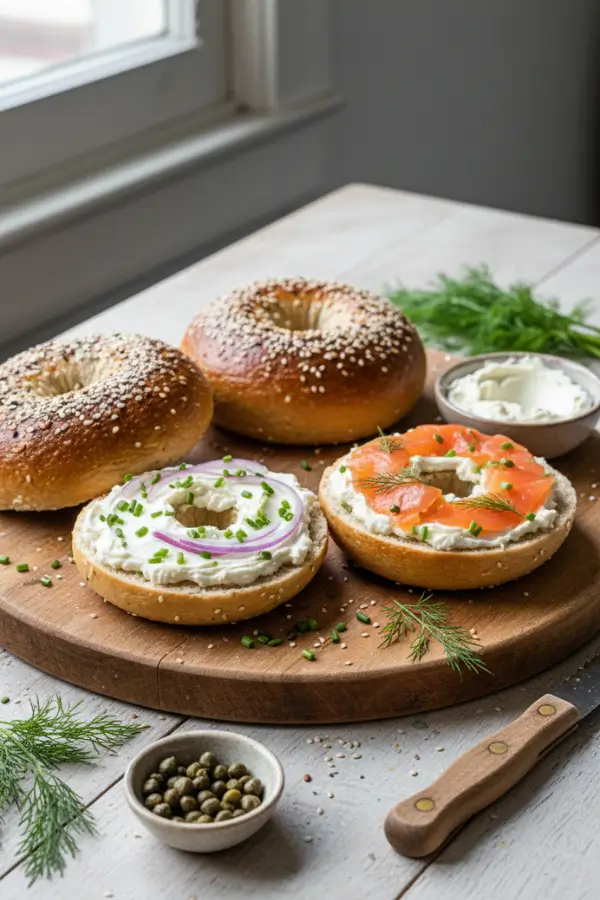
- Classic cream cheese spread with a thick layer of chive or plain cream cheese is always a crowd-pleaser.
- Avocado and egg on a toasted sesame bagel makes a hearty, protein-rich breakfast.
- Peanut butter and sliced banana on a plain or cinnamon-sugar bagel for a sweet morning treat.
- Everything bagel with smoked salmon, thinly sliced cucumber, red onion, and capers for a deli-style experience at home.
- Mini pizza bagels by spreading tomato sauce and shredded cheese on halved bagels and broiling until bubbly.
- Bagel chips by slicing leftover bagels thin, brushing with olive oil, and baking at 375°F until crispy.
- Grilled bagel sandwich with turkey, sharp cheddar, and mustard, toasted in a skillet for a satisfying lunch.
Frequently Asked Questions
Can I Use Active Sourdough Starter Instead of Discard?
Yes, you can swap in an equal amount of active, bubbly starter in place of the discard.
When using active starter, consider reducing the instant yeast by half since the starter will contribute extra leavening power.
Your rise times may be slightly faster, so keep an eye on the dough.
Do I Have to Add Instant Yeast?
The yeast is what makes this a quick, same-day recipe.
Without it, you would need to rely entirely on the natural leavening in the discard, which requires a much longer fermentation of 8 to 12 hours overnight.
If you prefer a yeast-free method, mix the dough the night before and allow it to slowly rise in the refrigerator overnight.
Why Is My Dough So Stiff and Hard to Mix?
Bagel dough is intentionally a low-hydration dough, which means it is meant to be stiffer than most bread doughs.
This stiffness is what gives bagels their dense, chewy structure.
If your stand mixer struggles, give the motor a rest halfway through and continue kneading in intervals.
How Do I Store Leftover Bagels?
Store bagels in an airtight bag or container at room temperature for up to 3 days.
For longer storage, slice each bagel in half and place in a zip-lock bag in the freezer for up to 3 months.
Toast directly from frozen for the freshest texture.
Why Did My Bagels Come Out Flat?
Flat bagels are usually caused by under-proofing during the first rise.
Make sure your dough has fully doubled before you proceed to shaping.
Also check that your yeast is fresh and your water was not too hot when mixing.
Can I Make These Without a Stand Mixer?
Absolutely. You can knead this dough entirely by hand on a lightly floured surface.
Expect to knead for about 10 minutes by hand to achieve the same smooth, elastic texture.
It is a workout, but the results are just as delicious.
What Is the Best Flour for Sourdough Discard Bagels?
Bread flour is highly recommended because of its higher protein content.
Higher protein creates stronger gluten strands, which give you that satisfyingly chewy bagel texture.
All-purpose flour will also work and produces a slightly softer result.