Our site contains ads and uses Amazon affiliate links. We may earn a small commission at no extra cost to you. We know ads can be distracting, and we’re sorry for any inconvenience they cause. It helps us keep the site running. Thanks for your understanding and supporting us!
📊Recipe At A Glance
- Prep Time: 20 minutes
- Cook Time: 65 minutes
- Total Time: 85 minutes
- Servings: 12 to 15 people
- Diet Type: Vegetarian
- Cuisine: American
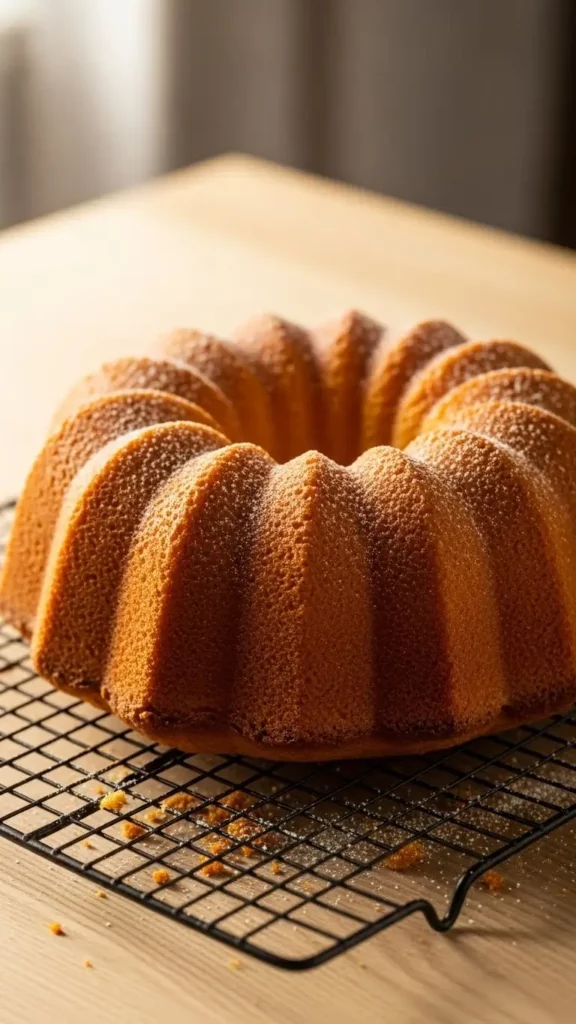
Imagine slicing into a moist, tender cake that smells like warm vanilla and toasted butter.
This vanilla wafer cake is an old-fashioned treasure passed down through generations.
Instead of traditional flour, this recipe uses crushed vanilla wafers as its secret ingredient. The result is a beautifully dense bundt cake packed with sweet coconut and crunchy pecans.
Every bite delivers layers of buttery richness and comforting nostalgia.
Whether you’re baking for a family gathering or a special occasion, this vintage cake will have everyone reaching for seconds.
Why This Recipe Stands Out
- This cake replaces traditional flour with crushed vanilla wafers, creating a unique and superior texture that rivals pound cake.
- The combination of shredded coconut and chopped pecans provides both moisture and delightful crunch in every slice.
- It requires no frosting yet remains incredibly moist and flavorful, making it a stress-free dessert option.
- This bundt cake is sturdy enough to transport to potlucks, church events, and family gatherings without falling apart.
- The recipe stays fresh for up to five days at room temperature, perfect for busy households.
- It freezes beautifully for up to three months, allowing you to prepare it well in advance.
Understanding the Vanilla Wafer Cake
Vanilla wafer cake represents a timeless American dessert that gained popularity in the 1970s.
This vintage cake stands out because it swaps traditional all-purpose flour for an entire box of crushed vanilla wafers.
The cookies melt seamlessly into the batter, creating a fine crumb structure. The vanilla wafers also eliminate the need for added vanilla extract since the cookies already contain vanilla flavor.
Combined with shredded sweetened coconut and chopped pecans, this cake develops a rich, complex taste that goes far beyond typical vanilla cakes.
The result feels luxurious despite its humble ingredient list.
The dense, moist texture reminds many people of their grandmother’s kitchen on a lazy Sunday afternoon.
Ingredients You’ll Need
- 1 box (11 ounces) vanilla wafers, crushed into fine crumbs
- 1 cup unsalted butter, softened to room temperature
- 2 cups granulated sugar
- 6 large eggs, at room temperature
- 1/2 cup whole milk
- 1 cup shredded sweetened coconut
- 1 cup chopped pecans
- 2 teaspoons vanilla extract
- 1 teaspoon salt
Tools to Use
- 10 to 12-cup bundt pan or tube pan
- Food processor or rolling pin
- Large mixing bowl
- Stand mixer or hand mixer
- Measuring cups and spoons
- Spatula
- Wire cooling rack
- Toothpick for testing doneness
How to Make Vanilla Wafer Cake
Step-1: Prep Your Workspace and Oven
Preheat your oven to 325 degrees Fahrenheit.
Line your baking sheet with parchment paper for safety and position your rack in the middle of the oven.
Thoroughly grease a 10 to 12-cup bundt pan with butter or baking spray.
Dust the greased pan generously with flour, tapping out excess.
This double preparation prevents sticking, which is common with bundt cakes.
Step-2: Crush the Vanilla Wafers
Place your entire box of vanilla wafers into a food processor.
Pulse the cookies until they resemble fine breadcrumbs.
If you don’t have a food processor, place the wafers inside a large ziplock bag.
Use a rolling pin or wooden spoon to crush them thoroughly.
The crumbs should be uniform and powder-like. Avoid leaving any large chunks.
Step-3: Cream the Butter and Sugar
Add softened butter and granulated sugar to your mixing bowl.
Using an electric mixer on medium speed, beat for 2 to 3 minutes.
The mixture should become light, fluffy, and pale in color.
This aeration creates air pockets that make the cake tender.
Scrape down the sides of the bowl frequently to ensure even mixing.
Step-4: Incorporate the Eggs
Add room-temperature eggs one at a time to the butter mixture.
Beat well after each egg addition.
Scrape the bottom and sides of the bowl between each egg to prevent lumps.
Room temperature eggs blend more smoothly and incorporate more air than cold eggs.
This step takes about 3 to 4 minutes total.
Step-5: Add the Vanilla Wafers and Milk
Add half of the crushed vanilla wafers to the mixture.
Mix on medium speed until combined. Then add the milk and vanilla extract.
Continue mixing until smooth and well incorporated.
Add the remaining crushed vanilla wafers and mix again.
Step-6: Fold in Coconut and Pecans
Remove the bowl from the mixer.
Using a spatula, gently fold in the shredded coconut and chopped pecans by hand.
Do not overmix at this stage. Hand folding prevents overworking the batter.
The batter will be thick at this point, which is normal.
Step-7: Transfer to Pan and Bake
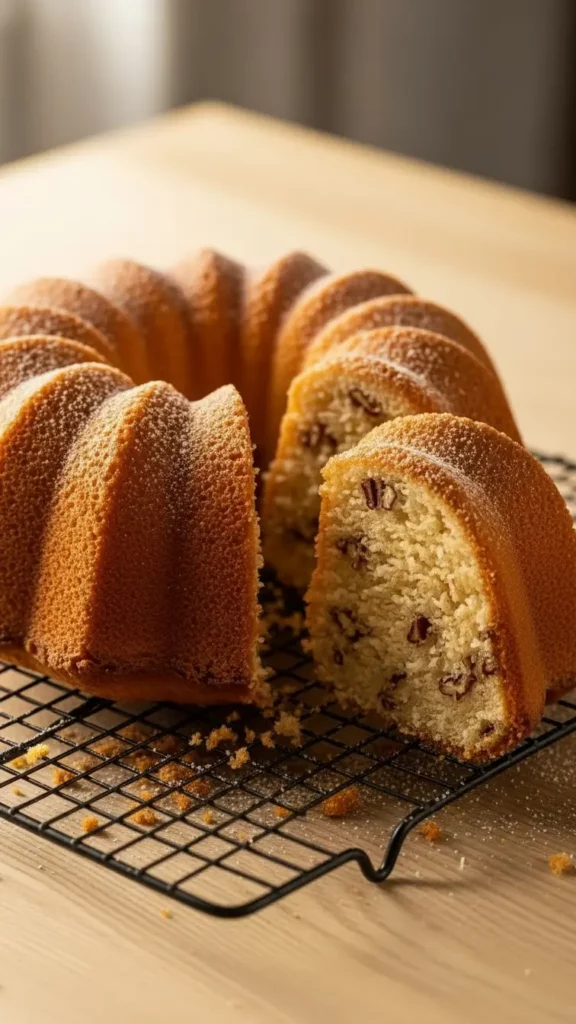
Pour the thick batter into your prepared bundt pan. Spread it evenly using a spatula.
Place the pan on your prepared baking sheet.
Bake for 60 to 70 minutes at 325 degrees Fahrenheit.
At the 60-minute mark, insert a toothpick into the center. It should come out mostly clean or with just a few crumbs attached.
Step-8: Cool the Cake Properly
Remove the cake from the oven.
Let it sit in the pan for 10 to 15 minutes on a wire rack.
This resting period allows the cake to pull away from the sides naturally.
Run a thin knife around the edges and center to loosen it. Invert the cake onto your cooling rack.
The cake should release smoothly from the pan.
Let it cool for another 20 to 30 minutes before serving.
Related Recipes You’ll Love to Try
- Holiday Showstopper: Easy Eggnog Crème Tart You Must Try
- Gnome Mini Cheesecakes: Meet the Cutest Holiday Treat Ever
- Easy Strawberry Chocolate Pine Cones: Magical Winter Dessert
- No-Bake Eggnog Cheesecake with Gingersnap Crust
Nutritional Information
Per serving (approximate values):
- Calories: 309
- Protein: 4 grams
- Total Fat: 14 grams
- Total Carbohydrates: 43 grams
- Sodium: 138 milligrams
- Fiber: 1 gram
- Sugar: 34 grams
Note: These values are estimates based on standard ingredient portions and may vary depending on your specific ingredients and serving size.
Tips for Success
- Use unsalted butter for better flavor control and consistent results in your baking.
- Room temperature eggs incorporate more smoothly and create a lighter, airier crumb structure.
- Don’t skip the grease and flour method for your bundt pan. It’s the most reliable way to prevent sticking.
- Use quality vanilla wafers like Nabisco Nilla Wafers for authentic flavor and texture.
- Crush your vanilla wafers into uniform fine crumbs for consistent texture throughout the cake.
- Never skip the cooling time in the pan. This allows the cake structure to set properly before turning it out.
- If your cake seems stubborn about releasing, let it cool longer. Patience prevents breakage.
- Invest in a quality non-stick bundt pan you trust, as cheaper pans often cause sticking problems.
- Always use medium speed on your mixer to avoid overdeveloping the gluten and creating a tough cake.
- Have all ingredients at room temperature before starting for the best results.
Common Mistakes to Avoid
- Using cold eggs directly from the refrigerator, which prevents proper incorporation and creates lumps.
- Crushing vanilla wafers into uneven pieces instead of fine, uniform crumbs.
- Overmixing the batter after adding the pecans and coconut, which toughens the cake.
- Insufficiently greasing and flouring the bundt pan, leading to sticking and torn cakes.
- Opening the oven door frequently during baking, which causes temperature drops and uneven baking.
- Removing the cake from the pan too quickly before it cools, which causes it to fall apart.
- Using melted or cold butter instead of softened butter, which affects the batter texture.
- Skipping the middle-rack placement, which can cause uneven browning or dry edges.
- Using salted butter, which creates an unbalanced flavor profile and affects texture.
- Forgetting that ovensize and rack placement affect baking time, so always check for doneness with a toothpick.
Creative Serving Ideas
- Dust the cooled cake with powdered sugar using a small sifter for an elegant presentation.
- Serve each slice with a generous dollop of freshly whipped cream on the side.
- Top each slice with vanilla ice cream for a warm-and-cold combination that’s absolutely divine.
- Drizzle warm caramel sauce over each slice just before serving for added richness.
- Toast individual cake slices in butter in a skillet and serve with berries and whipped cream.
- Pair the cake with strong coffee or tea for an afternoon treat that satisfies both sweet and beverage cravings.
- Layer slices with whipped cream between them to create an impressive cake stack for entertaining.
- Serve alongside fresh fruit like strawberries or raspberries to balance the sweetness.
- Create a trifle by layering crumbled cake pieces with whipped cream and fresh berries.
- Try serving thin slices with a light lemon curd or raspberry compote for a fruity contrast.
Frequently Asked Questions
Can I Use Margarine Instead of Butter?
No, margarine will not produce the same buttery flavor and rich crumb structure.
The water content in margarine differs significantly from butter, affecting your cake’s final texture and taste.
How Long Does This Cake Stay Fresh?
The cake keeps at room temperature in an airtight container for four to five days.
Refrigerated, it stays fresh for up to seven days, and frozen cakes last for three months.
Can I Substitute Walnuts for Pecans?
Yes, walnuts work wonderfully as a substitute and offer a slightly different but equally delicious flavor profile.
You can also use almonds or remove nuts entirely if you have allergies.
What If My Cake Sticks to the Pan?
Use a high-quality non-stick bundt pan and apply the grease and flour method generously. Baker’s Joy spray with flour provides excellent non-stick coverage.
Can I Add Frosting to this Cake?
This cake doesn’t need frosting, but cream cheese frosting or a simple vanilla glaze would complement it beautifully if you prefer extra sweetness.
Why Is My Cake Dense?
Dense texture is normal for this recipe, but overmixing the batter creates excessive density.
Mix only until ingredients combine. Also, ensure your eggs are room temperature for lighter incorporation.
Can I Make This Cake in a Different Pan?
A tube pan works as well as a bundt pan. Standard round cake pans require reduced baking time, so start checking at 30 to 40 minutes instead.
Do I Need to Remove the Vanilla Wafer Box’s Inner Packaging?
Yes, remove all packaging including the inner cardboard sleeves before using the wafers.
This ensures you’re using the actual cookies without any packaging material.
What Does This Cake Taste Like?
It tastes like a sophisticated pound cake with coconut and pecan flavors.
The vanilla wafers add subtle vanilla notes without tasting “cookie-like.”
Is This Recipe Suitable for Large Gatherings?
Absolutely. This cake is sturdy, travels well, and serves approximately 12 to 15 people.
You can make it a day or two ahead for convenience.