Our site contains ads and uses Amazon affiliate links. We may earn a small commission at no extra cost to you. We know ads can be distracting, and we’re sorry for any inconvenience they cause. It helps us keep the site running. Thanks for your understanding and supporting us!
Most Biscoff no bake cheesecake bars you find online are either too soft to hold their shape or too dense because the filling ratio is off. The problem is almost always the same: too much Biscoff spread and not enough cream cheese.
Biscoff spread is thick, sweet, and fatty. It adds incredible flavor, but it also softens the structure of a no bake filling if you use too much of it.
Get the balance right and you end up with bars that are creamy, rich, and firm enough to cut into clean squares straight from the fridge.
This recipe explains exactly why each ingredient ratio matters, walks through the double chill method for a crust that never crumbles, and shows you how to get that glossy spread topping to set without cracking.
Why the Biscoff-to-Cream Cheese Ratio Is Everything
Biscoff spread is made from ground Lotus Biscoff cookies blended with sugar, vegetable oil, and soy flour. It has a smooth, paste-like consistency and a deep caramel-spice flavor that makes it one of the most beloved cookie butters in the world.
But in a no bake cheesecake filling, it behaves very differently from a neutral ingredient like vanilla or powdered sugar.
It adds fat and softness simultaneously. When you exceed roughly one part spread to two parts cream cheese by weight, the filling never firms up properly in the fridge.
Cream cheese is what provides the structural backbone of a no bake filling. Its protein matrix sets when chilled, giving the bars the firmness they need to hold a slice. Biscoff spread weakens that matrix by coating the protein strands with fat, which prevents proper bonding.
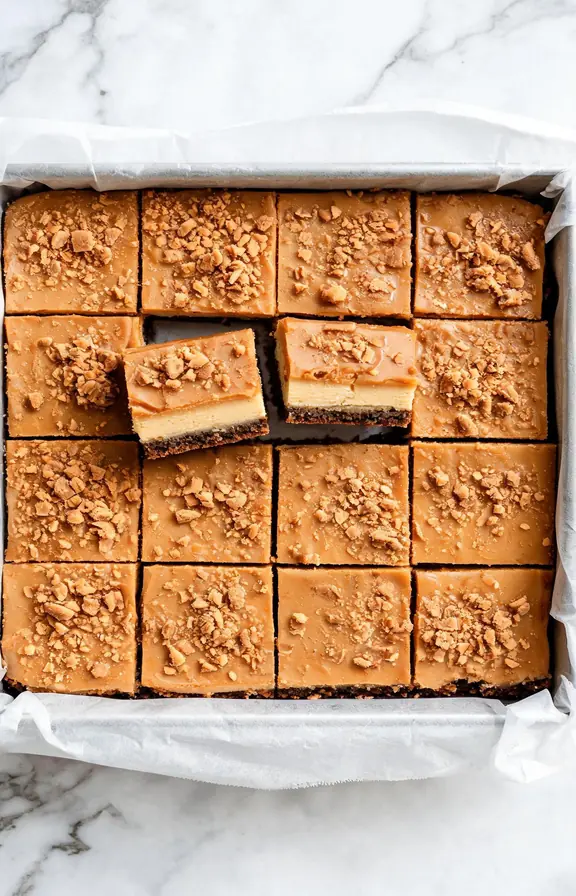
The fix is simple: use 225g of Biscoff spread to 450g of full-fat cream cheese. This keeps the caramel spice flavor loud and present while preserving enough cream cheese structure to produce bars you can lift cleanly from the pan.
For more no bake filling ideas that use this same logic of balancing fat and structure, see how we handled a simple 3-ingredient Philadelphia no bake cheesecake filling that sets perfectly every time.
The Double Chill Method: A Crust That Actually Holds
No competitor recipe covers this, and it is the single biggest reason no bake bar crusts go wrong. A Biscoff cookie crust needs two separate chilling periods to deliver the right texture under the filling.
The first chill happens right after you press the crust into the pan. You let it firm up in the fridge for 15 to 20 minutes before adding any filling. During this time, the butter in the crust solidifies and binds the crumbs together into a stable slab.
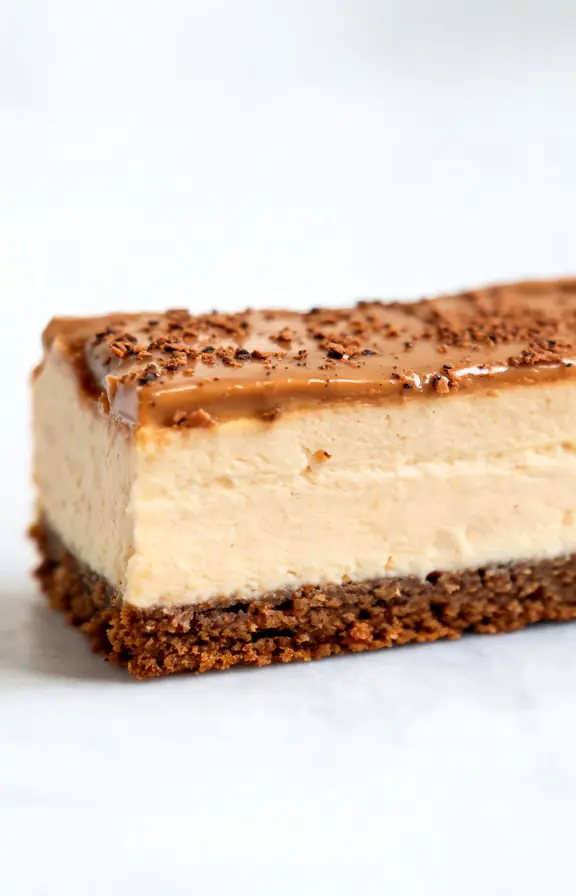
The second chill happens after you pour the filling and add the spread topping. This is the long 6-hour or overnight chill that sets the entire bar from bottom to top as a single unit.
Skipping the first chill means the filling soaks into an unbonded crust and you end up with a muddy, indistinct layer that has no clean texture contrast. The double chill keeps the crust crisp and sandy while the filling stays dense and creamy above it.
Cold Heavy Cream: The Secret to a Light but Firm Filling
Heavy whipping cream with at least 35% fat content is the other essential ingredient in this filling. When whipped cold, it traps air and forms a stable foam that lightens the dense cream cheese mixture without making it runny.
The trick is to whip the cream separately to stiff peaks before folding it into the cream cheese and Biscoff mixture.
If you add the cream liquid to the cream cheese and beat everything together at once, you lose the airy structure and end up with a denser, heavier filling that takes longer to set.
Folding, not stirring, is critical. Use a wide rubber spatula and fold in thirds from the bottom of the bowl upward. Stop as soon as the streaks disappear. Overmixing deflates the cream and removes the lightness that makes these bars feel creamy rather than dense.
Getting the Biscoff Spread Topping Right
The spread topping on these bars is what makes them look bakery-finished. But if you pour it on wrong, it either sinks into the filling or sets in an uneven, cracked layer.
Warm the Biscoff spread gently in the microwave for 10 to 15 seconds until it is just barely pourable but still thick. If you heat it more than that, it will be too liquid and run over the edges of the bars.
Pour it over the fully set filling in a thin, even layer. Use an offset spatula to spread it to the edges in one smooth pass. Then return the pan to the fridge for 30 minutes to let the topping firm up on its own before slicing.
This step is why you should always apply the topping at the very end, not before the long chill. A topping applied to an unset filling will sink and blend in rather than forming a distinct, glossy top layer.
How to Slice Clean Bars Every Time
Cutting any no bake cheesecake bar is a technique problem, not a recipe problem. The filling is soft and the crust is crumbly. If you cut cold without preparation, the knife drags and the layers separate.
Run a sharp knife under hot tap water for 10 seconds, then wipe it completely dry.
Press straight down through the bar in one firm motion, then lift the knife and wipe it dry again before each cut. The heat transfers to the filling just enough to let the knife pass cleanly without dragging.
Cut in a grid pattern: score the long dimension first into four equal strips, then cut each strip into four pieces. This gives you 16 bars of even size that are easy to serve and stack in a container for storage.
If you enjoy clean, portionable no bake desserts for a crowd, our no bake cherry cheesecake bars with a buttery graham cracker crust use the same slicing technique and are just as easy to make ahead.
Storage, Make-Ahead, and Freezing
These bars keep in the fridge for up to 5 days in an airtight container. Place parchment paper between layers to prevent the Biscoff topping from sticking.
For make-ahead purposes, you can prepare the crust and filling up to 2 days before serving and add the spread topping on the day of. This gives you more flexibility without sacrificing texture.
To freeze, cut the bars first, then wrap each one individually in plastic wrap before placing them in a freezer bag. Freeze for up to 2 months. Thaw overnight in the fridge, never at room temperature, to prevent condensation from softening the crust.
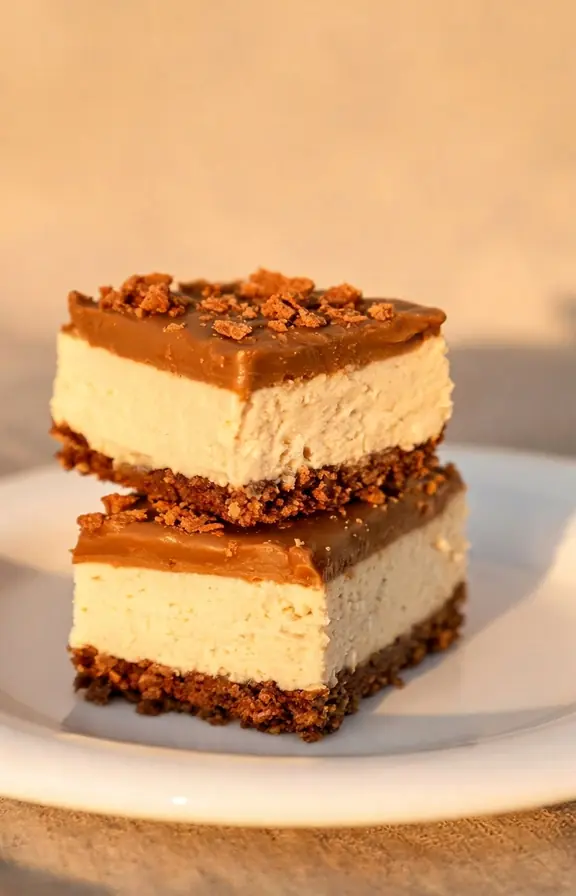
- Chocolate base: Swap the Biscoff cookie crust for crushed Oreos and add a drizzle of melted dark chocolate over the Biscoff topping.
- Salted caramel twist: Add a thin drizzle of salted caramel sauce between the filling and the spread topping before the final chill.
- Mini bar version: Press the crust into a 24-cup mini muffin tin lined with parchment strips and portion individual servings for easy party plating.
If you love the no bake format for desserts that serve a crowd without heating up your kitchen, our 5-minute no bake cheesecake dip with a cream cheese base is the fastest version of this same flavor profile you can make.
Frequently Asked Questions
Biscoff No Bake Cheesecake Bars
Silky, creamy no bake cheesecake bars loaded with Lotus Biscoff flavor from crust to topping. No oven needed. Sets perfectly with the right cream cheese ratio and the double chill method. Make ahead friendly.
- 8×8 or 9×9 inch square baking pan
- Parchment paper with overhang on all sides
- Food processor or zip-lock bag and rolling pin (for crumbs)
- Stand mixer or hand mixer
- Large mixing bowl
- Rubber spatula
- Offset spatula (for spreading topping)
- Sharp knife and cutting board
- 250g (about 30) Lotus Biscoff cookies, finely crushed
- 75g (5 tablespoons) unsalted butter, melted
- Pinch of fine sea salt
- 450g (2 blocks / 16 oz) full-fat brick cream cheese, room temperature
- 225g (3/4 cup) Lotus Biscoff spread, cold from the jar
- 80g (2/3 cup) powdered sugar, sifted
- 1 teaspoon pure vanilla extract
- 240ml (1 cup) heavy whipping cream, very cold (35% fat minimum)
- 100g (1/3 cup) Lotus Biscoff spread
- 3 to 4 crushed Biscoff cookies for garnish (optional)
- Prepare the pan and make the crust Line an 8×8 or 9×9 inch pan with parchment paper, leaving a 2-inch overhang on all four sides. These overhangs are your handles for lifting the bars cleanly after chilling. Pulse the Biscoff cookies in a food processor until they form fine, even crumbs with no large chunks. Transfer to a bowl, add the melted butter and pinch of salt, and stir until the crumbs look like wet sand and clump when pressed. Pour into the prepared pan and press firmly and evenly into the base using the flat bottom of a measuring cup. Press slightly up the sides for a defined edge. Refrigerate for 20 minutes while you make the filling.
- Whip the cream to stiff peaks Pour the very cold heavy cream into a clean bowl and beat with a hand mixer or stand mixer on medium-high speed for 2 to 3 minutes until stiff peaks form. The cream should hold a firm point when you lift the beater and not slump back down. Set aside. Do not over-beat or the cream will become grainy and separate.
- Make the Biscoff cream cheese filling In a large bowl, beat the room temperature cream cheese with a hand mixer on medium speed for 1 minute until completely smooth with no lumps. Add the cold Biscoff spread and sifted powdered sugar and beat again for 1 minute until fully incorporated and the mixture is uniformly caramel-colored. Add the vanilla and beat briefly to combine. Taste and adjust sweetness with an extra tablespoon of powdered sugar if needed. The Biscoff spread is already quite sweet, so be conservative.
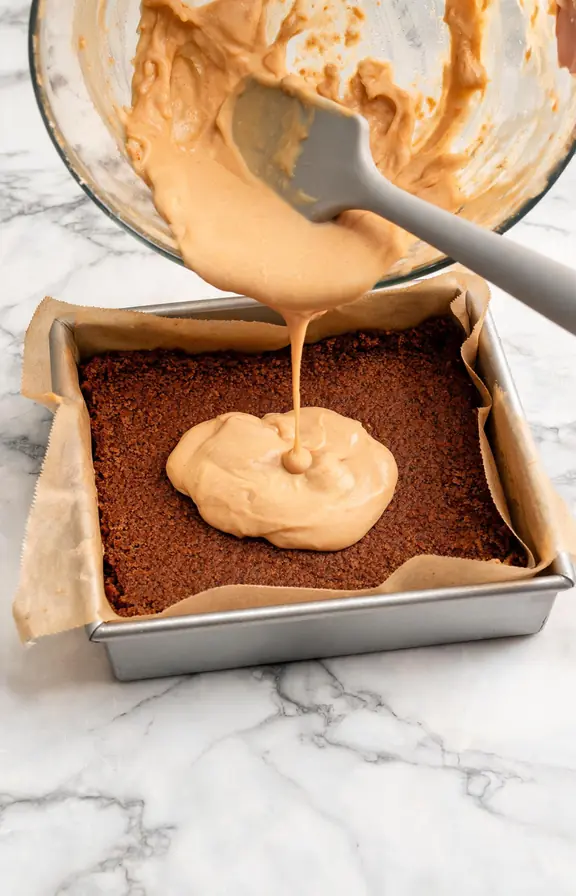
- Fold in the whipped cream Add the whipped cream to the cream cheese mixture in three additions. Use a wide rubber spatula and fold from the bottom of the bowl upward in slow, deliberate strokes. Stop folding as soon as the streaks of white disappear. The finished filling should look thick, airy, and glossy and hold its shape when you lift the spatula. Overmixing will deflate the cream and produce a denser, heavier filling.
- Fill the pan and smooth the top Remove the chilled crust from the fridge. Pour the Biscoff filling over the crust and use an offset spatula to spread it into an even layer that reaches all four corners. Tap the pan gently on the counter twice to release any large air pockets. Smooth the surface one more time. Refrigerate for at least 6 hours, or cover with plastic wrap and chill overnight for the cleanest slices.
- Add the Biscoff spread topping Once the bars are fully set, microwave 100g of Biscoff spread for 10 to 15 seconds until it is just pourable but still thick and not runny. Pour it over the set filling and use an offset spatula to spread it in a thin, even layer across the entire surface. Sprinkle with crushed Biscoff cookies if using. Return the pan to the fridge for 30 minutes to firm up the topping before slicing.
- Slice and serve Lift the bars from the pan using the parchment overhang and place on a cutting board. Run a sharp knife under hot water for 10 seconds, wipe it completely dry, then press straight down through the bars in one clean motion. Wipe the knife dry after every single cut. Score into four strips lengthwise, then cut each strip into four bars to yield 16 even pieces. Serve immediately or store in an airtight container in the fridge.
Nutritional values are estimates calculated using standard USDA food composition data. Actual values will vary based on the brand of cream cheese, the exact amount of Biscoff spread used in the topping layer, and bar size after cutting.