Our site contains ads and uses Amazon affiliate links. We may earn a small commission at no extra cost to you. We know ads can be distracting, and we’re sorry for any inconvenience they cause. It helps us keep the site running. Thanks for your understanding and supporting us!
Most pumpkin pecan tassies fail before the filling ever goes in. The cream cheese pastry looks fine on the counter, then collapses into flat little puddles the moment it hits a hot mini muffin pan.
The other common failure shows up after baking. The pumpkin filling either weeps liquid onto the pecan topping or sinks into a dry, cracked dip in the center.
Neither problem comes down to bad luck. Both trace back to temperature control in the pastry and moisture control in the filling, and this article walks through the fix for each one before giving you the full recipe.
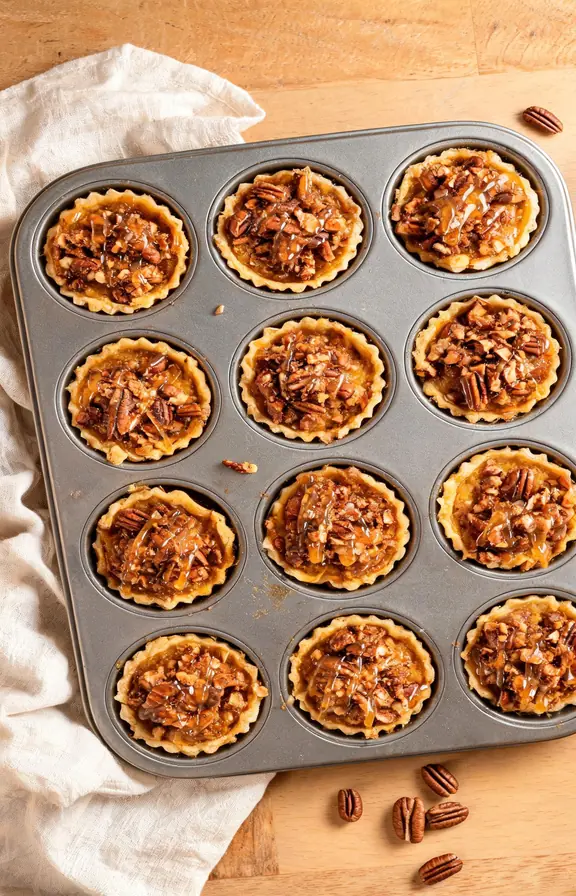
Why Pumpkin Pecan Tassie Shells Shrink or Sink Instead of Holding Their Shape
Cream cheese pastry behaves differently than a standard pie dough. The cream cheese adds extra fat and moisture, which makes the dough soft and pliable, but also much quicker to warm up under your fingers.
Warm dough means soft butter, and soft butter has no structure left to hold once it meets a hot oven. The shell slumps down into a flat puck before the starches ever get the chance to set.
There is a second factor working against you at the same time. Pressing the dough firmly into a small muffin cup stretches and agitates the gluten network, and stretched gluten wants to spring back exactly like a rubber band the instant it’s given the chance.
The Two-Chill Fix That Keeps Every Tassie Shell Standing
The first chill happens right after mixing. Wrap the dough and refrigerate it for at least 30 minutes so the flour hydrates fully and the gluten has time to relax before you ever pick up a rolling pin.
The second chill happens after the shells are shaped, not before. Once every ball of dough is pressed into its mini muffin cup, the whole pan goes back into the refrigerator for 20 to 30 minutes.
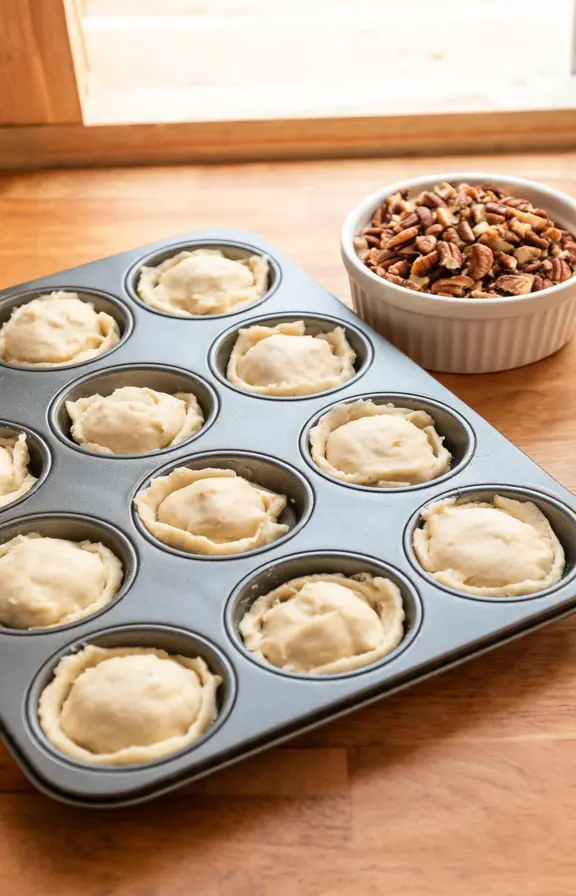
This is also the moment to preheat your oven, since a fully preheated oven means the chilled shells go from cold to set almost immediately, rather than sitting in a slowly warming oven where the fat has more time to soften again before it firms up for good.
If you want an even more forgiving version of this pastry, our tested gluten free pie crust dough follows the same chill-twice logic and works well swapped into these same mini muffin cups.
Building a Pumpkin Filling That Sets Without Turning Watery or Cracking
Canned pumpkin puree is mostly water, and that water has nowhere to go once it’s sealed inside a small pastry cup. Too much of it and the filling never fully sets, leaving a wet layer right where the pastry meets the custard.
An egg yolk, rather than a whole egg, keeps the filling rich and binds it firmly without adding the extra water a whole egg white would carry in. A small splash of heavy cream rounds out the texture without thinning it further.
Fill each shell only about two thirds full. Pumpkin custard puffs as it bakes, and an overfilled shell either overflows onto the pecan topping or pushes the topping right off the surface.
If you love this pumpkin and warm spice combination in a bigger format too, our layered pumpkin spice cake uses the same core spice blend at full cake size.
Toasting the Pecans Is the One Step Most Recipes Skip
Raw chopped pecans mixed straight into brown sugar and butter still taste fine, but they taste flat compared to pecans that spent a few minutes in a dry pan first. Toasting drives off surface moisture and kicks off a Maillard reaction between the nut’s natural sugars and proteins.
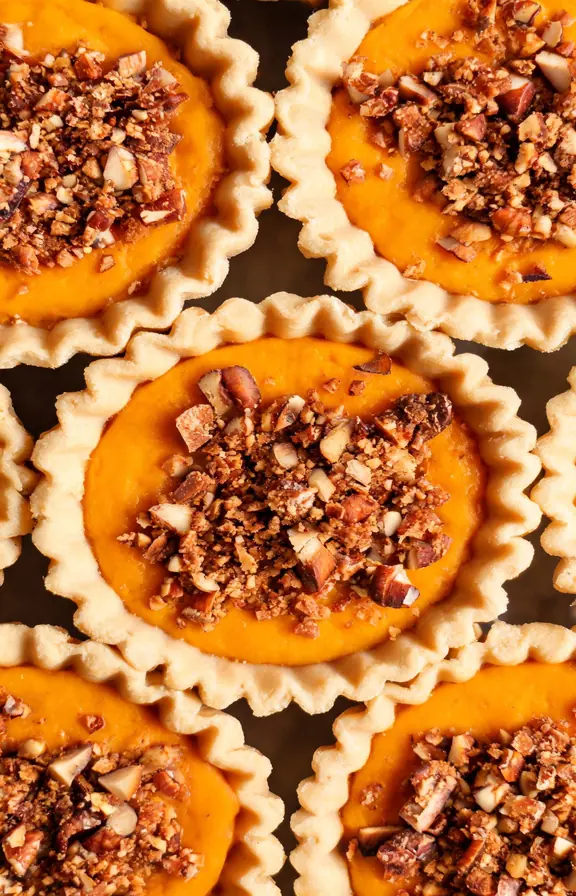
That reaction is the same one behind the deep, toasty flavor in the toasted pecan layer of our coconut pecan German chocolate frosting, and it works exactly the same way here. Five to seven minutes in a dry skillet, stirred often, is all it takes.
Let the toasted pecans cool fully before mixing them with the sugar and melted butter. Warm pecans will start to melt that butter prematurely, leaving a greasy topping instead of a crumbly one.
Tassies vs Pecan Pie Bars vs Mini Pumpkin Pies: Does the Pan Actually Matter
A standard mini muffin pan holds about a tablespoon of filling per cup, which is exactly the ratio this recipe is built around. Swap in a shallower tartlet pan and the same amount of filling spreads thinner, cutting several minutes off the bake time.
Pecan pie bars use a single shared crust instead of individual shells, which means no shrinkage risk at all since there’s no small cup shape to slump. The tradeoff is losing the individual, grab-and-go format that makes tassies so popular for parties.
Whichever pan you use, dark nonstick metal browns the pastry edges faster than a light colored pan, so start checking for doneness a couple minutes early if that’s what you have on hand.
Frequently Asked Questions
Pumpkin Pecan Tassies
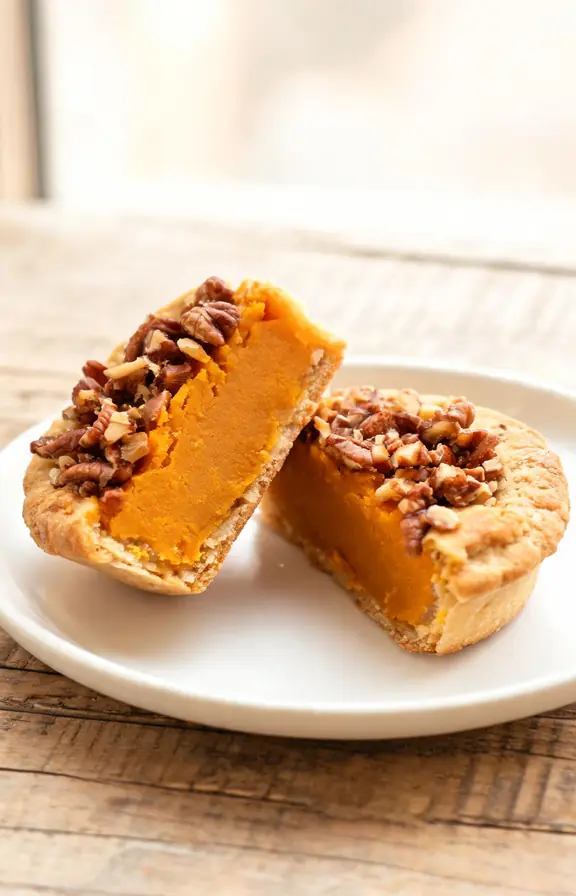
Buttery cream cheese pastry shells filled with a spiced pumpkin custard and topped with a toasted pecan crumble. Built around a two-chill method so every shell holds its shape, with a light maple glaze finish.
- Mini muffin pan (24 cups, or two 12-cup pans)
- Stand mixer or hand mixer
- Small skillet (for toasting pecans)
- Small cookie scoop or tablespoon
- Rolling pin (optional)
- Wire cooling rack
- Kitchen scale (recommended)
- 113g (1/2 cup) unsalted butter, softened
- 85g (3 oz) full-fat brick cream cheese, softened
- 150g (1 1/4 cups) all-purpose flour
- 1/4 teaspoon fine sea salt
- 150g (2/3 cup) light brown sugar, packed
- 120g (1/2 cup) pumpkin puree
- 1 large egg yolk
- 2 tablespoons heavy cream
- 1/2 teaspoon vanilla extract
- 1/4 teaspoon ground cinnamon
- 1/8 teaspoon ground nutmeg
- Pinch of fine sea salt
- 100g (1 cup) chopped pecans, toasted and cooled
- 65g (1/3 cup) brown sugar, packed
- 2 tablespoons unsalted butter, melted
- 60g (1/2 cup) powdered sugar
- 1 tablespoon pure maple syrup
- 1 to 2 teaspoons milk, as needed
- Make the cream cheese pastry Beat the softened butter and cream cheese together on medium speed until smooth, about 1 minute. Add the flour and salt, mixing just until the dough comes together in a shaggy mass.
- First chill Gather the dough into a disc, wrap it, and refrigerate for at least 30 minutes, or until firm but still pliable.
- Shape the shells Divide the chilled dough into 24 equal balls, about 1 tablespoon each. Press each ball into a mini muffin cup, working it up the sides to form a shell with a thin, even wall.
- Second chill Refrigerate the shaped shells, still in the pan, for 20 to 30 minutes. Preheat the oven to 350°F (175°C) while the shells chill.
- Toast the pecans While the shells chill, toast the chopped pecans in a dry skillet over medium heat for 5 to 7 minutes, stirring often, until fragrant. Let them cool completely.
- Mix the pumpkin filling Whisk the brown sugar, pumpkin puree, egg yolk, heavy cream, vanilla, cinnamon, nutmeg, and salt together in a bowl until smooth.
- Mix the pecan topping Stir the cooled toasted pecans with the brown sugar and melted butter until evenly coated.
- Fill and top Spoon the pumpkin filling into the chilled shells, filling each about two thirds full. Sprinkle the pecan topping evenly over each filled shell.
- Bake Bake for 20 to 22 minutes, until the pastry edges are golden and the filling looks set with a slight wobble in the center. Cool in the pan for 10 minutes.
- Unmold and glaze Run a butter knife gently around each tassie and lift them onto a wire rack to cool completely. Whisk the powdered sugar, maple syrup, and milk together, then drizzle over the cooled tassies before serving.
Nutritional values are estimates calculated using standard USDA food composition data. Actual values will vary based on exact ingredient brands, tassie size, and glaze amount.