Our site contains ads and uses Amazon affiliate links. We may earn a small commission at no extra cost to you. We know ads can be distracting, and we’re sorry for any inconvenience they cause. It helps us keep the site running. Thanks for your understanding and supporting us!
There is nothing more satisfying than pulling a rustic peach crumble out of the oven on a warm summer evening.
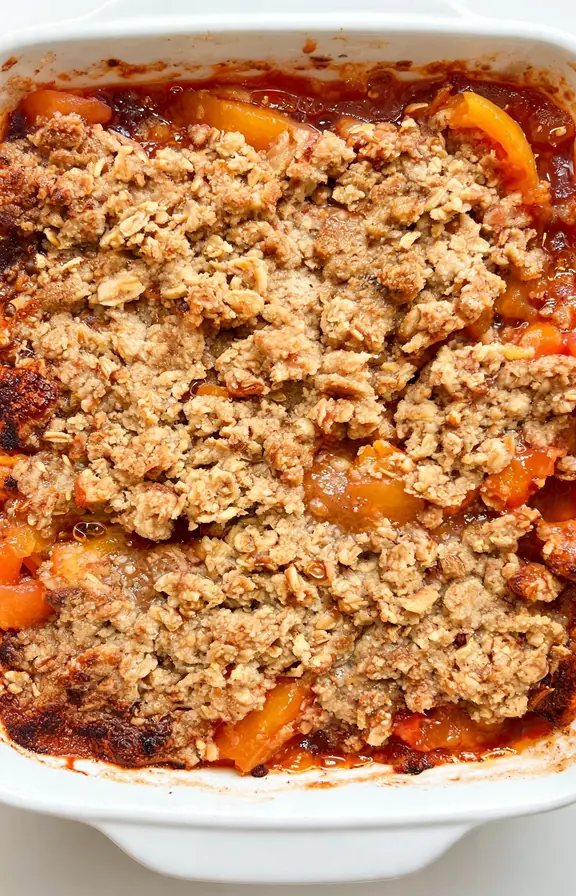
The topping turns a rich, burnished gold. Jammy peach juice bubbles up through the cracks. The kitchen smells like brown butter, ripe stone fruit, and warm cinnamon all at once.
This is a from-scratch recipe built around two things: peak-season peaches and a properly made buttery oat topping. No boxed mix. No shortcut. No fuss.
What makes this version different is the cold-butter technique. Most home bakers soften or melt their butter first. That is the single biggest reason crumbles turn out greasy and flat instead of golden and craggy.
Here, cold butter goes directly into the dry ingredients until you get thick, uneven clumps that bake into a shatteringly crisp topping with deep butterscotch pockets beneath.
If you love easy fruit desserts made without a mixer, bookmark our Golden Peach Crisp with Oats and our Cast Iron Peach Upside Down Cake for the full peach season lineup.
Choosing the Right Peaches: Freestone vs Clingstone
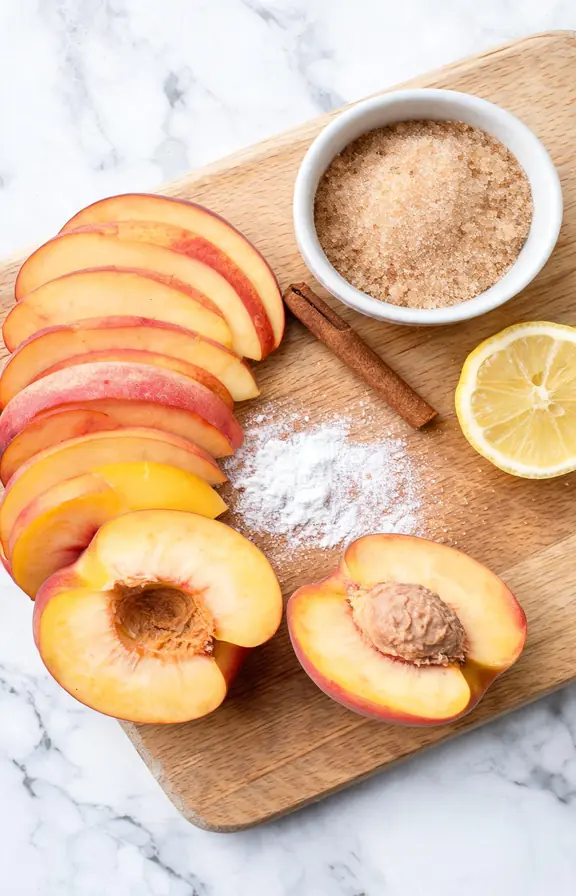
The quality of your crumble depends almost entirely on the quality of your peaches. Ripe, fragrant, in-season peaches give you a jammy, deeply flavored filling. Hard, out-of-season peaches give you a watery, disappointing one.
Look for freestone peaches when the recipe calls for slicing. The flesh separates cleanly from the pit, which makes prep fast and clean. Clingstone varieties taste just as good but pitting them takes extra patience.
A ripe peach should yield gently when pressed near the stem. It will feel heavy for its size and give off a sweet, floral aroma.
Color alone is not a reliable guide. Some pale yellow varieties are perfectly ripe while some blushed peaches are still firm and starchy inside.
If fresh freestone peaches are not available, frozen sliced peaches work well. Thaw them fully, drain the excess liquid, and pat dry before using. This prevents a soggy filling. Canned peaches in juice (not syrup) also work in a pinch but will need less added sugar.
The Cold-Butter Method: The Detail That Changes Everything
Most recipes treat the crumble topping as an afterthought. They instruct you to stir everything together until mixed. This recipe treats the topping as the star.
The ratio that works best is one part flour to one part rolled oats with slightly more brown sugar than granulated.
Brown sugar adds moisture and a deep caramel flavor that granulated sugar alone cannot deliver. A pinch of fine sea salt sharpens every other flavor without making the topping taste salty.
Old-fashioned rolled oats are the right choice here. They hold their shape and texture through baking, giving you distinct oat flakes in the finished crumble.
Quick oats become mushy and lose their individuality. Instant oats should never be used for crumble topping.
Work the cold butter in with your fingertips rather than a pastry cutter if you can. Fingertips give you better feel for when the mixture is right.
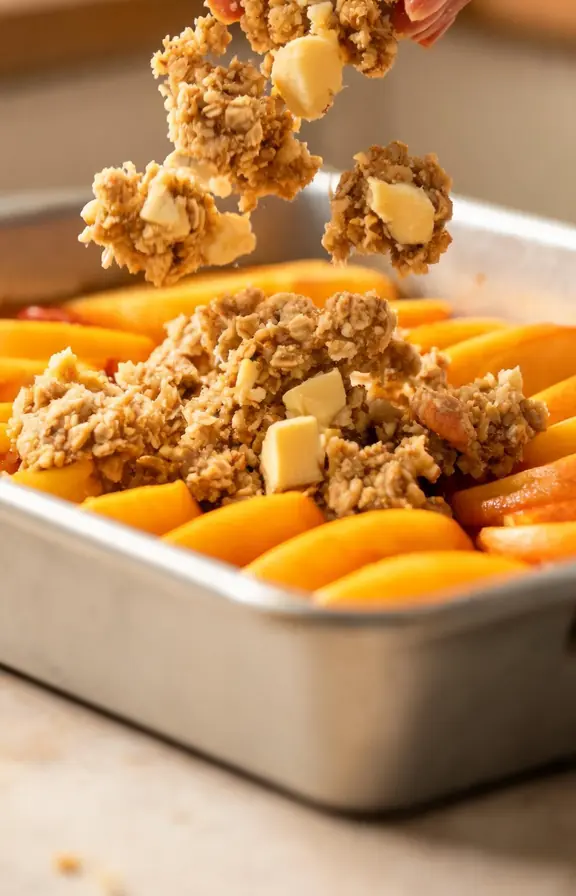
You are looking for pieces that range from pea-size to almond-size. Some smaller sandy bits are fine. Big irregular lumps are what create the best texture in the finished crumble.
How to Build the Peach Filling Without a Soggy Bottom
The peach filling has one job: become jammy, fragrant, and thick enough to spoon without running all over the bowl. Cornstarch is the key to achieving that.
Cornstarch is a more efficient thickener than all-purpose flour. It requires less quantity to achieve the same result and produces a clear, glossy gel rather than a cloudy, starchy one.
When peaches release their juices during baking, the cornstarch binds that liquid into a luscious spoonable syrup.
Lemon juice does two jobs in the filling. It adds acidity that balances the sweetness of ripe peaches and brown sugar, preventing the filling from tasting flat or cloying.
It also reacts with the natural pectin in peaches, helping the filling gel slightly even before the cornstarch takes effect.
Leaving the skin on saves time, adds texture, and retains more antioxidants. Peach skin contains a higher concentration of chlorogenic acid than the flesh.
The skin softens completely during baking and becomes nearly undetectable in the finished filling. If you prefer a smoother filling, blanch the peaches in boiling water for 30 seconds and the skins will slip off in ice water.
Doneness: Four Ways to Know the Crumble Is Ready
Peach Crumble vs Peach Crisp vs Peach Cobbler
This question comes up constantly. The short answer is that this recipe is a hybrid that most closely resembles a crisp, but is called a crumble because that name is more widely recognized.
A traditional British crumble topping contains just butter, flour, and sugar. No oats. It bakes into a softer, sandier crust. A crisp adds oats to that base, which creates a crisper, more textured result. This recipe uses oats, which technically makes it a crisp.
A cobbler is a completely different category. The topping is a dropped biscuit dough or poured batter that bakes cakey and soft. If you love that style, our Cast Iron Skillet Peach Cobbler gives you the classic Southern version done properly.
Make-Ahead, Storage, and Reheating Options
This crumble is genuinely flexible for make-ahead baking. Prepare both the peach filling and the oat topping up to 24 hours in advance and store them separately in the refrigerator. Assemble and bake just before serving.
Once baked, the crumble keeps well in the refrigerator for up to three days covered loosely with foil. The topping will soften in the fridge. To restore crispness, reheat individual portions in a 325°F oven for 8 to 10 minutes rather than the microwave.
Peach crumble also freezes well before baking. Assemble completely in a freezer-safe dish, wrap tightly, and freeze for up to two months. Bake from frozen at 350°F, adding 20 to 25 minutes to the baking time.
For baking tools that make prep like this faster and easier, browse the kitchen tool reviews on this site, particularly for baking dishes and pastry cutters that hold up through years of crumble season.
Flavor Variations Worth Trying
The base recipe is excellent as written, but it responds well to a few additions that do not overcomplicate the process.
For more ideas using oats across different dessert formats, our 4-Ingredient Peanut Butter Oatmeal No-Bake Cookies and Vegan Banana Oat Breakfast Muffins are worth bookmarking.
Why Peaches Deserve More Credit Than They Get
Fresh peaches are one of the most nutrient-dense stone fruits available during summer.
A single medium peach provides vitamin A, vitamin C, potassium, and about 2.4 grams of dietary fiber, roughly half of which is soluble fiber that feeds beneficial gut bacteria.
Research published in peer-reviewed journals has identified chlorogenic acid and neochlorogenic acid as the primary antioxidant compounds in peach flesh and skin.
These polyphenols show strong free-radical scavenging activity. The peach skin carries a significantly higher concentration of these antioxidants than the flesh, which is one reason this recipe calls for leaving the skin on.
For a thorough breakdown of the nutritional profile of peaches and how cooking affects their antioxidant content, the Healthline peach nutrition overview is a well-sourced and readable reference.

Frequently Asked Questions
Rustic Peach Crumble Recipe: Buttery Oat Topping, From Scratch
Fresh ripe peaches baked under a thick, golden oat crumble made with cold butter and brown sugar. No mixer, no fuss, ready in 55 minutes from scratch.
- 9×13 inch baking dish or equivalent
- Two large mixing bowls
- Pastry cutter or fingertips
- Sharp knife and cutting board
- Measuring cups and spoons
- Citrus juicer (for lemon)
- 6 to 7 medium ripe peaches (about 900g / 2 lbs), pitted and sliced 1/2 inch thick, skin on
- 3 tablespoons brown sugar, packed
- 1 tablespoon granulated sugar
- 1.5 tablespoons cornstarch
- 1 tablespoon fresh lemon juice
- 1 teaspoon pure vanilla extract
- 1/2 teaspoon ground cinnamon
- 1/4 teaspoon ground nutmeg
- 1 cup (90g) old-fashioned rolled oats
- 3/4 cup (95g) all-purpose flour
- 1/2 cup (110g) packed brown sugar
- 2 tablespoons granulated sugar
- 1/2 teaspoon ground cinnamon
- 1/4 teaspoon fine sea salt
- 115g (1/2 cup / 1 stick) cold unsalted butter, cut into 1/2-inch cubes
- Preheat and prep Preheat your oven to 350°F (175°C). Lightly butter a 9×13 inch baking dish and set aside. Wash and slice the peaches. There is no need to peel them.
- Make the peach filling In a large bowl, combine the sliced peaches with brown sugar, granulated sugar, cornstarch, lemon juice, vanilla extract, cinnamon, and nutmeg. Toss gently until every slice is evenly coated. Pour the filling into the prepared baking dish and spread into an even layer.
- Make the oat crumble topping In a second large bowl, whisk together the rolled oats, flour, brown sugar, granulated sugar, cinnamon, and salt. Add the cold butter cubes. Using your fingertips or a pastry cutter, work the butter into the dry ingredients until you have a mixture of pea-size and almond-size clumps with no large dry patches remaining. Do not overwork. The mixture should hold together when squeezed but fall apart easily when released.
- Assemble and bake Drop the oat topping over the peach filling in loose handfuls. Do not press it down. Leave the surface uneven and rustic. Bake uncovered for 38 to 42 minutes until the topping is deep golden brown and the peach juices are bubbling visibly in the center of the dish.
- Rest and serve Remove from the oven and let the crumble rest on the counter for 12 to 15 minutes before serving. This allows the filling to thicken into a proper syrup. Serve warm with vanilla ice cream or lightly sweetened whipped cream.
Nutritional values are estimates calculated using standard USDA food data. Actual values may vary based on specific ingredient brands, peach variety, and serving size.