Our site contains ads and uses Amazon affiliate links. We may earn a small commission at no extra cost to you. We know ads can be distracting, and we’re sorry for any inconvenience they cause. It helps us keep the site running. Thanks for your understanding and supporting us!
Most pecan topped pumpkin pie recipes read like a regular pumpkin pie with a garnish scattered on top at the end. That works fine for looks, but it rarely produces a topping that stays crisp once the pie cools.
The real issue is timing, not the ingredient list. Pour a praline mixture onto raw custard and it disappears into the filling before the oven even gets a chance to set it.
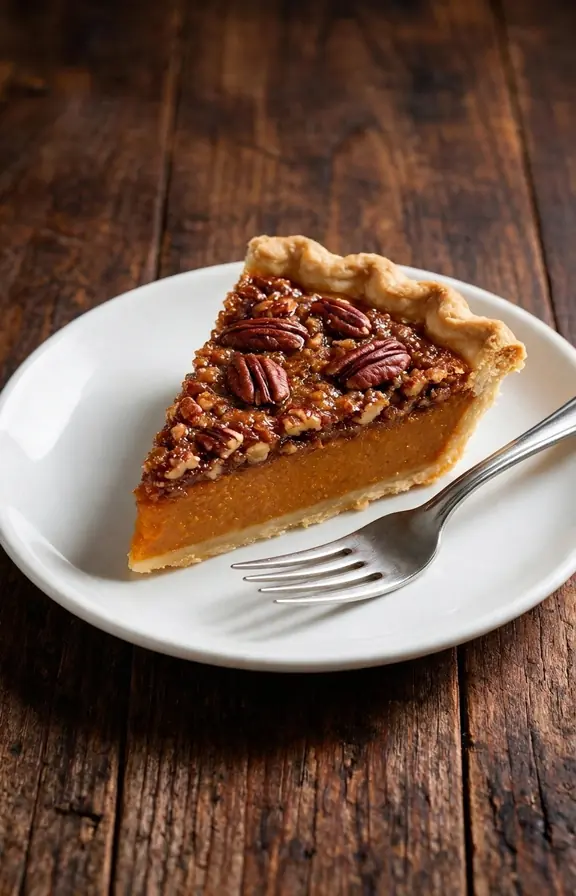
This recipe fixes that with a staged bake, built specifically to keep a custardy pumpkin layer underneath a crackly pecan praline top.
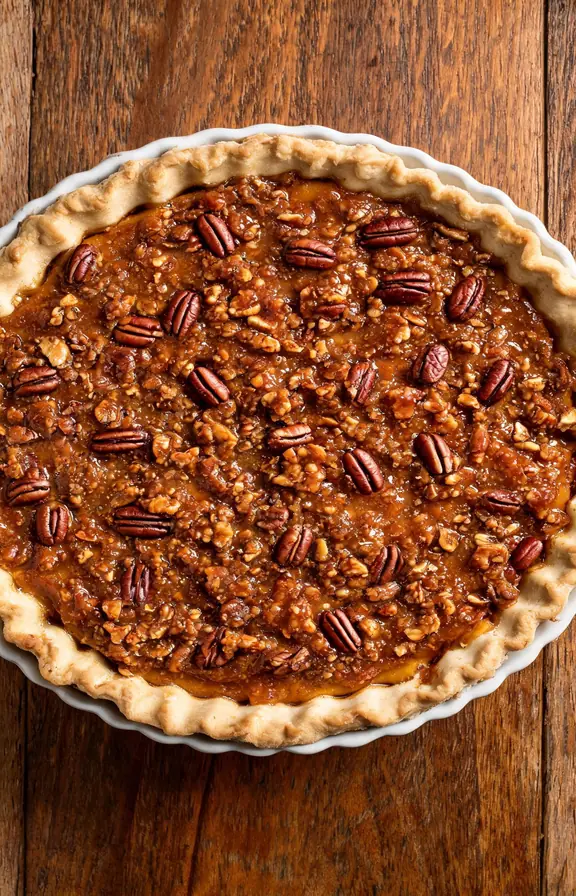
Why the Pecan Topping Sinks Into the Custard Instead of Sitting on Top
Pumpkin custard is a loose liquid before it bakes. Pour anything heavier on top of it and gravity wins, pulling the topping straight down into the filling.
Egg proteins in the custard only start binding the mixture together once they hit around 160°F. Before that point, the filling has almost no structure to hold a topping up.
That is the entire reason a two-stage bake matters here. The custard needs a head start in the oven before the pecan layer ever touches it.
The Three-Stage Bake That Keeps Each Layer Distinct
Stage one is a partial blind bake of the crust alone, which keeps the bottom from turning gummy once the wet custard goes in.
Stage two bakes the pumpkin custard by itself at a slightly lower temperature, just until the outer two inches are set and the center still moves like gelatin when nudged.
Stage three adds the pecan praline mixture and returns the pie to the oven for a shorter, hotter bake that toasts the top without overcooking the custard underneath.
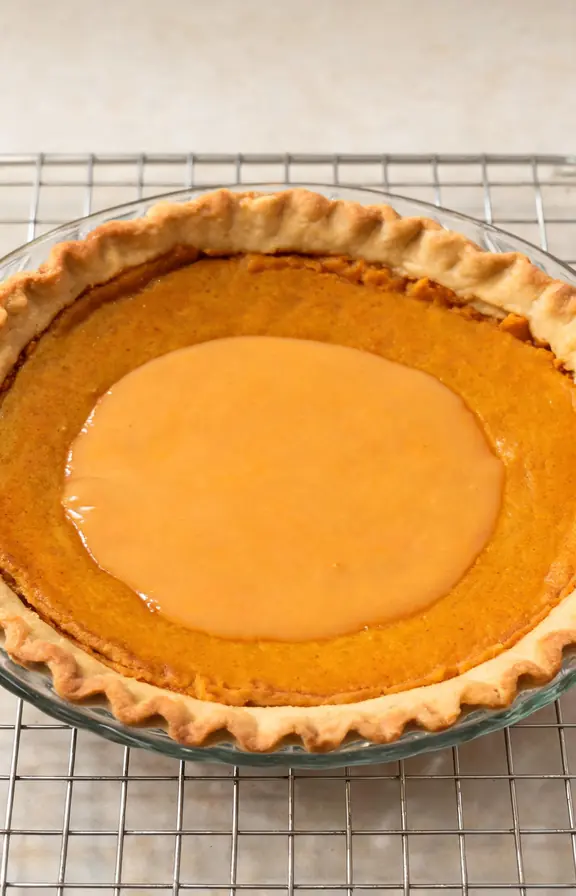
If your crust edges are browning too fast during stage two, a foil ring or a store-bought pie shield solves that without touching the custard timing.
For a flakier base under all that filling, our gluten-free pie crust built for holding wet fillings works well here if you need a dairy-friendly, wheat-free option.
Choosing and Toasting Pecans for a Topping That Stays Crunchy
Pecan halves hold their shape and crunch far better than small pieces, which tend to burn faster and turn bitter under the praline glaze.
Toast the pecans on their own for five to six minutes before mixing them into the butter and brown sugar. Raw pecans added straight into a wet praline mixture often steam instead of crisping.
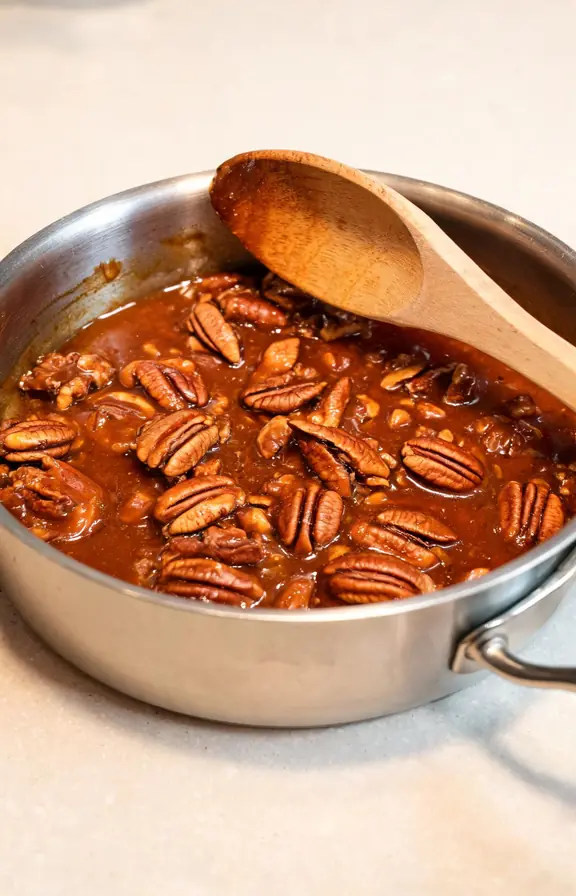
Once toasted and combined with the syrup, spoon the praline gently rather than pouring it from a height. A slow, close pour keeps the layer even instead of pooling in one spot.
Does Your Pie Pan Material Change the Bake Time?
Glass pans conduct heat slower than metal, which usually means adding three to five extra minutes to the custard stage before it looks set.
Dark metal pans brown the crust fastest, so keep a closer eye on the edges if that is what you are using.
Ceramic sits between the two, and works well here since it holds gentle, even heat through both the custard stage and the shorter praline bake.
Whichever pan you use, a light dollop of our stabilized whipped cream frosting that holds its shape on pie slices makes a nice contrast against the warm praline layer.
Frequently Asked Questions
Pecan-Topped Pumpkin Pie
A spiced pumpkin custard baked until just set, then topped with a warm butter and brown sugar pecan praline for a crisp, distinct top layer that never sinks into the filling.
- 9-inch pie pan
- Pie weights or dried beans
- Mixing bowls
- Whisk
- Small saucepan
- Pie crust shield or foil
- Cooling rack
- 1 unbaked 9-inch pie crust, homemade or store-bought
- 1 large egg, beaten, for egg wash
- 425g (15 oz) pure pumpkin puree
- 150g (3/4 cup) granulated sugar
- 2 large eggs
- 1 1/2 teaspoons pumpkin pie spice
- 1/4 teaspoon fine sea salt
- 180ml (3/4 cup) evaporated milk
- 1 teaspoon vanilla extract
- 85g (6 tablespoons) unsalted butter
- 100g (1/2 cup) light brown sugar, packed
- 2 tablespoons heavy cream
- 1/4 teaspoon fine sea salt
- 150g (1 1/2 cups) pecan halves, toasted
- Blind bake the crust Preheat the oven to 375°F (190°C). Line the pie crust with parchment and pie weights, then bake for 15 minutes. Remove the weights and parchment, brush with the beaten egg, and bake 5 more minutes until lightly golden. Set aside.
- Mix the custard Whisk the pumpkin puree, sugar, eggs, pumpkin pie spice, and salt together until smooth. Whisk in the evaporated milk and vanilla until fully combined.
- Partially bake the custard Pour the custard into the warm crust. Bake at 350°F (175°C) for 30 to 35 minutes, until the outer edges are set and the center still jiggles like gelatin. Remove from the oven and let rest 10 minutes on the counter.
- Toast the pecans While the custard bakes, spread the pecan halves on a baking sheet and toast at 350°F (175°C) for 5 to 6 minutes, until fragrant. Set aside to cool slightly.
- Make the praline Melt the butter in a small saucepan over medium heat. Stir in the brown sugar, cream, and salt, and cook for 2 minutes until smooth and glossy. Remove from heat and fold in the toasted pecans.
- Add the topping Spoon the warm pecan praline gently and evenly over the rested custard, working from the center outward so it does not pool in one spot.
- Finish baking Shield the crust edges with foil or a pie shield. Return the pie to the oven at 350°F (175°C) and bake 15 to 18 minutes more, until the praline layer is bubbling gently at the edges.
- Cool completely Cool the pie on a wire rack for at least 2 hours at room temperature, then refrigerate for 1 more hour before slicing for the cleanest cuts.
Nutritional values are estimates calculated using standard USDA food composition data. Actual values will vary based on exact ingredient brands and slice size.