Our site contains ads and uses Amazon affiliate links. We may earn a small commission at no extra cost to you. We know ads can be distracting, and we’re sorry for any inconvenience they cause. It helps us keep the site running. Thanks for your understanding and supporting us!
Most pumpkin cheesecake bars fail in one of two ways. Either the pumpkin swirl stays loose and never firms up, or the top splits into deep cracks the moment the pan cools.
Both problems trace back to moisture and heat, not bad luck or a broken oven.
This article walks through exactly why that happens, then gives you a full recipe built to avoid both from the start.
Why Pumpkin Cheesecake Bars Turn Out Soupy Instead of Sliceable
Pumpkin puree is mostly water. That single fact explains almost every soupy pumpkin cheesecake complaint out there.
A standard cheesecake batter is cream cheese, sugar, and eggs, a fairly low-moisture mix. Fold in a half cup of pumpkin puree straight from the can and you have added a meaningful amount of free liquid to a batter that was never built to hold it.
That extra water sits in the pumpkin layer and never fully bakes out in a shallow bar pan. The result is a top layer that looks set but stays loose and wet once you slice into it.
The Fix: Blot the Pumpkin and Handle the Batter Gently
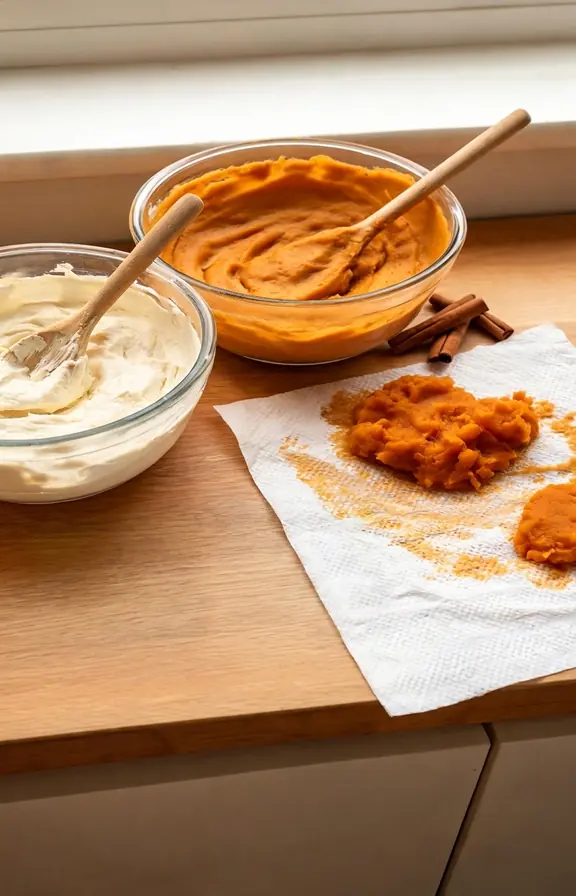
Spreading the pumpkin puree between paper towels for a few minutes pulls out a real amount of surface water before it ever touches the cream cheese.
Beating the cream cheese and sugar on low to medium speed keeps the batter dense instead of airy. Add the eggs one at a time and stop mixing the second they disappear into the batter.
Room temperature cream cheese, eggs, and sour cream matter here too. Cold ingredients force you to mix longer and harder to get a smooth batter, and that extra mixing time is exactly what pulls air into the mix.
This is also why a shallow bar pan behaves differently than a springform. Bars bake faster and more evenly edge to center, so a slight underbake at the center is easy to hit without drying out the edges.
Pull the pan the moment a 2 to 3 inch circle in the middle still jiggles like gelatin. It will finish setting as it cools and chills.
Getting a Crust That Stays Crisp Under a Wet Filling
A graham cracker crust pressed straight into a cold pan often turns gummy once the cheesecake batter sits on top of it for an hour of baking and hours of chilling.
Pre-baking the crust for 8 to 10 minutes before the filling goes in solves this. The short bake sets the butter and sugar into a firmer structure that can handle the moisture above it.
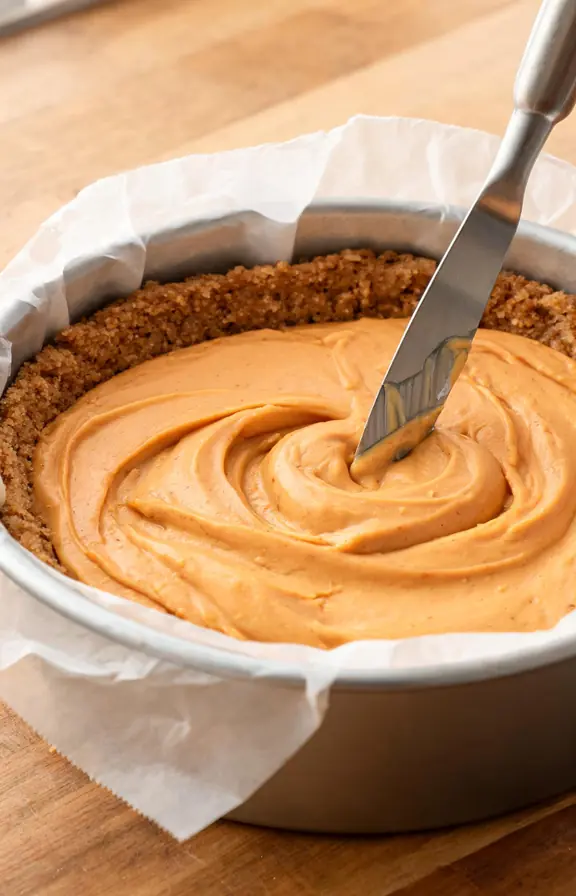
Line the pan with parchment paper and leave an overhang on two sides. It makes lifting the whole slab out for slicing much easier than trying to cut bars inside the pan.
Do You Need a Water Bath for Cheesecake Bars?
Not usually, and this is where a lot of bar recipes overcomplicate things. A full water bath is meant for tall springform cheesecakes that bake unevenly from edge to center.
A shallow 9×9 bar pan already bakes evenly, so a full water bath is unnecessary here. Instead, place a small baking pan filled with hot water on the rack below the bars.
That adds humidity to the oven without the risk of water leaking into your crust through a wrapped springform pan.
If you’d rather skip the oven step entirely for a party, a no-bake cheesecake bar recipe with a Biscoff crust uses the same blotting logic without any baking at all.
Frequently Asked Questions
Pumpkin Cheesecake Bars
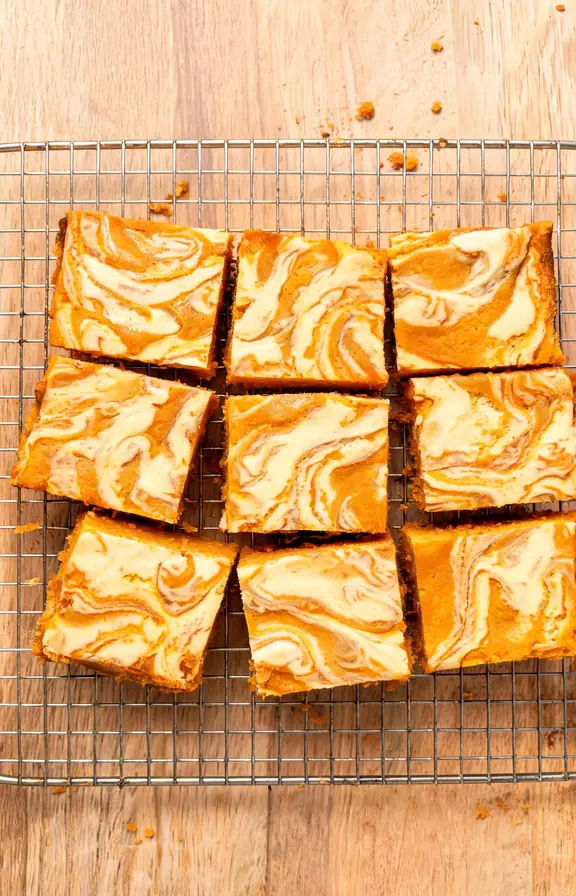
Dense, creamy pumpkin cheesecake bars built around a blotted pumpkin swirl and a pre-baked graham cracker crust. No water bath, no soupy layer, and a clean slice every time.
- 9×9 inch baking pan
- Parchment paper
- Stand mixer or hand mixer
- Paper towels (for blotting pumpkin)
- Small baking pan (for the oven humidity trick)
- Rubber spatula
- Butter knife or skewer (for swirling)
- Kitchen scale (recommended)
- 170g (1 1/2 cups) graham cracker crumbs
- 30g (2 tablespoons) granulated sugar
- 85g (6 tablespoons) unsalted butter, melted
- 450g (16 oz) full-fat cream cheese, room temperature
- 150g (3/4 cup) granulated sugar
- 2 large eggs, room temperature
- 60g (1/4 cup) sour cream, room temperature
- 1 teaspoon vanilla extract
- 1/4 teaspoon fine sea salt
- 120g (1/2 cup) pumpkin puree, blotted
- 25g (2 tablespoons) brown sugar, packed
- 1 1/2 teaspoons pumpkin pie spice
- 1/4 teaspoon ground cinnamon
- Blot the pumpkin Spread the {0001} pumpkin puree between two layers of paper towels and press gently to absorb excess moisture. Set aside while you make the crust.
- Make and pre-bake the crust Preheat the oven to 325°F (163°C) and line a 9×9 inch pan with parchment paper, leaving an overhang on two sides. Stir together the graham cracker crumbs, sugar, and melted butter, then press firmly into the bottom of the pan. Bake for 8 to 10 minutes, then set aside to cool slightly.
- Make the cheesecake batter Beat the cream cheese on low to medium speed until smooth, about 2 minutes. Add the sugar and beat just until combined. Add the eggs one at a time, mixing only until each disappears, then mix in the sour cream, vanilla, and salt.
- Make the pumpkin swirl layer Remove 1 cup of the cheesecake batter to a separate bowl. Stir in the blotted pumpkin puree, brown sugar, pumpkin pie spice, and cinnamon until smooth.
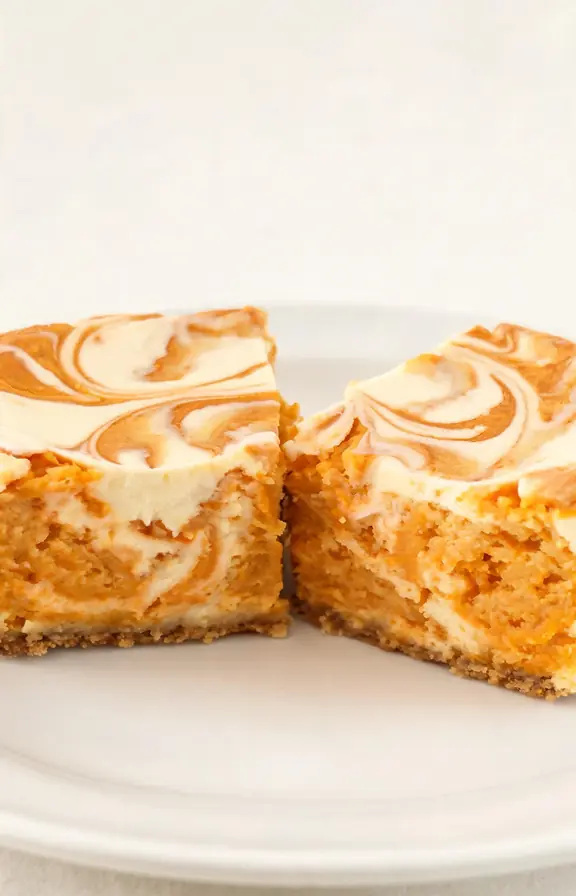
- Layer and swirl Pour the plain cheesecake batter over the crust and smooth into an even layer. Drop spoonfuls of the pumpkin batter on top, then drag a knife or skewer through both layers to create a marbled swirl.
- Bake Place a small pan of hot water on the oven rack below the bars. Bake for 40 to 45 minutes, until the edges look set and a 2 to 3 inch circle in the center still jiggles slightly.
- Cool gradually Turn off the oven and crack the door open, leaving the bars inside for 15 minutes. Transfer the pan to a wire rack and cool to room temperature.
- Chill and slice Cover and refrigerate for at least 4 hours, ideally overnight. Use the parchment overhang to lift the whole slab out of the pan, then slice into 16 bars with a clean, warm knife.
Nutritional values are estimates calculated using standard USDA food composition data. Actual values will vary based on exact ingredient brands, bar size, and swirl amount.