Our site contains ads and uses Amazon affiliate links. We may earn a small commission at no extra cost to you. We know ads can be distracting, and we’re sorry for any inconvenience they cause. It helps us keep the site running. Thanks for your understanding and supporting us!
Most sourdough discard cracker recipes produce something forgettable. Thick, pale, slightly chewy, and without real flavor.
This article explains exactly why that happens. You will learn how to fix every variable, from discard age to oven temperature.
No special equipment needed. No sourdough experience required. Just your discard jar, a rolling pin, and one baking sheet.
What Sourdough Discard Actually Does to Cracker Dough
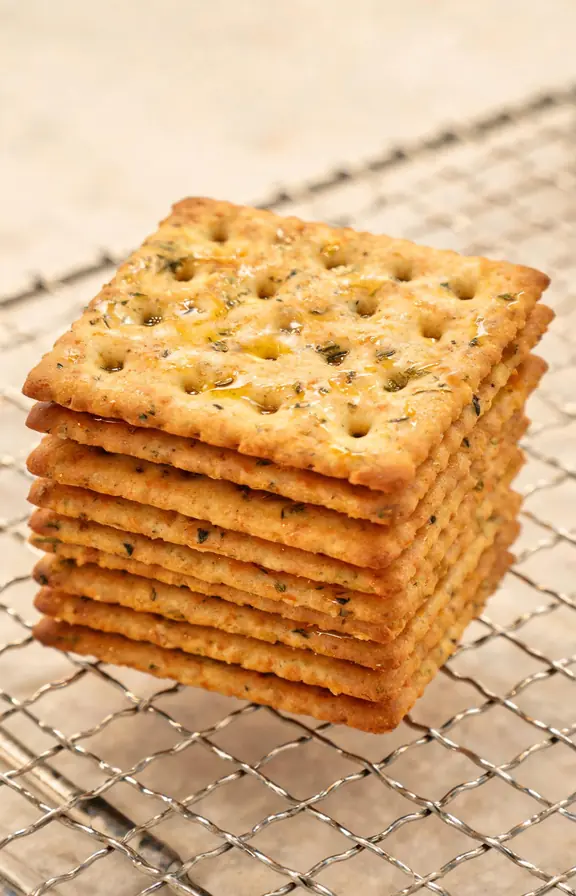
Most bakers treat discard as just a flavor additive. In crackers, it is doing three distinct jobs at once.
First, the acidity. Discard is acidic from lactic and acetic acid. That acid relaxes the gluten so the dough rolls thinner without tearing.
Second, the enzymes. Fermentation produces amylase enzymes. These break starches into sugars that caramelize faster in the oven.
Third, the flavor. Acetic acid adds sharpness. Lactic acid adds milky depth. Both layer beneath the garlic and herbs in a way plain dough cannot replicate.
The Thickness Principle: Why 1/16 Inch Changes Everything
The most common reason crackers come out chewy is thickness. Most bakers roll to 1/8 inch. That is twice as thick as it needs to be.
At 1/8 inch, the center retains moisture and softens within hours. At 1/16 inch, the cracker dehydrates fully and stays crisp for two weeks.
Roll between two sheets of parchment paper. This prevents sticking without added flour. You can slide it directly onto the baking sheet with no distortion.
Peel back the top sheet after rolling. Apply the olive oil topping. Then slide the bottom sheet straight onto the pan.
The Triple Flavor Stack: Garlic, Fresh Herbs, and Extra Virgin Olive Oil
These three ingredients are not interchangeable. Each one contributes a specific compound the others cannot replace.
1. Extra Virgin Olive Oil (for polyphenol flavor and crispness)
Standard vegetable oil makes a crisp but flavor-neutral cracker. Extra virgin olive oil contains polyphenols that give it a peppery, slightly bitter finish.
Those polyphenols survive moderate oven heat. They balance the sharp tang of the discard and create a more pronounced golden crunch.
Use the best quality EVOO you have. The oil is a featured flavor here, not a background cooking medium.
2. Fresh Garlic (for layered allicin release)
Garlic powder and fresh garlic behave entirely differently here. Both are used for a reason.
Garlic powder goes into the dough. It disperses evenly and mellows during baking. Fresh minced garlic on the surface partially caramelizes, creating a roasted, sweet depth.
This two-stage garlic approach creates two distinct flavor layers. Use both. Do not skip either one.
3. Fresh Herbs (for volatile oil bloom)
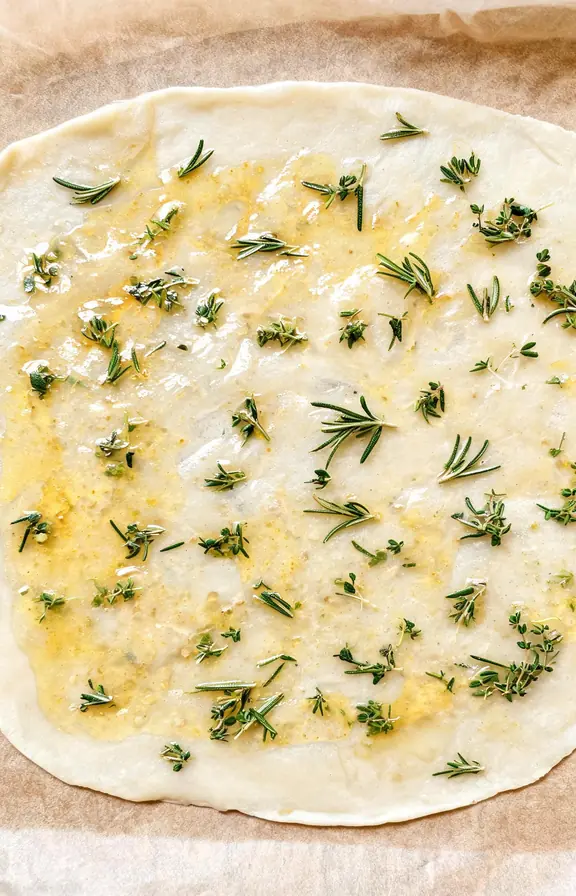
Dried herbs rehydrate during baking and distribute evenly in the dough. Fresh herbs on the surface do something different.
They bloom their volatile oils directly onto the top of the cracker as it bakes. The aroma hits you before the cracker even reaches your mouth.
Rosemary and thyme are the best choices. Their essential oils are heat-stable enough to survive the oven without burning off.
The Score-Before-You-Bake Method (The Step Everyone Skips)
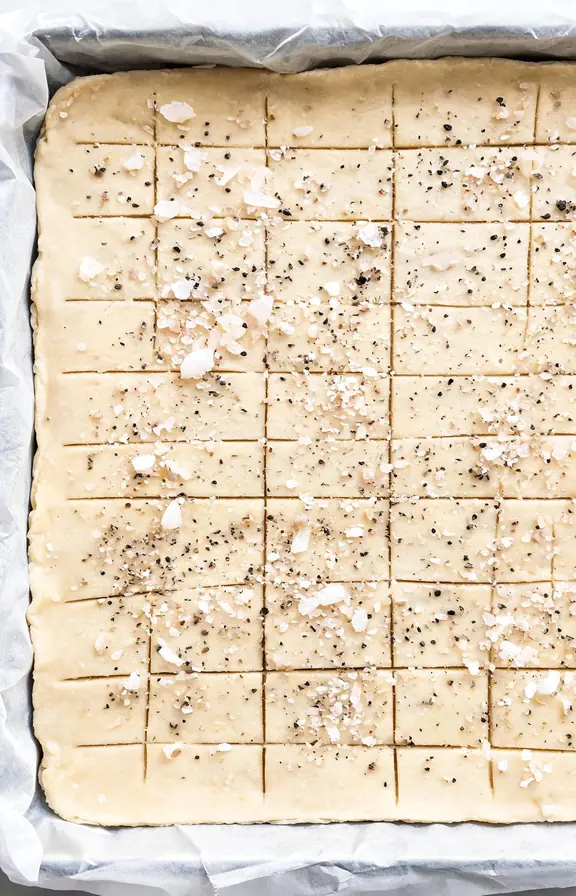
Cut the crackers before they go into the oven, not after. This single step changes everything about the finished texture.
Pre-scoring creates deliberate stress points in the dough. Moisture escapes from the interior during baking. The center dehydrates at the same rate as the edges.
Do not separate the pieces before baking. Leave them connected on the sheet. Connected pieces insulate each other from over-browning at the edges.
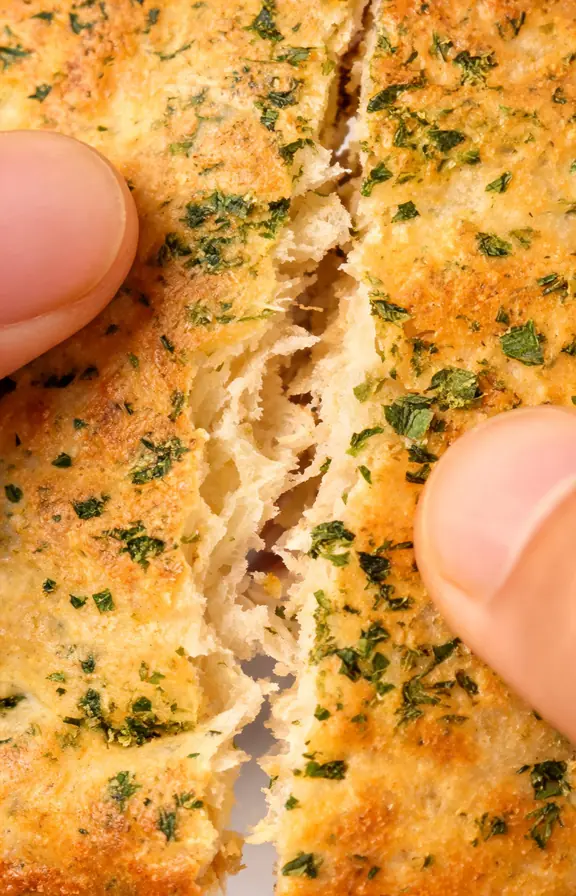
After baking, crackers break apart cleanly along the scored lines. No crumbling. No jagged edges.
Oven Temperature: The 325°F Principle for Dehydration Baking
Most cracker recipes bake at 350°F to 400°F. Sourdough discard crackers need 325°F. The reason is the fermentation sugars.
Discard dough contains more available sugars than standard dough. It browns faster. At 350°F or above, the garlic turns bitter before the interior fully dehydrates.
At 325°F (163°C), the dough dries from the inside out. The surface stays golden, not burnt. The garlic tastes sweet and roasted, not sharp.
Rotate your baking sheet halfway through. Oven hot spots are why half a tray comes out perfect and half comes out pale.
The Flour Blend Upgrade: Why Whole Wheat Changes the Texture Profile
All-purpose flour alone gives a crisp but plain cracker. Replacing 25 to 30 percent with whole wheat changes everything.
The bran particles cut through gluten strands. This creates a snap-rather-than-shatter texture most people associate with artisan crackers.
The germ adds a nutty, earthy note. It pairs exceptionally well with rosemary and garlic. It also accelerates browning, so watch your first batch carefully.
For a deeper flavor with maximum tang, also try our Seeded Sourdough Discard Everything Bagel Crackers. Same base technique, different topping profile.
Fresh vs. Dried Herb Combinations: A Flavor Map
Not every herb works in every position in this recipe. Here is a guide based on how each herb responds to heat.
How Sourdough Discard Crackers Compare to Store-Bought
Most commercial crackers contain refined palm oil, maltodextrin, and at least four stabilizers. Homemade gives you full control over every ingredient.
Sourdough discard contains lactic acid bacteria. These begin breaking down phytic acid in wheat. Phytic acid is an antinutrient that blocks mineral absorption.
Baking kills the live cultures. But the fermentation has already done its work. The organic acids remain stable through baking and create a flavor no commercial product can match.
If you maintain a starter and want more discard options, our Sourdough Discard Crackers with Rosemary Parmesan and Sourdough Discard Cinnamon Sugar Cruffins cover both savory and sweet.
Pairing and Serving Ideas Beyond the Cheese Board
These crackers are strong enough in flavor to eat on their own. But they pair in ways plain crackers simply cannot.
With soft cheeses like ricotta, goat cheese, or whipped feta, the garlic and herb notes do all the seasoning work. No extra condiments needed.
With hummus or white bean dip, the sourdough tang cuts through the richness of tahini beautifully. Every bite feels complete.
Crushed coarsely, these crackers make an excellent breadcrumb substitute. The olive oil and herb coating is already built in. No extra seasoning needed.
For soup, try them alongside a thick lentil or tomato soup. They hold their structure far longer than you would expect.
Storage and Maintaining Crispness in Humid Climates
Cool crackers completely on the baking sheet before storing. At least 20 minutes. Moving warm crackers into a container traps steam and softens them immediately.
Store in an airtight glass jar or tin. Not a plastic zip bag. Plastic allows microscopic moisture transfer that softens crackers within 48 hours.
In humid climates above 70 percent humidity, add a food-safe silica gel packet to the container. A folded paper towel between layers also works well.
Stored correctly, these crackers stay crisp for two weeks at room temperature. Freeze for longer storage and reheat at 300°F (150°C) for 5 minutes to restore the snap.
Frequently Asked Questions
Sourdough Discard Crackers With Herbs Garlic Olive Oil
Crispy thin crackers made with sourdough discard, fresh rosemary, garlic, and extra virgin olive oil. One bowl, no yeast, ready in 34 minutes. Stays crisp for two weeks.
- Large baking sheet (half sheet pan preferred)
- Two sheets of parchment paper
- Rolling pin
- Pizza cutter or sharp pastry knife
- Pastry brush
- Large mixing bowl
- Microplane or fine grater (for garlic)
- Wire cooling rack
- 1 cup (240g) sourdough discard, refrigerated 1–7 days, room temperature
- 3/4 cup (94g) all-purpose flour, spooned and leveled
- 1/4 cup (30g) whole wheat flour (or substitute additional all-purpose)
- 3 tablespoons (45ml) extra virgin olive oil
- 1/2 teaspoon fine sea salt
- 1/2 teaspoon garlic powder
- 1 teaspoon dried rosemary, lightly crushed
- 1/2 teaspoon dried thyme
- 2 tablespoons (30ml) extra virgin olive oil, for brushing
- 2 cloves fresh garlic, very finely minced or microplaned
- 1 tablespoon fresh rosemary leaves, finely chopped
- 1 tablespoon fresh thyme leaves
- 1/2 teaspoon flaky sea salt (Maldon or similar), for topping
- 1/4 teaspoon cracked black pepper
- Preheat and prep Set your oven to 325°F (163°C). Cut two sheets of parchment paper to fit your baking sheet. Set one sheet flat on a clean work surface.
- Bloom the dried herbs In a small pan over low heat, warm the olive oil with the dried rosemary and thyme for 30 seconds. Remove from heat. Let cool for 2 minutes before using.
- Mix the dough In a large bowl, combine the discard, both flours, the bloomed herb olive oil, salt, and garlic powder. Mix until a shaggy dough forms. Use your hands to bring it into a smooth ball. It should feel like firm pie crust dough. If it cracks, add water one teaspoon at a time.
- Divide and roll thin Divide the dough into two equal pieces. Place one piece on the parchment on your work surface. Cover with the second parchment sheet. Roll to 1/16-inch thickness. It will look almost translucent. Peel back the top sheet. Press any tears back together and continue.
- Apply the topping Mix the 2 tablespoons of olive oil with the minced fresh garlic. Brush evenly over the rolled dough. Scatter fresh rosemary and thyme on top. Press gently into the surface with your fingertips. Sprinkle with flaky salt and cracked pepper.
- Score (do not separate) Using a pizza cutter, score the dough into rectangles roughly 1.5 to 2 inches. Do not separate the pieces. Leave them connected on the parchment. Slide the parchment and dough directly onto your baking sheet.
- Bake with rotation Bake at 325°F (163°C) for 11 minutes. Rotate the baking sheet 180 degrees. Continue baking for 10 to 12 more minutes. The crackers should be uniformly golden brown, not just at the edges. The surface should look dry and matte, not shiny.
- Cool completely before breaking Let crackers cool on the baking sheet for at least 20 minutes before breaking apart. They feel soft when warm. That is normal. They firm to a full snap as they cool. Repeat with the second piece of dough.
Nutritional values are estimates calculated using standard USDA food data. Actual values may vary based on specific ingredient brands, discard hydration level, and cracker size.